Vintage PRAYBOY 1984 Cover: The Vanishing Analog Satire | The Record
The History
PRAYBOY: THE SATIRICAL MASTERPIECE
When Sanctity Met Satire in the 1980s
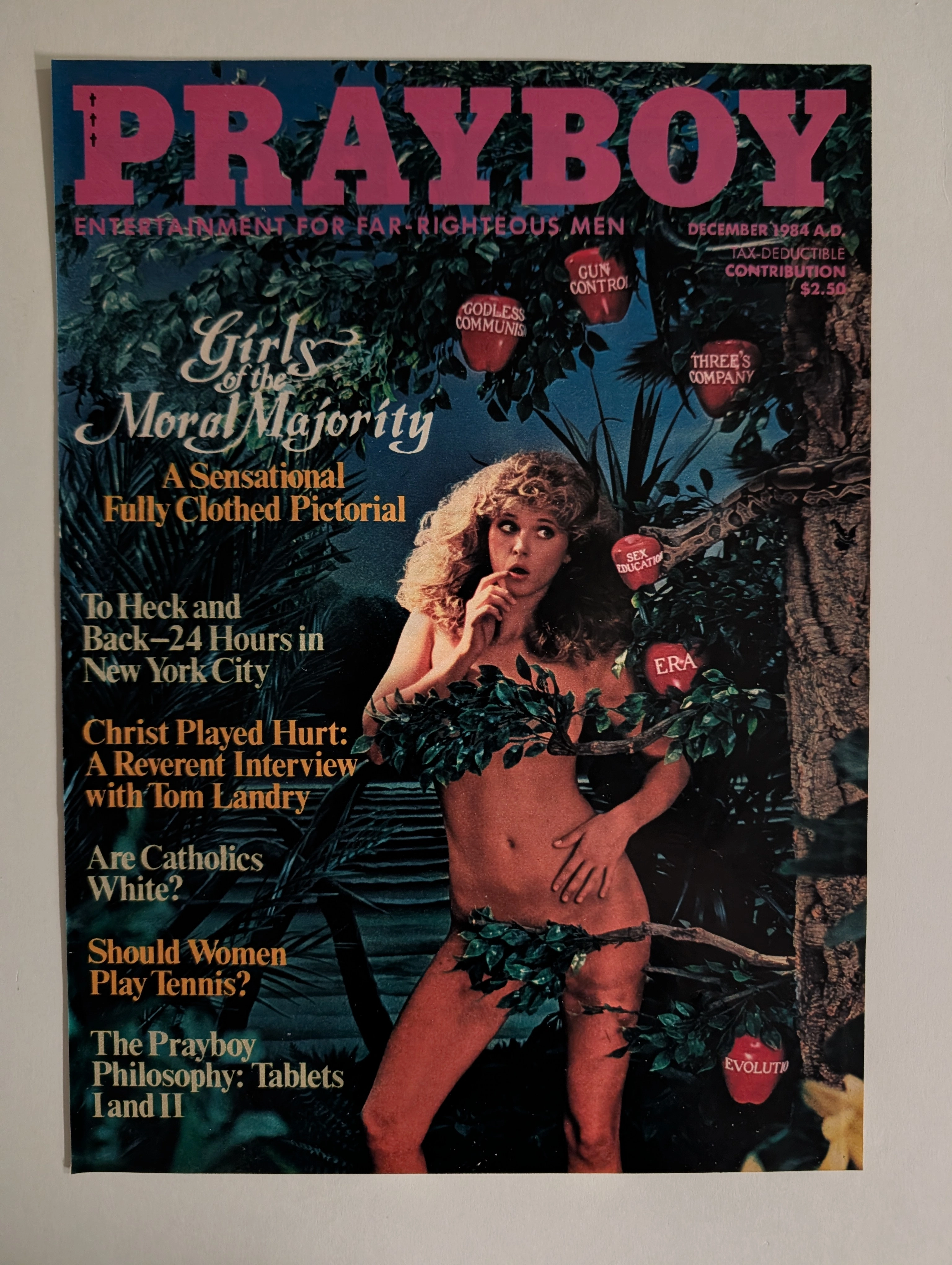
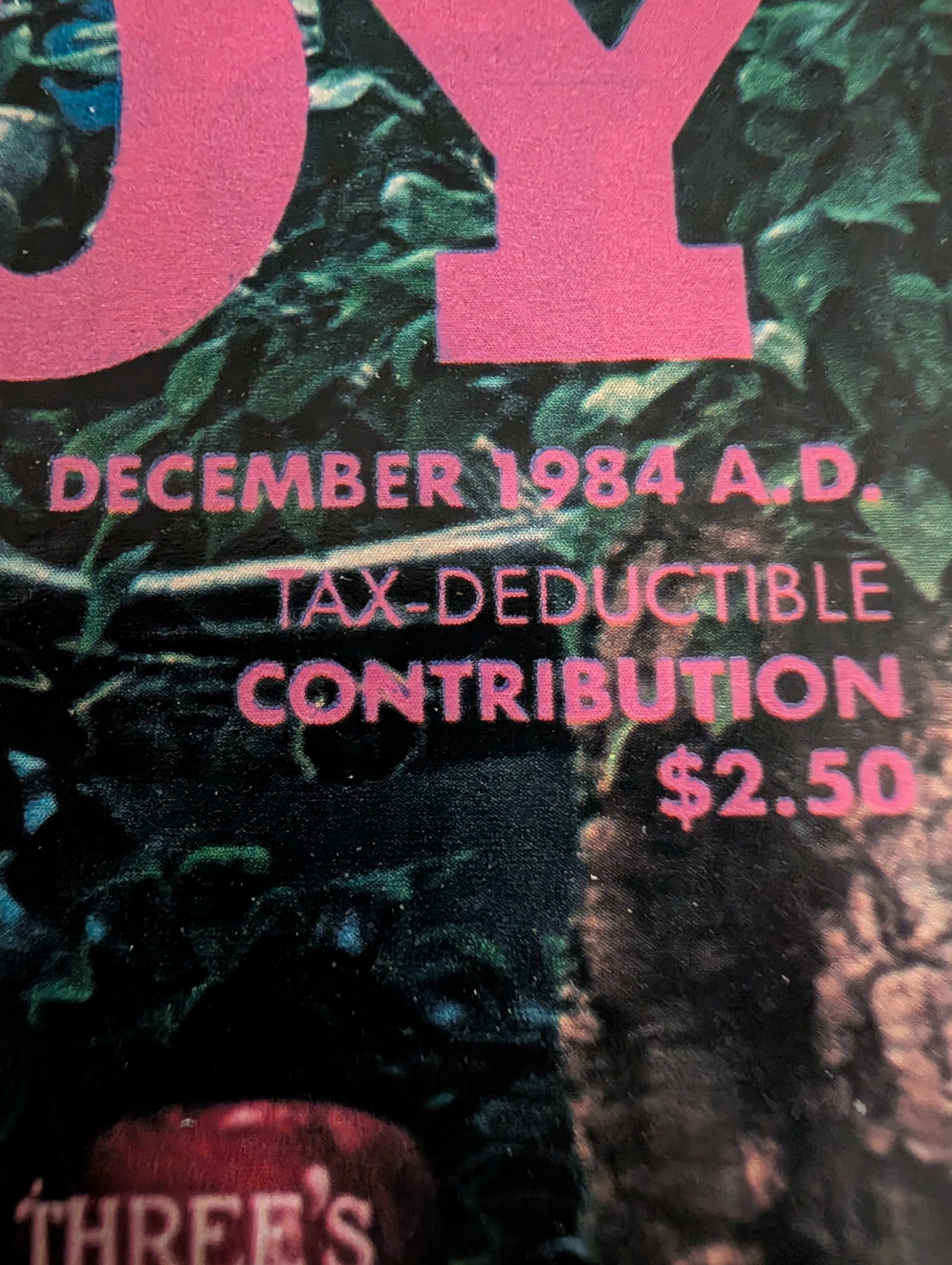
This is not a conventional magazine cover; it is a "Museum Grade Artifact" of 1980s cultural rebellion. The December 1984 issue of "PRAYBOY" (Entertainment for Far-Righteous Men) is a brilliant, biting parody of Playboy, mocking the extreme conservative "Moral Majority" of the era. This magazine-sized analog print is a fading piece of bold historical satire.
🏛️ CHAPTER I: THE HISTORY OF REBELLION & SATIRE
The Cultural Clash: In the 1980s, right-wing religious conservatism was a dominant political force in the US. This cover fearlessly parodies those ideals, featuring Eve attempting to cover herself under the headline "Girls of the Moral Majority: A Sensational Fully Clothed Pictorial." The apples of sin are labeled with the era's hot-button issues like "EVOLUTION," "GUN CONTROL," and "SEX EDUCATION."
📷 CHAPTER II: THE GOLDEN AGE OF ANALOG CRAFTSMANSHIP
Practical Set Design: Created pre-Photoshop, this required masterful studio photography and art direction. The lighting simulating moonlight, the placement of the artificial Eden, and the hand-painted typography on real apples were all physical, analog accomplishments captured on film.
⏳ CHAPTER III: THE FRAGILITY OF HISTORY & PAPER DEGRADATION
The Chemistry of Decay: Pre-2000 paper contains Lignin, which oxidizes over time. This page is literally consuming itself through acidic autocatalysis. Its survival over 40 years gives it a beautiful, natural patina that authenticates its museum-grade status.
📈 CHAPTER IV: THE ECONOMICS OF SCARCITY
Niche Scarcity: Parody publications had drastically lower print runs than mainstream media. Combined with the daily destruction of vintage paper by the elements, this magazine-sized original print has evolved into a highly scarce Alternative Asset for any sophisticated home art gallery.
The Archive Continues
Continue the Exploration
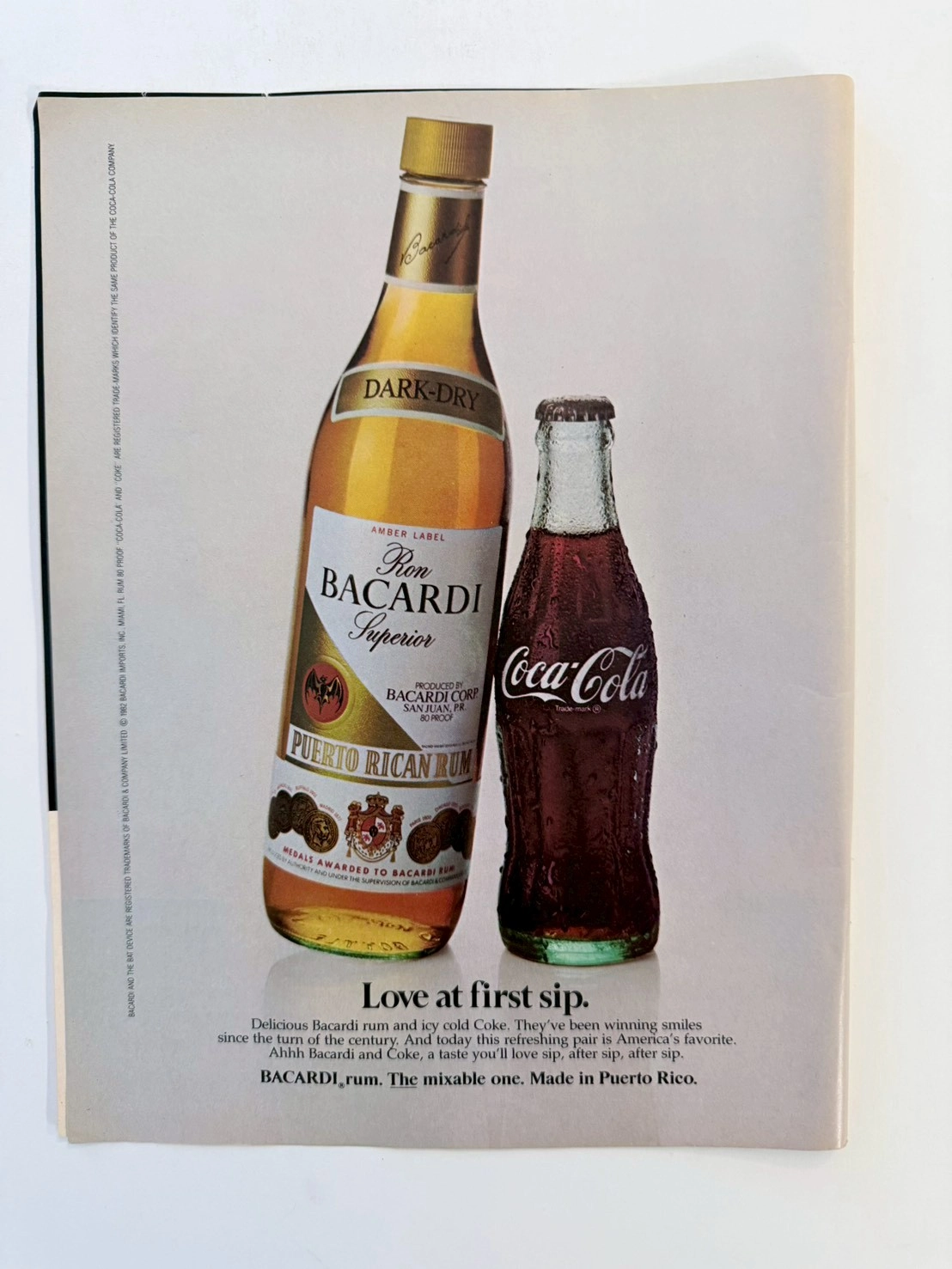
The Treaty of Two Empires: Deconstructing the 1982 Bacardi & Coca-Cola Vintage Ad (Class S)
Dive into the history of American consumerism with this museum-grade analysis of the iconic 1982 Bacardi and Coca-Cola co-branding advertisement. This Class S archival piece captures the definitive shift from the Golden Age of Illustration to 1980s commercial studio photography. Explore the geopolitical legacy of the "Cuba Libre" and the analog practical effects behind the immortal condensation on the Coca-Cola contour bottle.
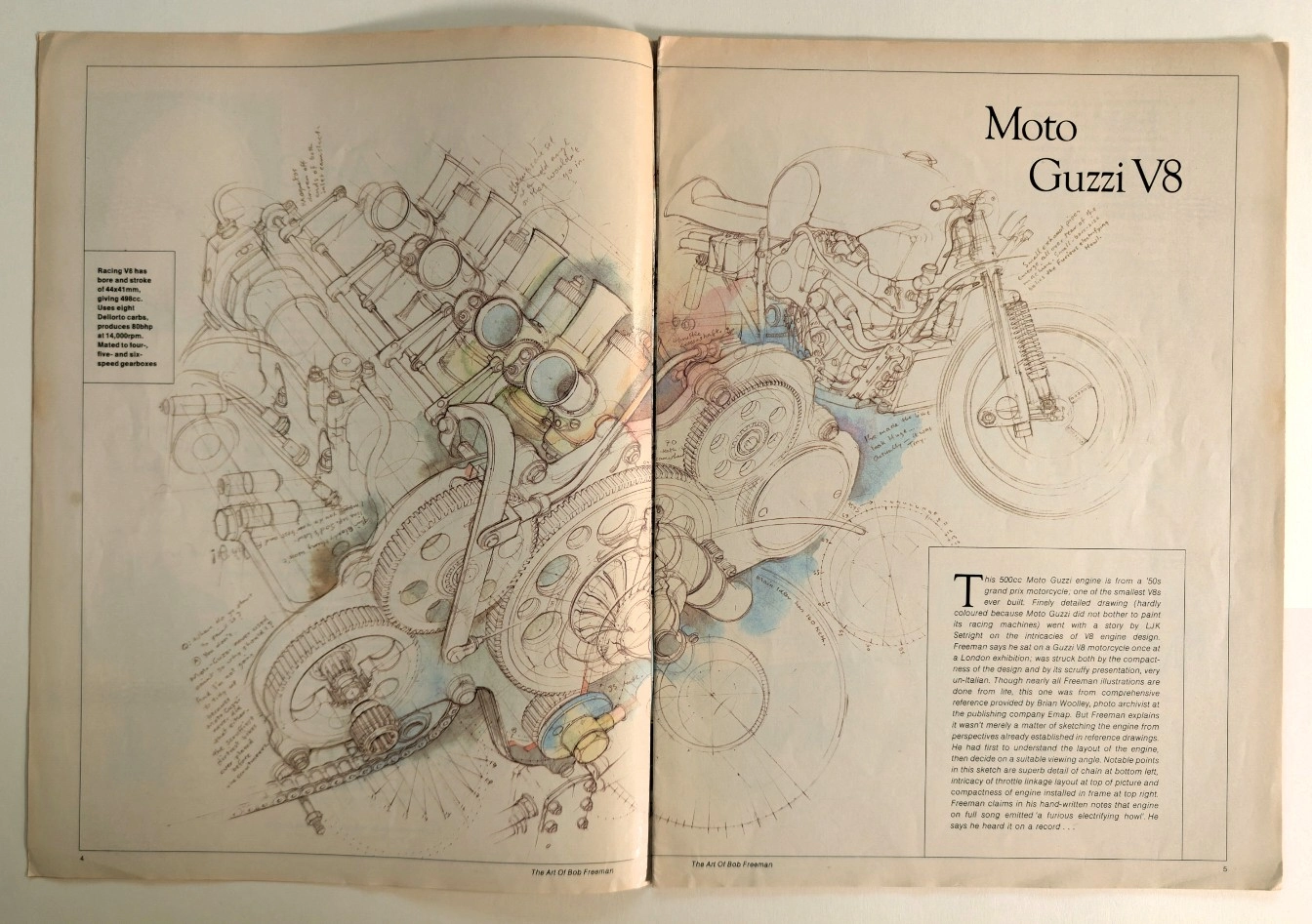
Anatomy of a Monster: The Moto Guzzi V8 Technical Masterpiece
Unearthing a rare technical illustration of the legendary Moto Guzzi V8 engine by Bob Freeman, preserved on naturally aged, pre-2000 analog print media.
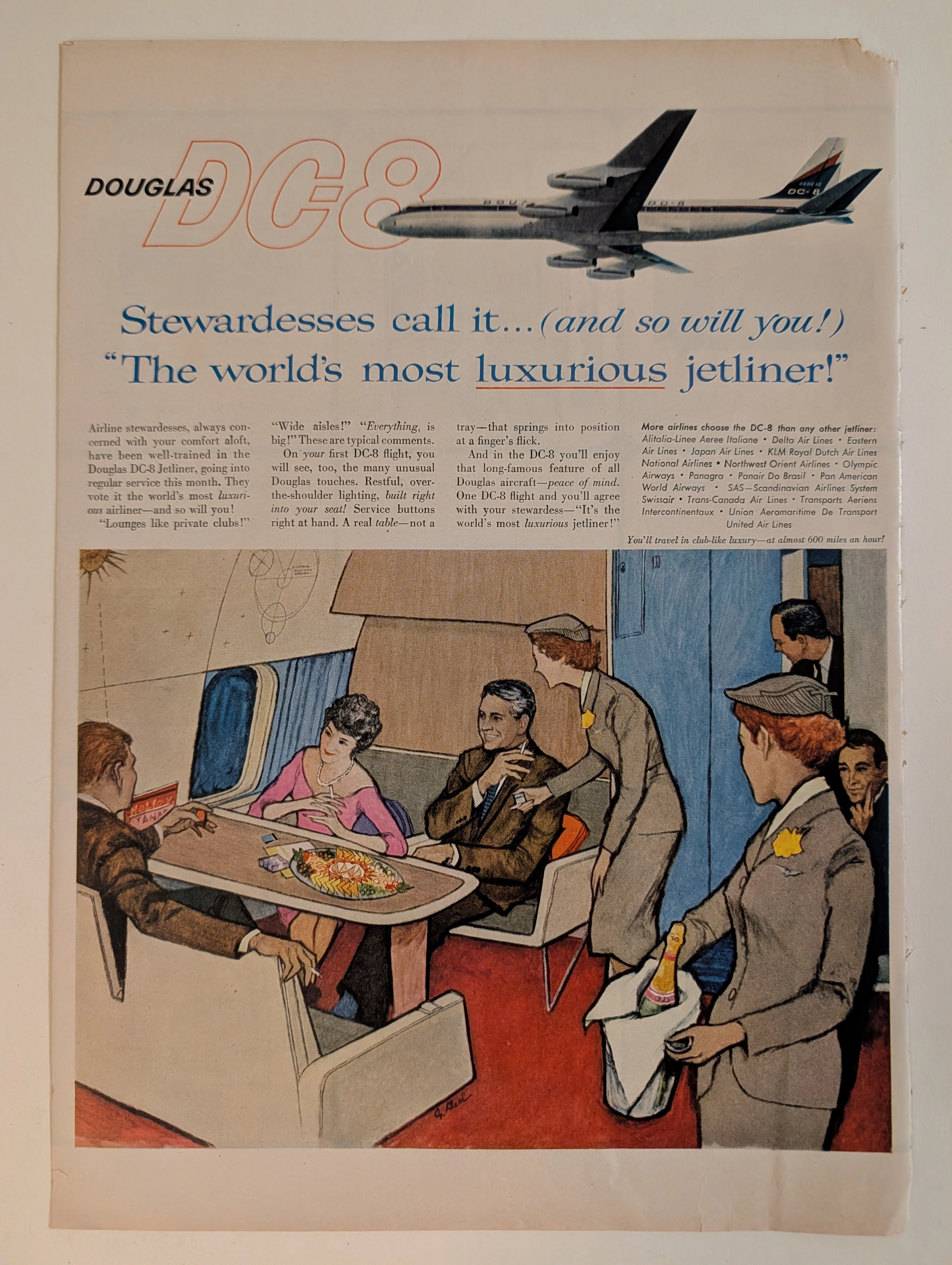
THE TIME TRAVELER'S DOSSIER: THE STRATOSPHERIC MANSION AND THE AESTHETICS OF DECAY
The artifact under exhaustive, museum-grade analysis is a flawlessly preserved Historical Relic originating from the absolute dawn of the commercial Jet Age (circa late 1950s to early 1960s). This Primary Art Document is a magnificent full-page advertisement for the Douglas DC-8, the aerospace leviathan engineered to rival the Boeing 707 and conquer the global skies. Visually anchored by an elegant, sweeping illustration of the aircraft's exterior and a highly detailed, evocative rendering of its opulent passenger lounge, the piece represents the zenith of mid-century aspirational marketing. Signed by an elusive mid-century commercial artist, the illustration captures the "Palomar Lounge"—a private club in the stratosphere where the elite played cards, smoked, and drank champagne beneath a Space-Age celestial diagram. By utilizing the ultimate authority of the era—the airline stewardess—to validate its luxury ("Stewardesses call it... The world's most luxurious jetliner!"), Douglas masterfully sold the illusion of exclusive, aristocratic segregation at 600 miles per hour. Rescued from the binding of a forgotten periodical, this pre-2000s analog artifact is an unforgeable testament to the aesthetic of wabi-sabi. Printed on inherently acidic wood-pulp paper, it exhibits a beautifully frayed right margin and a deep, warm ivory oxidation. This majestic chemical degradation transforms a mass-produced corporate propaganda piece into an irreplaceable, ready-to-frame Primary Art Document of aerospace history.