Vintage Chivas Regal x Charles Saxon Ad: The Vanishing Playboy Art | The Record
The History
THE AUDACIOUS REQUEST
The Ultimate High-Class Beggary on a Playboy Page
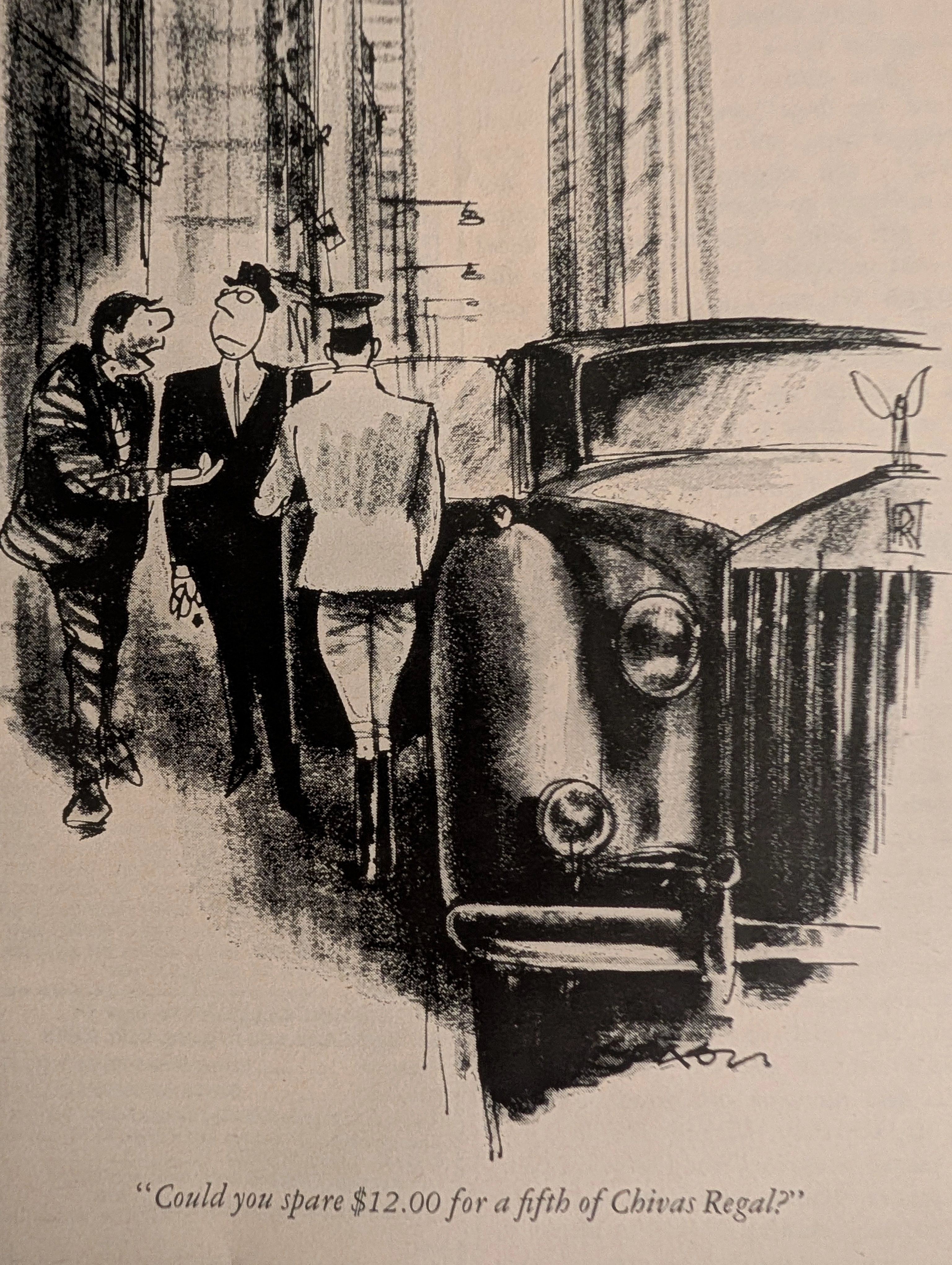
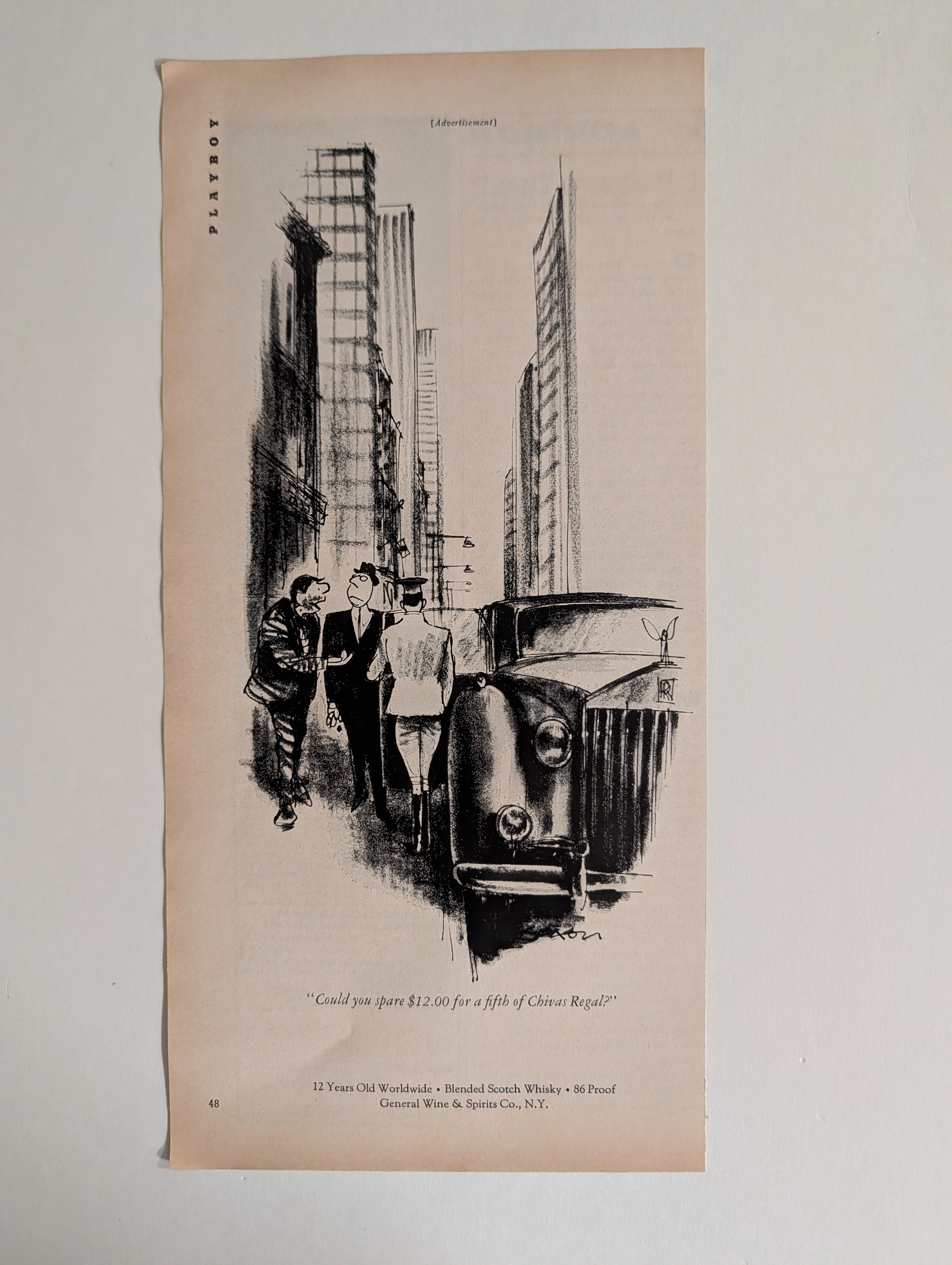
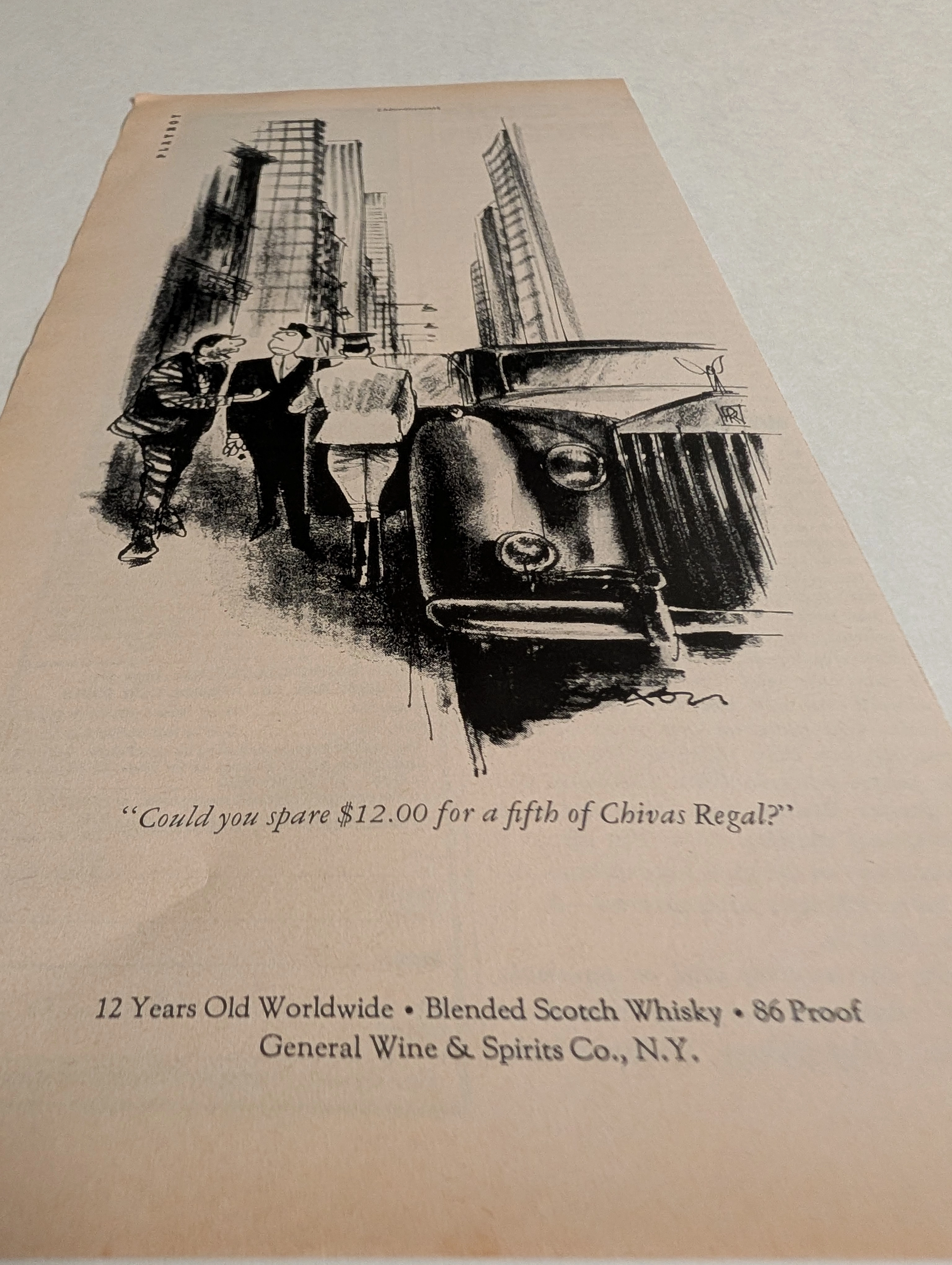
As the Chief Curator of The Record, I present a masterpiece that brilliantly merges refined humor with absolute luxury. This original Chivas Regal advertisement, salvaged from the pages of a vintage Playboy magazine, features the distinctive linework of the legendary illustrator Charles Saxon. This magazine-sized print is not just a comedic sketch; it is a "Museum Grade Artifact" documenting high-society ideals, analog illustration, and the fragile nature of decaying paper.
🏛️ CHAPTER I: THE HERITAGE OF LUXURY & THE MASTER ILLUSTRATOR
The Brand: Positioned as a premium blended Scotch whisky, Chivas Regal brilliantly uses this ad to mock everyday beggary. The beggar asks, "Could you spare $12.00 for a fifth of Chivas Regal?"—elevating the brand to an absolute necessity even for the destitute.
The Artist (Charles Saxon): The signature "Saxon" belongs to Charles Saxon, a renowned American cartoonist famous for his work in The New Yorker. His masterful ink strokes effortlessly convey the stark contrast between the wealthy gentleman and the ambitious beggar.
📷 CHAPTER II: THE CRAFT OF ANALOG ILLUSTRATION & PRINTING
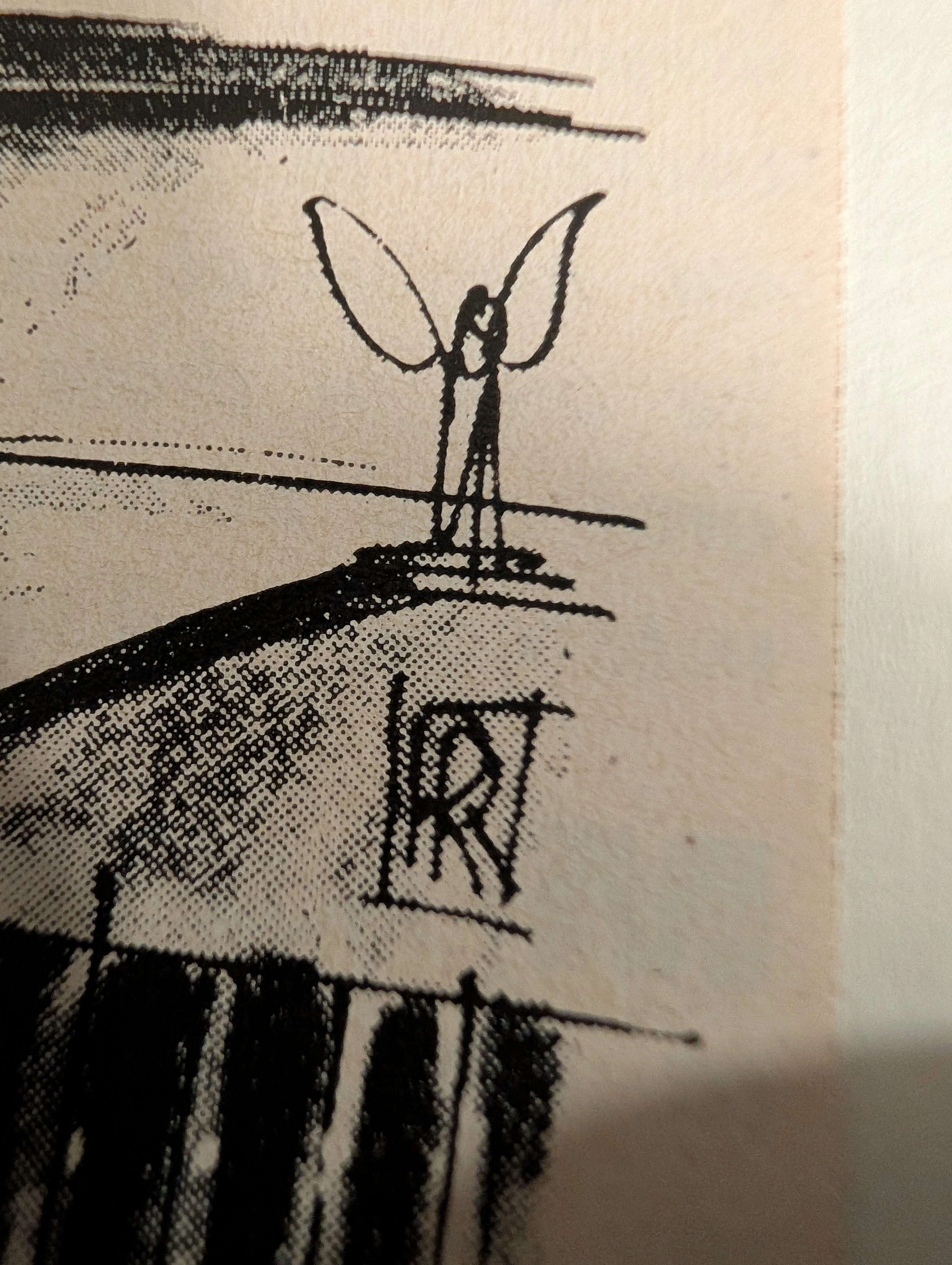
Analog Execution: Before digital tablets, Saxon crafted this using physical ink and wash techniques. Translating his hand-drawn shadows into the CMYK halftone printing of pre-2000s magazines created a unique, textured dot pattern. It is an authentic analog footprint that modern printing simply cannot replicate.
⏳ CHAPTER III: THE FRAGILITY OF HISTORY & PAPER DEGRADATION
The Chemistry of Decay: This paper contains Lignin, which oxidizes when exposed to light and air. The beautiful, warm yellowing (patina) you see is the physical manifestation of acid autocatalysis—the paper is slowly consuming itself. This page's survival over decades makes it a rare, decaying artifact of the analog age.
📈 CHAPTER IV: THE ECONOMICS OF SCARCITY
Alternative Asset: Original vintage Playboy magazines are steadily being destroyed by time and elements. As the source material vanishes, intact original prints like this transform into high-yield alternative assets. Framed perfectly, this magazine-sized piece elevates any home art gallery or luxury bar.
The Archive Continues
Continue the Exploration
Simmon · Other
The Time Traveller's Dossier: The Architecture of Slumber – The 1967 Simmons Golden Value
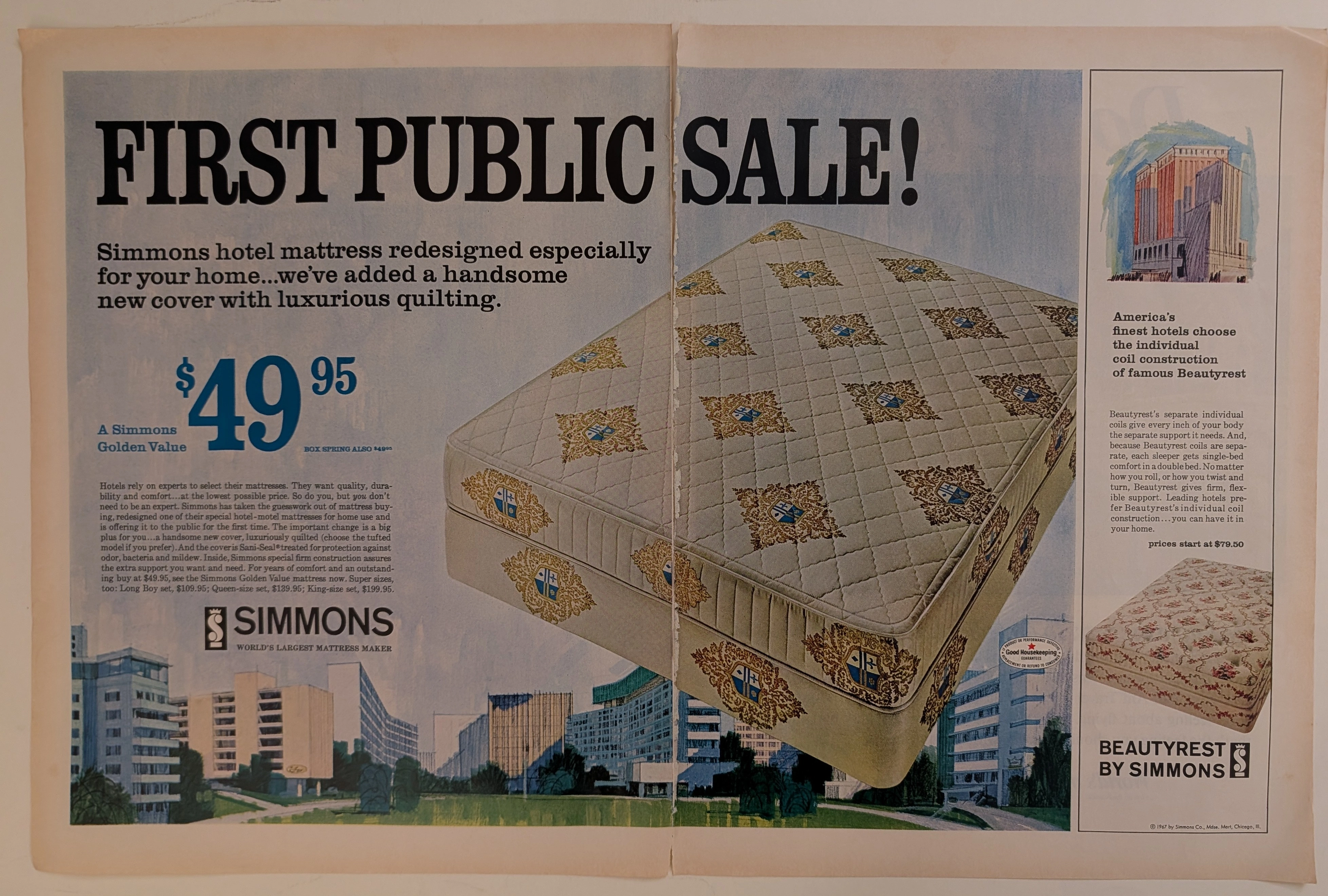
The evolution of the American domestic interior during the mid-twentieth century was heavily influenced by the golden age of travel and the rapid expansion of the luxury hospitality industry. The historical artifact elegantly secured upon the analytical table of The Record Institute today is a large-format, two-page centerfold print advertisement for the Simmons Mattress Company, copyrighted in 1967. This document transcends standard consumer goods marketing; it operates as a sophisticated sociological mirror, reflecting a highly specific moment when industrial sleep engineering and the aspirational luxury of the modern hotel were explicitly packaged and sold to the suburban American household. This world-class, comprehensive dossier conducts a meticulous, profound, and historically objective examination of the artifact, operating under the absolute most rigorous parameters of sociological and material science evaluation. We will decode the brilliant marketing psychology embedded within the "First Public Sale" messaging, analyze the iconic "Good Housekeeping" endorsement, and dissect the rich semiotics of the heraldic quilt patterns alongside the modernist architectural illustrations. Furthermore, as we venture deeply into the chemical and physical foundations of this analog printed ephemera, we will reveal the precise mechanical fingerprints of the CMYK halftone rosettes and the graceful, natural oxidation of the paper substrate. This precise intersection of visual nostalgia, mid-century commercial artistry, and the immutable chemistry of time cultivates a serene wabi-sabi aesthetic—a natural, irreversible phenomenon that serves as the primary engine driving up its market value exponentially within the elite global spheres of Vintage Commercial Ephemera and Mid-Century Lifestyle Archives collecting.
Zippo · Tobacco
The Time Traveller's Dossier: The Archive of the Immortal Flame – The 1968 Zippo "7 Beautiful Ways" Advertisement
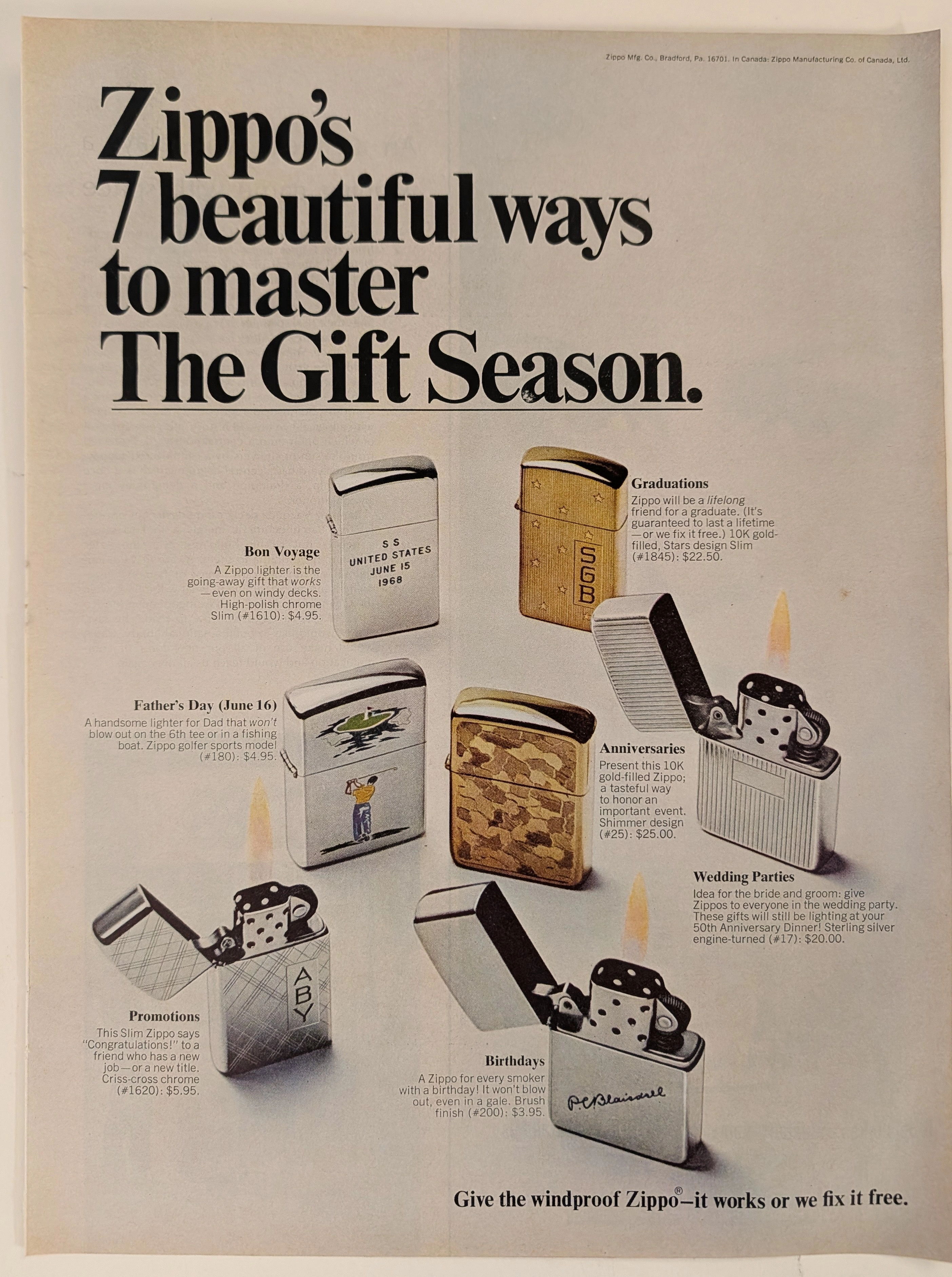
The act of creating fire is a profound symbol of mankind's mastery over nature and the mechanical authority we hold over physical elements. The historical artifact elegantly placed upon the examination table of The Record Institute today is a full-page print advertisement for Zippo from 1968, presented under the campaign "7 beautiful ways to master The Gift Season." This document transcends conventional marketing; it is a flawless psychological projection of the mid-twentieth-century American Dream, encapsulated in metal and backed by a lifetime guarantee. This world-class archival dossier will conduct a meticulous and profound analysis of the artifact, operating under the most rigorous parameters of historical and material science evaluation. We will explore the brand's sophisticated market segmentation through seven occasion-specific lighter models, ranging from high-polish chrome to 10K gold-filled and Sterling Silver editions. Furthermore, we will delve into the magnitude of the legendary declaration, "it works or we fix it free," a promise that confidently challenges the passage of time. Advancing into the chemical foundations of this analog offset lithography, we will reveal the mechanical fingerprints of the halftone rosettes and the natural oxidation of the paper substrate. This precise intersection of metallurgical mechanics and the chemistry of time produces a serene wabi-sabi aesthetic—a phenomenon that serves as the primary engine driving up its market value exponentially within the elite global spheres of Vintage Tobacciana collecting.
THE TIME TRAVELER'S DOSSIER: THE AUTOMOTIVE ARISTOCRACY AND THE AESTHETICS OF RUIN
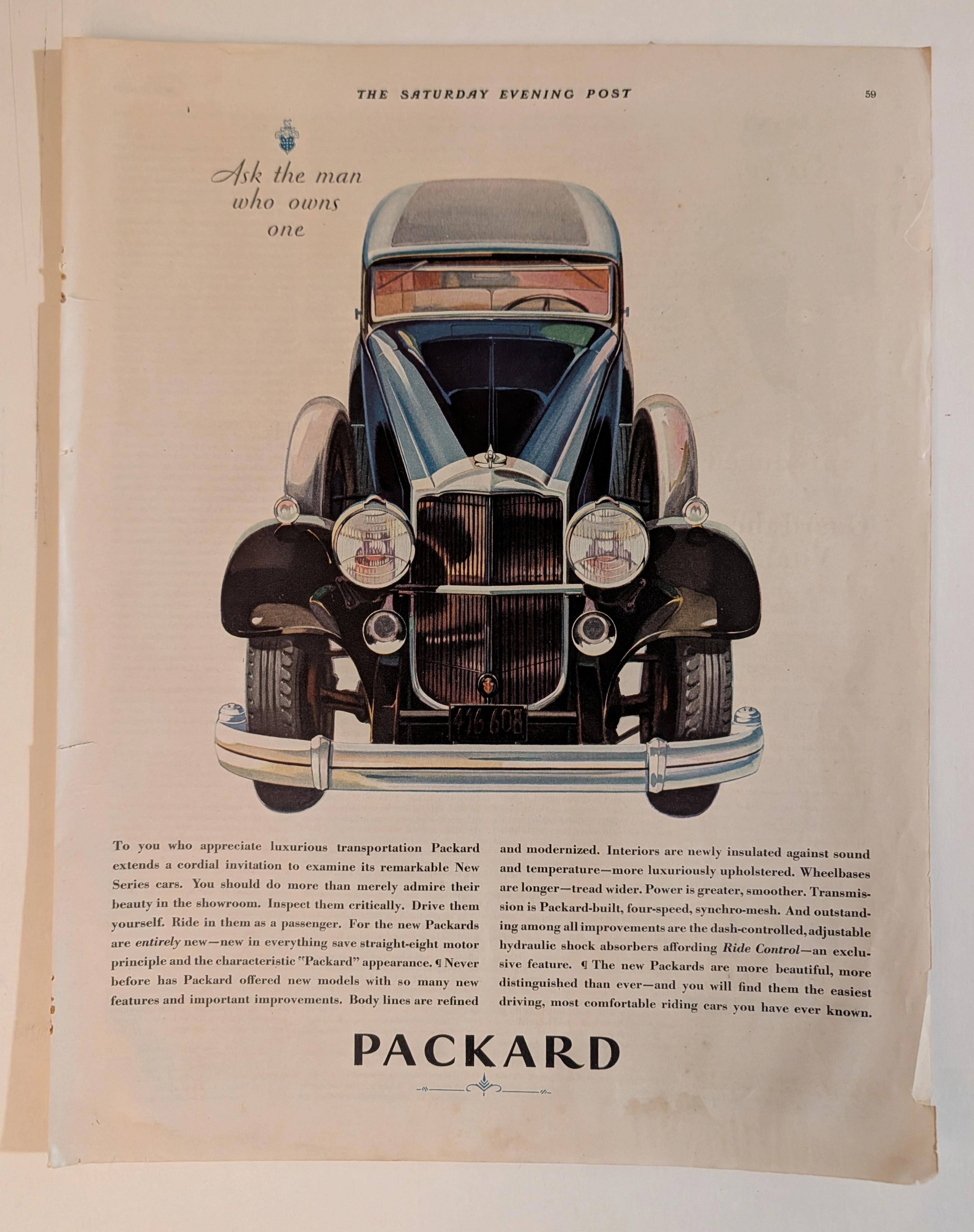
The artifact under rigorous, museum-grade analysis is an exceptionally preserved Historical Relic originating from the golden age of American automotive supremacy. Sourced from a vintage issue of The Saturday Evening Post, this Primary Art Document features a commanding, full-page advertisement for Packard, one of the most prestigious luxury automobile manufacturers in world history. Visually dominated by a striking, head-on illustration of a New Series Packard, the piece explicitly highlights the legendary corporate slogan: "Ask the man who owns one". Published during the turbulent economic landscape of the early 1930s Great Depression, this advertisement is a profound sociological marker. It boldly markets uncompromising luxury—boasting features like a four-speed synchro-mesh transmission and "Ride Control" shock absorbers—to an elite aristocracy largely insulated from the era's financial collapse. Physically, this pre-2000s analog artifact is a breathtaking embodiment of wabi-sabi. It exhibits a violently torn left binding edge, significant moisture blooming along the bottom margin, and deep amber lignin oxidation. This natural chemical and environmental degradation transforms a mass-produced commercial print into an irreplaceable, ready-to-frame Primary Art Document, forever capturing the magnificent mortality of the analog age.