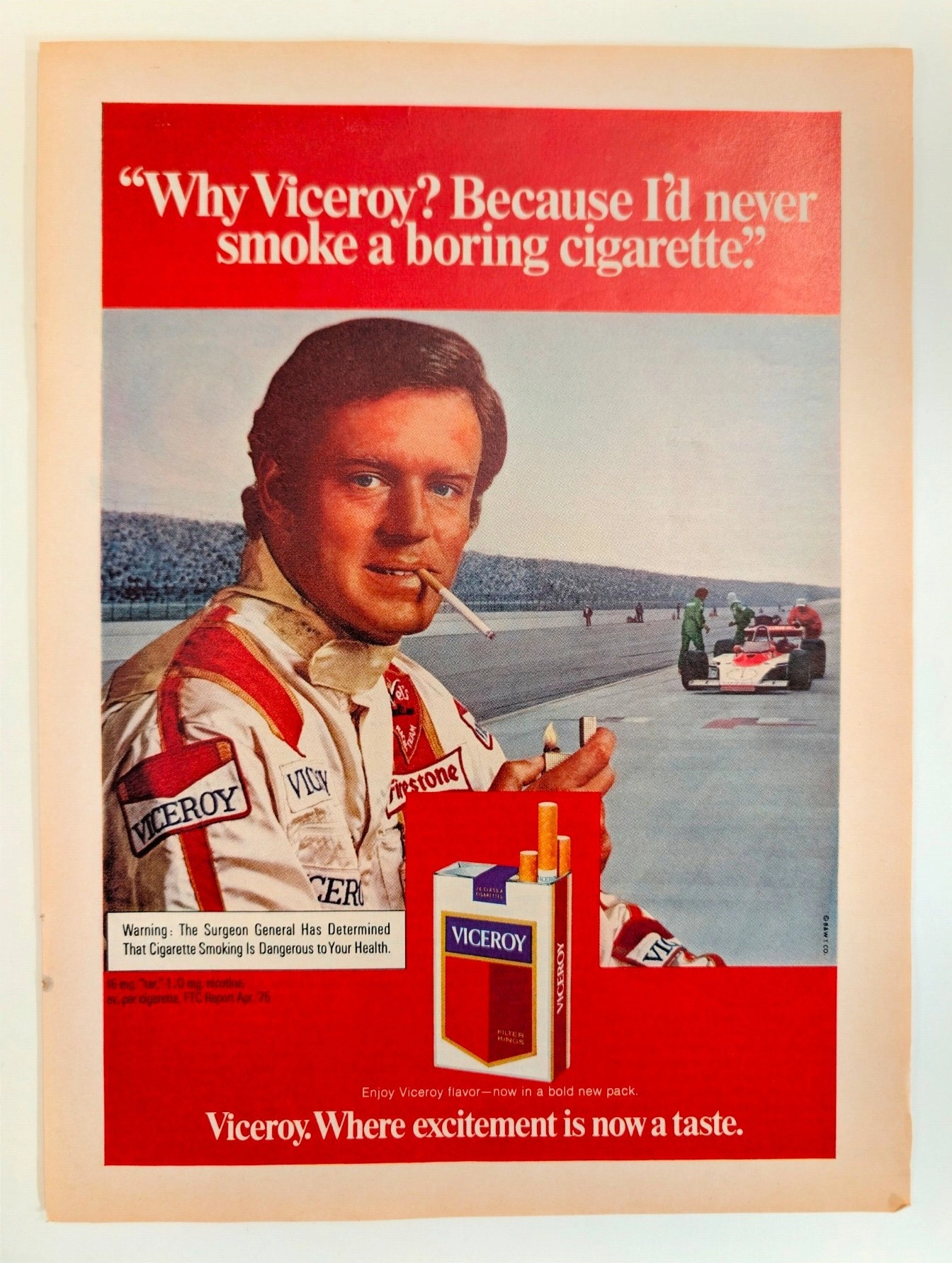
Viceroy: Al Unser and the "Taste of Excitement"
The History
Al Unser (Alfred Unser Sr.): An American racing legend and one of only four drivers to win the Indianapolis 500 four times. His presence in a racing suit featuring Viceroy and Firestone patches serves as a "Champion's Seal," guaranteeing a "Taste of Excitement" in an era where smoke and victory were inseparable.
This is a chronicle of the golden age of "Tobacco Sponsorship" in 1975, when cigarettes were the stars of the racing stage. The claim "I'd never smoke a boring cigarette" challenged consumer norms. Today, this ad series is considered a "forbidden artifact" due to strict tobacco control laws, making it increasingly rare in the vintage market.
Viceroy utilized a "Winning on Sunday" strategy, using the image of a top driver as a bridge to the product. The dominant vibrant red tones evoke intensity, speed, and rebellion. It communicates that smoking Viceroy isn't just a habit, but an entry into the ranks of a world-class winning team.
Iconic 70s Analog Finish: This piece features film photography with saturated colors and natural lighting. The layout, showing Al Unser's face alongside the "Bold New Pack," is a deliberate visual connection intended to make the brain associate success with this specific taste.
Exhibition Halls
The Archive Continues
Continue the Exploration
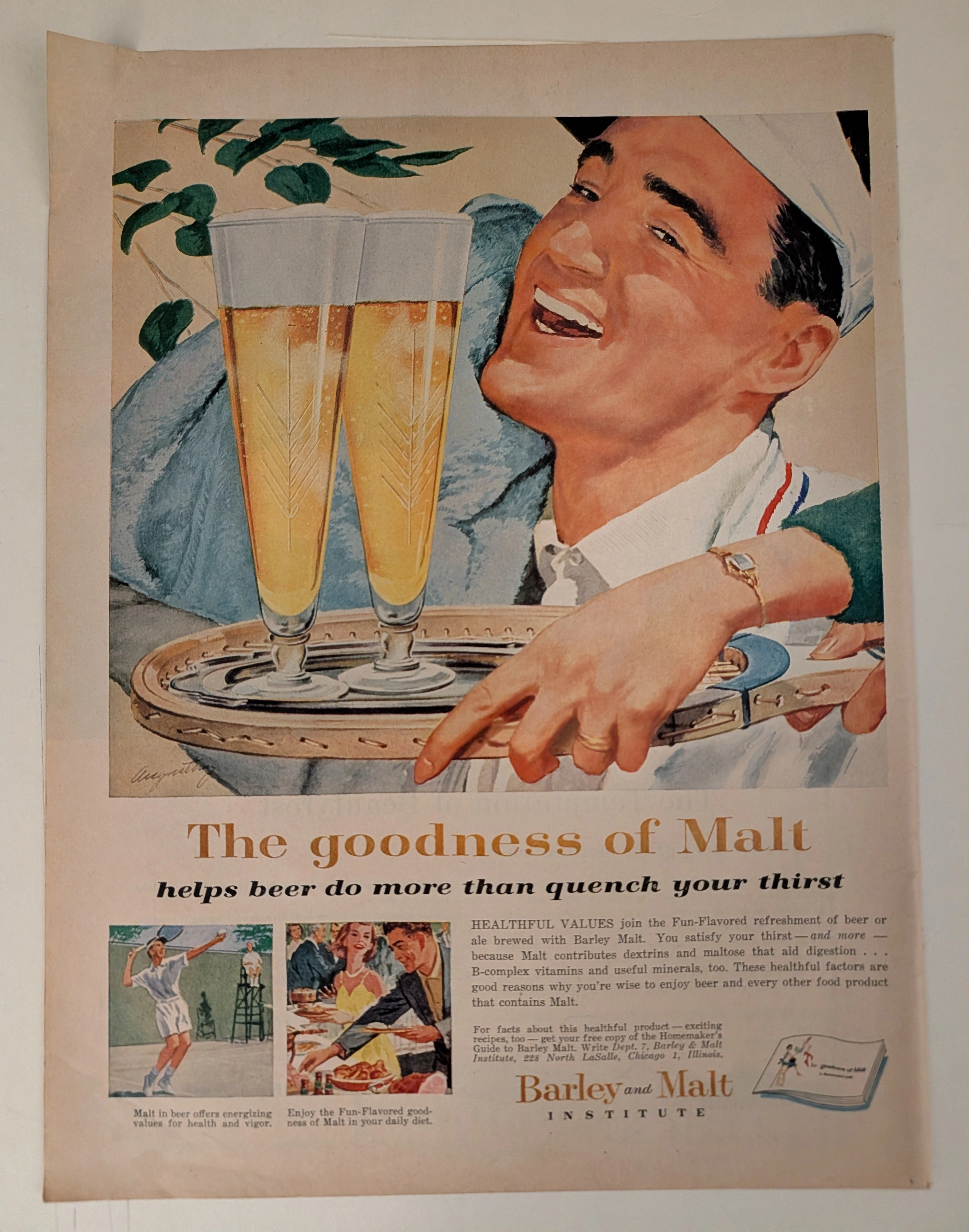
The Time Traveller's Dossier: How a 1959 Beer Ad Turned Alcohol into 'Health Food' – Barley and Malt Institute Advertisement
History is not written; it is printed. Before digital algorithms dictated human behavior, societal engineering was executed through the calculated geometry of the four-color offset press. The artifact before us is not merely an advertisement; it is a weaponized blueprint of middle-class aspiration. This museum-grade archival dossier presents an academic deconstruction of a 1959 print advertisement commissioned by the Barley and Malt Institute of Chicago. Operating on a profound binary structure, it documents a calculated paradigm shift within the American alcohol industry. It illustrates the precise historical fracture where beer was conceptually transitioned from a stigmatized working-class vice into a health-conscious staple of suburban domesticity. Through the lens of mid-century commercial artistry and precise visual forensics, this document serves as a masterclass in psychological marketing, establishing cultural tropes that unconditionally dominate modern pop culture and contemporary branding
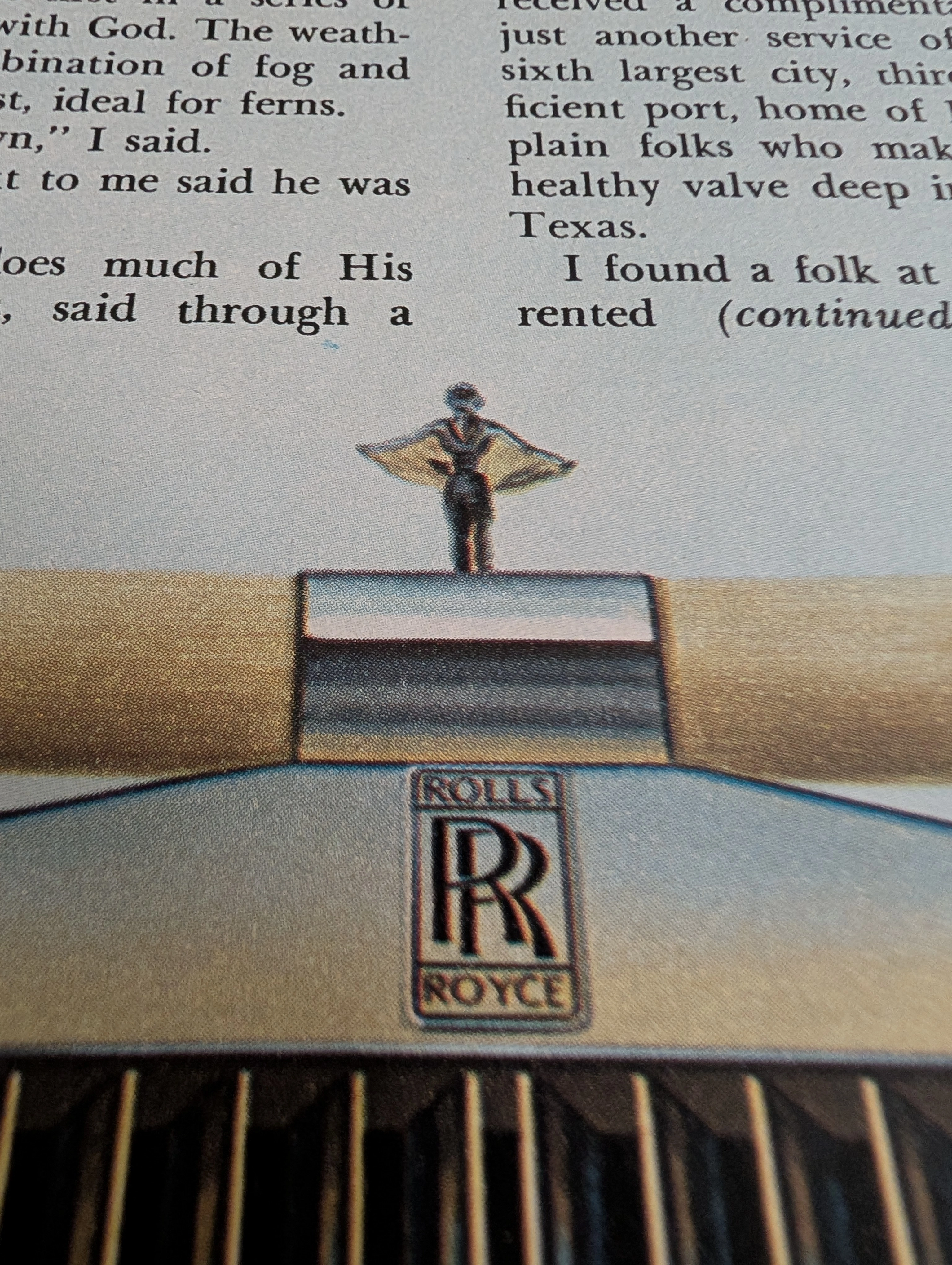
ROLL ROYCE · Automotive
The Time Traveller's Dossier: The Oil Baron's Chariot – 1970s "HOU$TON" Editorial Illustration
History is not written; it is printed. Before digital algorithms dictated human behavior, societal engineering was executed through the calculated geometry of the four-color offset press. The historical artifact before us is not merely a magazine editorial illustration; it is a weaponized blueprint of American myth-making and a testament to the era of unchecked petro-wealth. This museum-grade archival dossier presents an academic deconstruction of a 1970s print feature on Houston, Texas, brilliantly illustrated by the legendary Eraldo Carugati. Operating on a profound binary structure, it documents a calculated paradigm shift in the global perception of wealth. It illustrates the precise historical fracture where the "Texas Oil Boom" transitioned from a regional economic event into a larger-than-life cultural archetype. Through the lens of late-analog commercial artistry and precise visual forensics, this document serves as a masterclass in psychological semiotics, establishing the visual tropes of the brash, high-rolling American Wildcatter that unconditionally dominates modern pop culture.
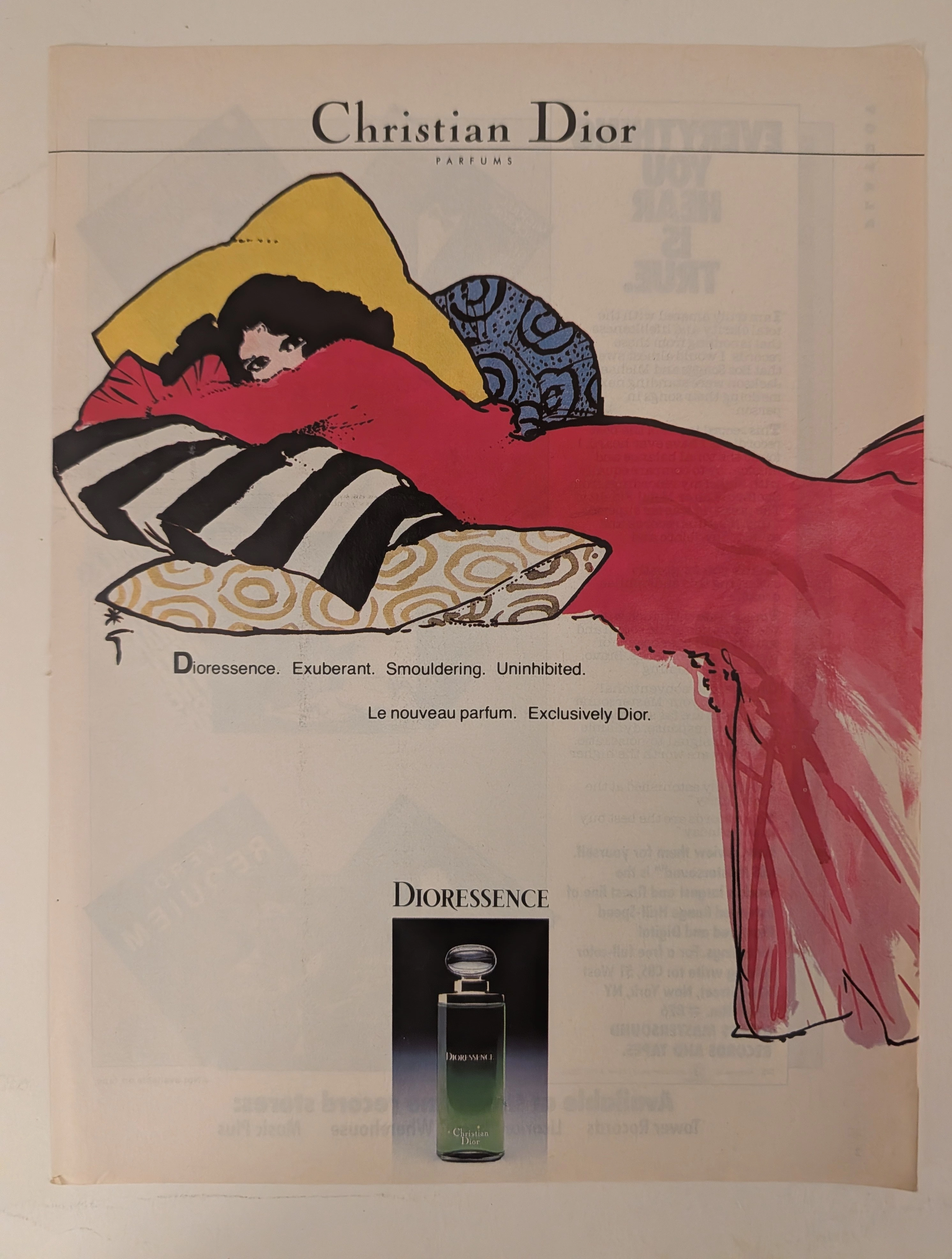
Christian Dior · Fashion
The Time Traveller's Dossier: The Stroke of Seduction – 1970s Christian Dior "Dioressence" Advertisement
History is not written; it is printed. Before digital algorithms dictated consumer desires, societal engineering was executed through the calculated geometry of the four-color offset press and the masterful stroke of an illustrator's brush. The historical artifact before us is not merely a fragrance advertisement; it is a weaponized blueprint of unapologetic female sensuality and a testament to the absolute zenith of French haute couture marketing. This museum-grade archival dossier presents an academic deconstruction of a vintage 1970s print advertisement for Christian Dior's "Dioressence" perfume. Operating on a profound binary structure, it documents a calculated paradigm shift within the global luxury fragrance industry. It illustrates the precise historical fracture where the polite, restrained elegance of post-war fashion transitioned into the bold, liberated, and sexually assertive era of the 1970s. Through the lens of late-analog commercial artistry—specifically the genius of René Gruau—and precise visual forensics, this document serves as a masterclass in psychological semiotics, establishing the visual tropes of the empowered, enigmatic woman that unconditionally dominate modern luxury branding.