The Time Traveller's Dossier: The Architect of the Great Society – Lyndon B. Johnson
The History
To fully appreciate the immense historical gravity, cultural magnitude, and sociological importance of this artifact, one must meticulously contextualize the extraordinary trajectory of Lyndon Baines Johnson (LBJ) and the nation he was called upon to lead during a period of profound mourning and necessary healing. The narrative of this portrait is inextricably linked to one of the most somber days of the American twentieth century: November 22, 1963. Thrust into the highest office in the land under tragic circumstances, Johnson inherited a nation that required immediate stability and reassurance. Beneath the solemnity of his accession lay one of the most formidable, highly pragmatic, and effective political minds in the history of the Republic.
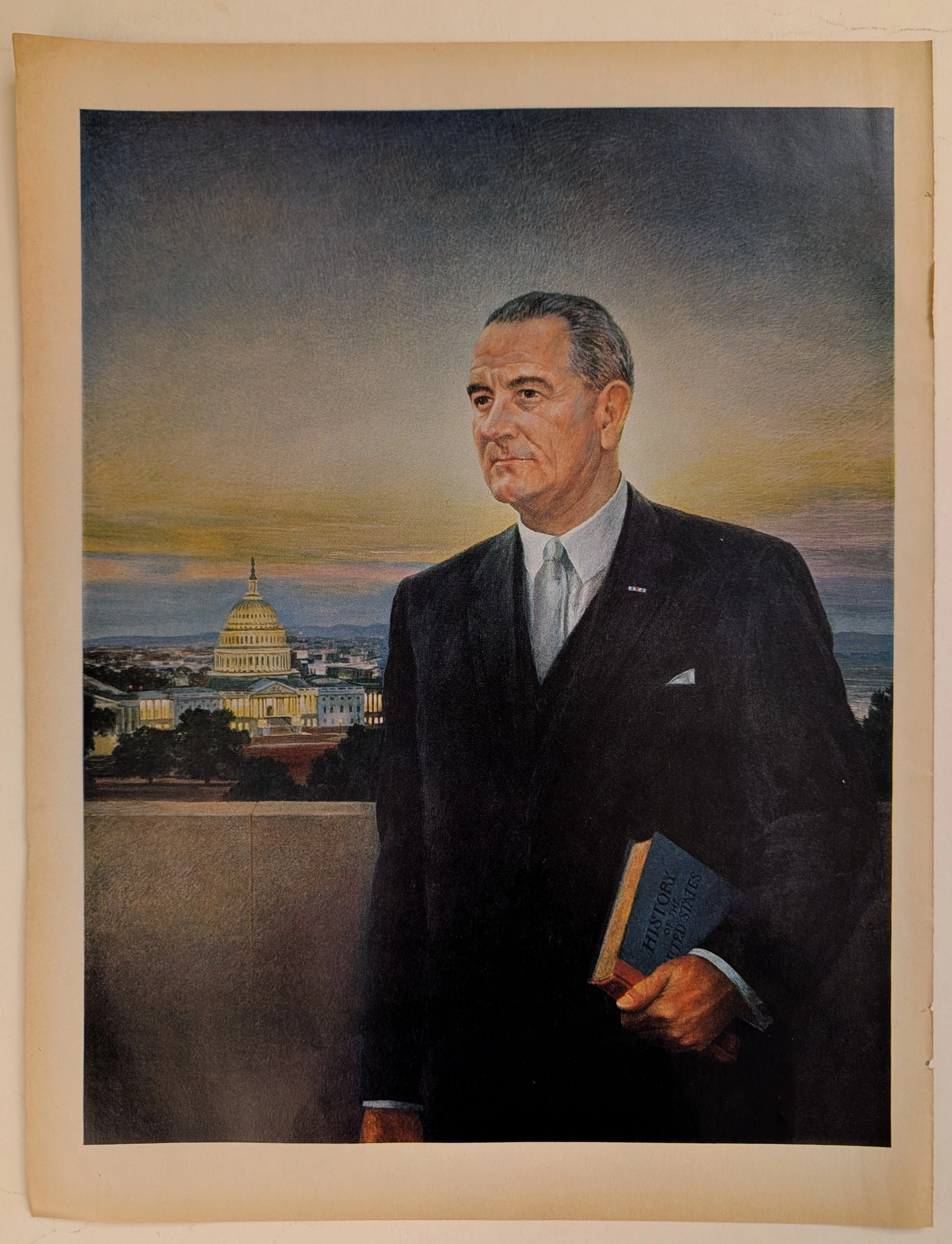
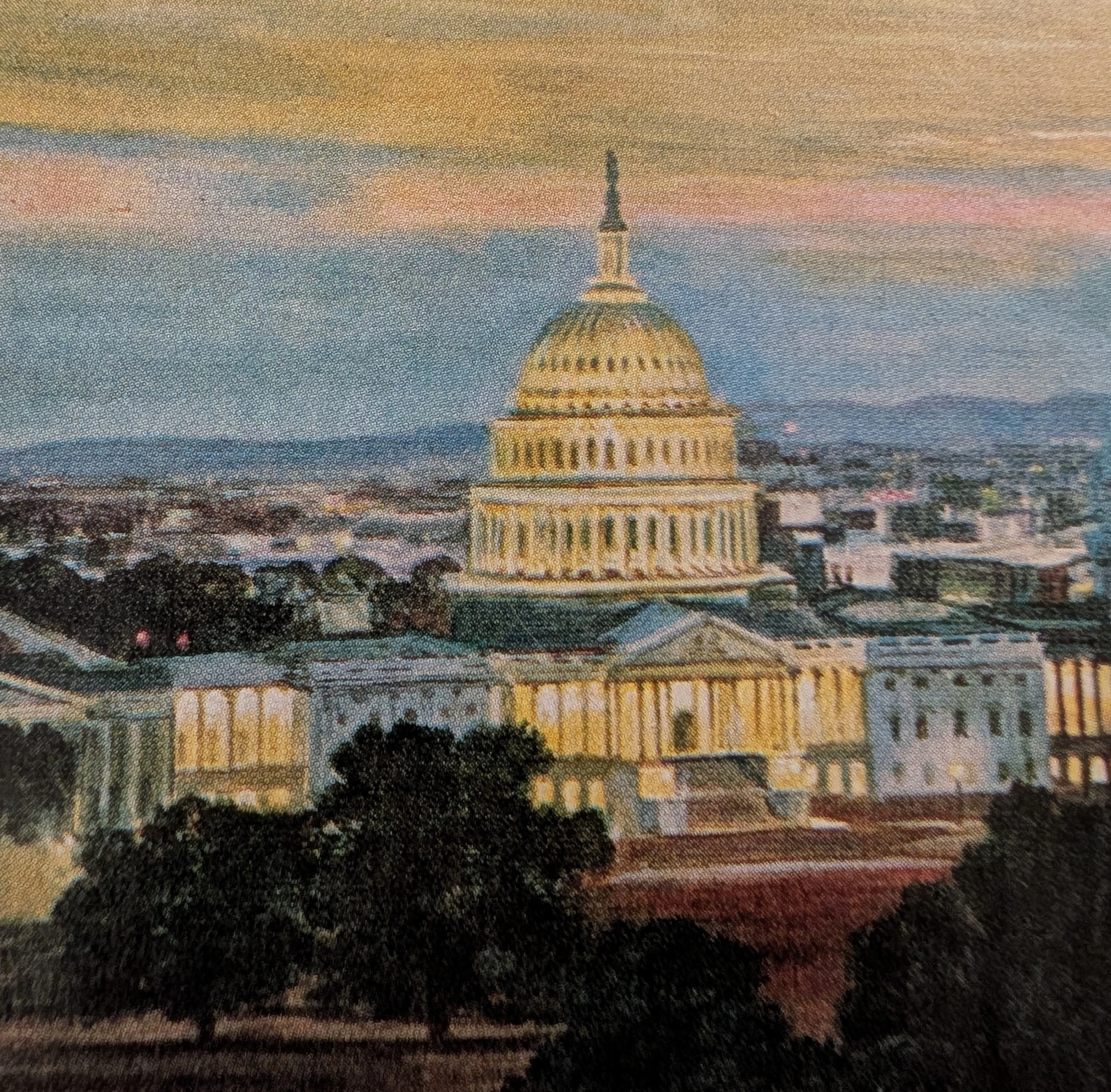
The visual composition of this artifact is a deliberate, masterful orchestration of political iconography. Johnson is positioned prominently in the foreground, his gaze fixed not on the viewer, but on a distant horizon, projecting the resolute foresight and steady contemplation required of a global leader. Behind him, bathed in the ethereal, hopeful light of a breaking dawn, stands the United States Capitol dome. This is not merely a patriotic backdrop; it is a profound declaration of his foundational domain and expertise. Before assuming the presidency, LBJ was universally acknowledged as the "Master of the Senate." He served as the Senate Majority Leader with unparalleled legislative genius. He was famous for the "Johnson Treatment"—a highly persuasive and influential method of negotiation involving a mix of personal charm, deep institutional knowledge, and formidable political leverage used to build consensus. Placing the Capitol directly behind his right shoulder symbolizes that his executive success was fundamentally rooted in his unmatched mastery of the legislative branch.
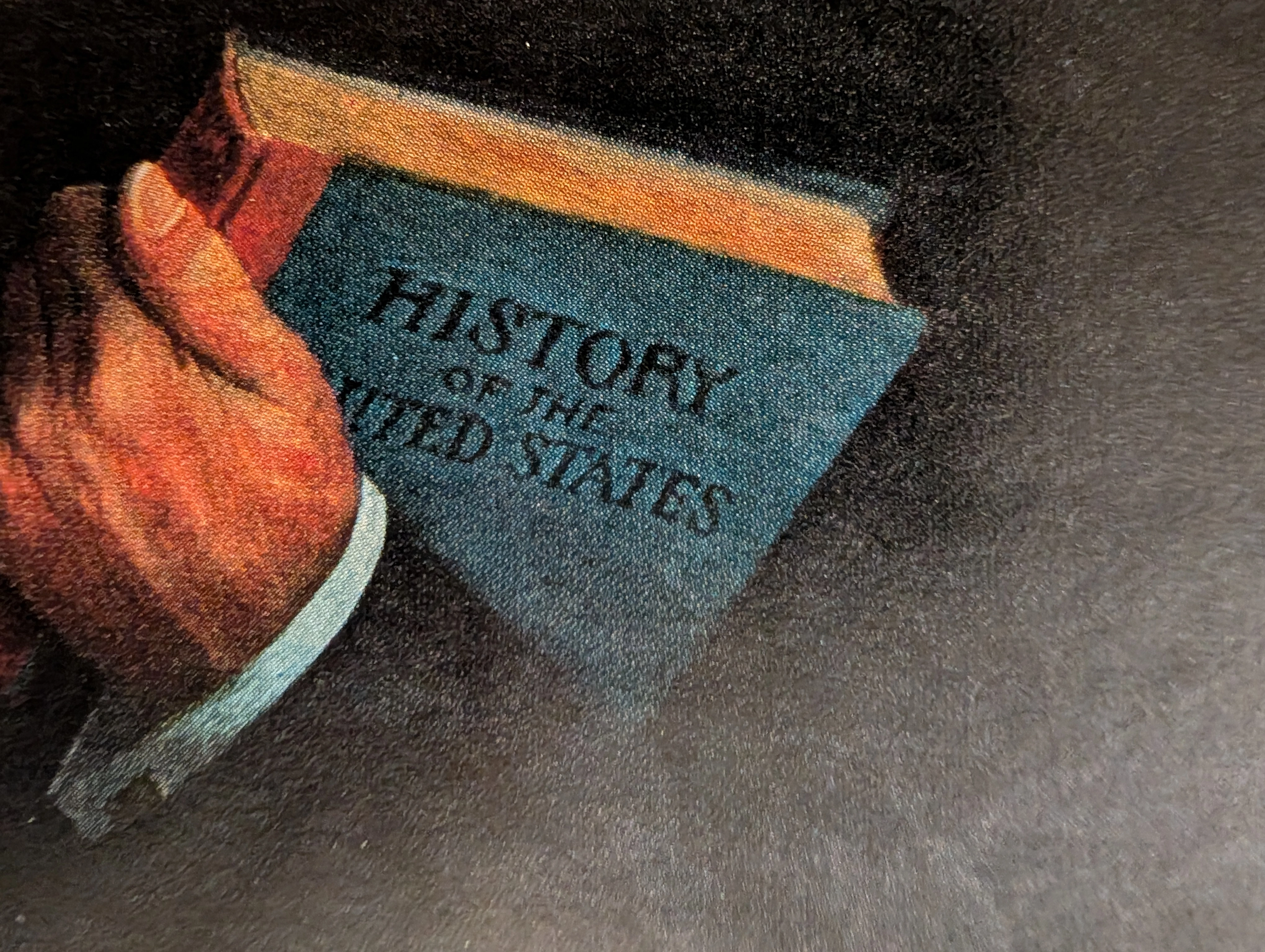
In his left hand, resting with an air of profound authority and stewardship, Johnson grasps a thick, blue, cloth-bound volume titled "HISTORY OF THE UNITED STATES". This specific semiotic choice is the absolute historical crux of the artifact. Lyndon Johnson was a leader deeply invested in the long-term impact of his administration on the welfare of the American people. He possessed a profound desire to expand upon the domestic achievements of his predecessor and mentor, Franklin D. Roosevelt. The book signifies his unwavering commitment to authoring a monumental chapter of progress in the American narrative.
He pursued this vision with historic legislative momentum. Leveraging the national consensus following his sweeping victory in the 1964 election, Johnson unveiled "The Great Society." This represented the most ambitious slate of domestic legislation since the New Deal, aimed at eliminating poverty and racial injustice. With breathtaking legislative skill, he secured the passage of the Civil Rights Act of 1964, a landmark achievement that legally dismantled institutional segregation. He followed this with the Voting Rights Act of 1965, a monumental triumph that protected the enfranchisement of millions of African Americans. Furthermore, he established Medicare and Medicaid, ensuring essential healthcare access for the elderly and the economically disadvantaged, and launched the "War on Poverty," fundamentally expanding the American social safety net. When he holds the "History of the United States" in this portrait, he is symbolically holding the very fabric of the more equitable society he was striving to build.
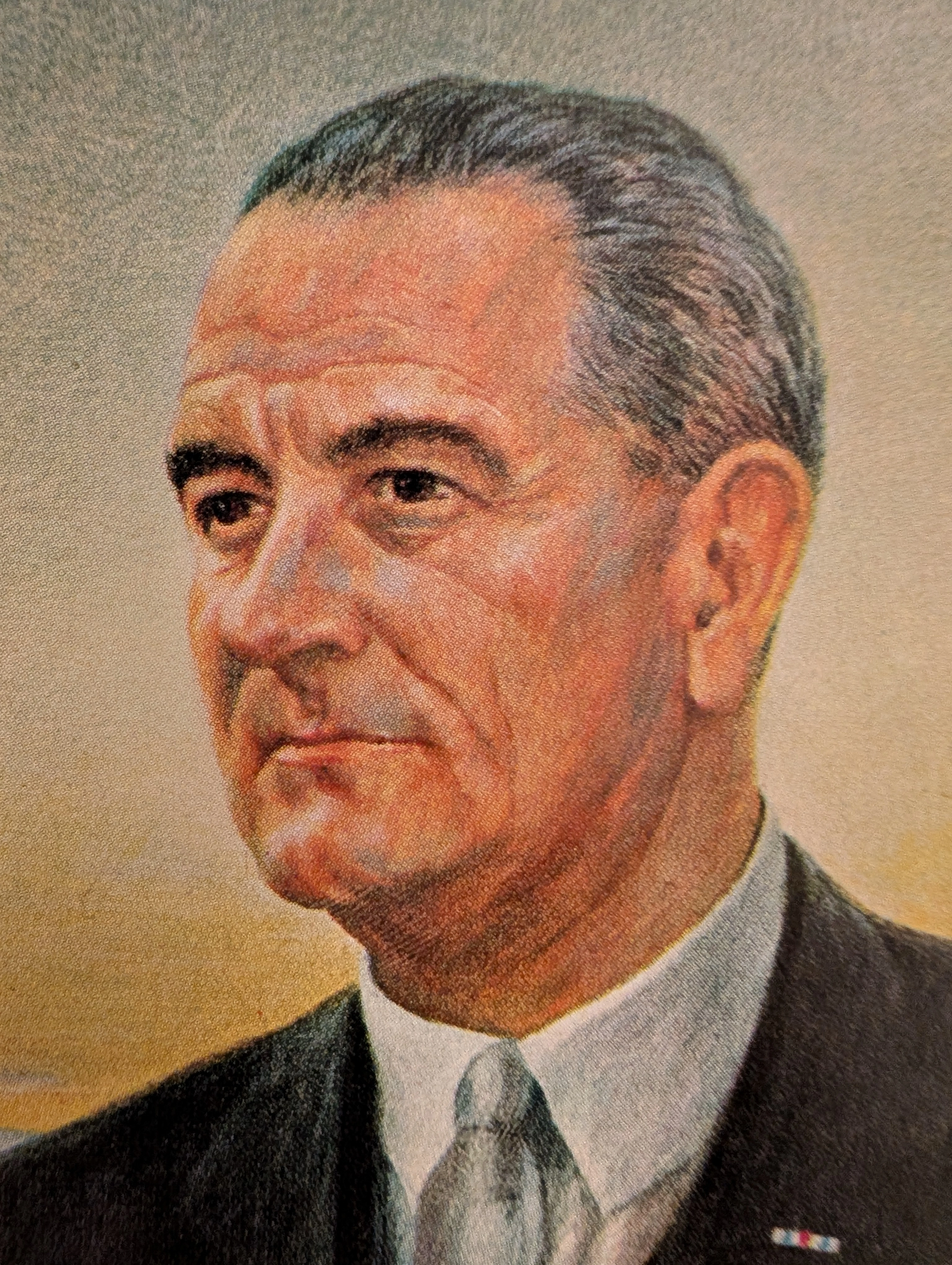
However, the detailed lines etched into his face by the illustrator also convey the immense weight of the presidency and the parallel challenges his administration faced on the global stage. The twilight sky in the background serves as a reflection of the complex international obligations of the era, most notably the Vietnam War. Guided by the established Cold War doctrine of containment, Johnson oversaw the systematic escalation of American involvement in Southeast Asia. This commitment evolved into a protracted and highly complex conflict that required vast military and financial resources.
The geopolitical realities of the Vietnam era initiated a period of intense national introspection and civic debate within the United States. The immense financial requirements of the international conflict inevitably competed for funding with his visionary Great Society domestic programs. The president, who had set out with the ultimate goal of domestic unification and social uplift, found his administration navigating profound domestic disagreements and widespread public demonstrations. The psychological toll of balancing historic advancements in civil rights with the responsibilities of a deeply challenging overseas conflict was immense. In March 1968, amidst a divided political landscape, Johnson made the historic and stabilizing decision to announce he would not seek re-election, prioritizing national unity over personal political continuation.
Therefore, this portrait operates as a profound and multi-dimensional historical document. The small lapel pin he wears—the Silver Star, awarded for his service during World War II—speaks to his connection with military service and national duty. He stands as a towering statesman of the twentieth century, holding the history book representing his monumental domestic achievements, while the subtle lighting reflects the complex global responsibilities that ultimately defined his era in the Oval Office.
The Paper
As a physical entity, this printed artifact functions as a living, breathing, and profound record of mid-twentieth-century graphic reproduction and substrate chemistry. Under exceptional macro-lens examination, this document reveals the stunning complexity and mathematical precision of analog color printing. The intricate, textured rendering of Johnson's facial features, the golden architectural lighting spilling across the columns of the Capitol building, and the sharp, embossed-style typography on the cover of the "HISTORY OF THE UNITED STATES" book are all meticulously constructed from a precise, mathematically rigorous galaxy of halftone rosettes. This intricate pattern constitutes the mechanical fingerprint of the pre-digital analog offset printing press. Microscopic, varying sizes of Cyan, Magenta, Yellow, and Key (Black) ink dots are elegantly and systematically layered at specific angles to trick the human eye and the biological visual cortex into perceiving continuous, vibrant, and dimensional photographic and illustrative reality.
Yet, the most profound and impactful factor elevating the immense value of this artifact in the contemporary collector's market is the natural, organic, and entirely irreversible process of Material Degradation. The expansive margins and the overall paper substrate exhibit a genuine, unavoidable, and entirely unforgeable "Toning." This gradual, graceful transition from the original bright, bleached manufactured paper to a warm, antique ivory and golden hue is caused by the slow chemical oxidation of Lignin—the complex organic polymer that binds cellulose fibers together within the raw wood pulp of the paper. As the substrate is exposed to ambient oxygen and ultraviolet light over a span of decades, the molecular structure of the lignin gracefully and systematically breaks down. This accumulation of time, this naturally evolving patina, represents the absolute core of the wabi-sabi aesthetic. The profound appreciation for the beauty found in natural aging, impermanence, and the physical manifestation of history upon a fragile medium is an irreversible chemical reaction. It is precisely this authentic, unreplicable degradation that acts as the primary engine driving up its market value exponentially among elite collectors, as it provides the ultimate, irrefutable proof of the artifact's historical authenticity and its magnificent journey through time.
The Rarity
RARITY CLASS: S (Historic Presidential Ephemera / Exceptional Archival State)
Evaluated under the most exacting, rigorous, and uncompromising archival parameters, this artifact is definitively and securely designated as Class S.
The remarkable and defining paradox of mid-century political ephemera is that these specific documents were often produced in significant numbers for campaigns, commemorative events, or institutional distribution. They were inherently destined by their very nature to be tacked to bulletin boards, exposed to harsh office lighting, folded into archives, and ultimately phased out as political administrations transitioned. For a large-format political lithograph to survive entirely intact since the 1960s without catastrophic structural tearing, without destructive moisture staining, or without the fading of the delicate, light-sensitive halftone inks constitutes a highly significant statistical archival anomaly.
The impeccable structural integrity of this paper, combined with the immense historical weight of the Lyndon B. Johnson presidency, elevates the desirability of this document far beyond standard political collectibles. The completely even, uniform lignin oxidation framing the portrait acts as a perfect, natural matting, enhancing its aesthetic dignity. It makes it a highly prized, museum-worthy piece of American history. It is ardently sought after by global curators, political historians, and private archivists to ensure its historical permanence through acid-free, UV-protected conservation framing.
Visual Impact
The aesthetic brilliance and psychological power of this artifact lie in its masterful execution of "Monumental Statesman Staging." The artist has intentionally manipulated the scale and perspective to elevate LBJ to a figure of dignified, historic proportions, befitting the office he held.
The low vantage point encourages the viewer to look up at the President, instilling an immediate sense of leadership and respect. His dark, impeccably tailored suit provides a massive anchor of visual weight, contrasting beautifully with the ethereal, glowing pastel hues of the Washington D.C. skyline behind him. The lighting is remarkably sophisticated; a warm, golden glow illuminates his face and hands, highlighting the profound wisdom and experience in his expression and drawing the eye directly to the history book he grips so firmly. This is not merely a portrait of a man at work; it is an allegorical painting of a leader holding stewardship over his era, forever immortalized between the triumphs of his domestic policies and the responsibilities of the global stage.
Exhibition Halls
The Archive Continues
Continue the Exploration
THE TIME TRAVELER'S DOSSIER: THE FLAVOR OF AUTHENTICITY AND THE PROPHET OF CAPITALISM
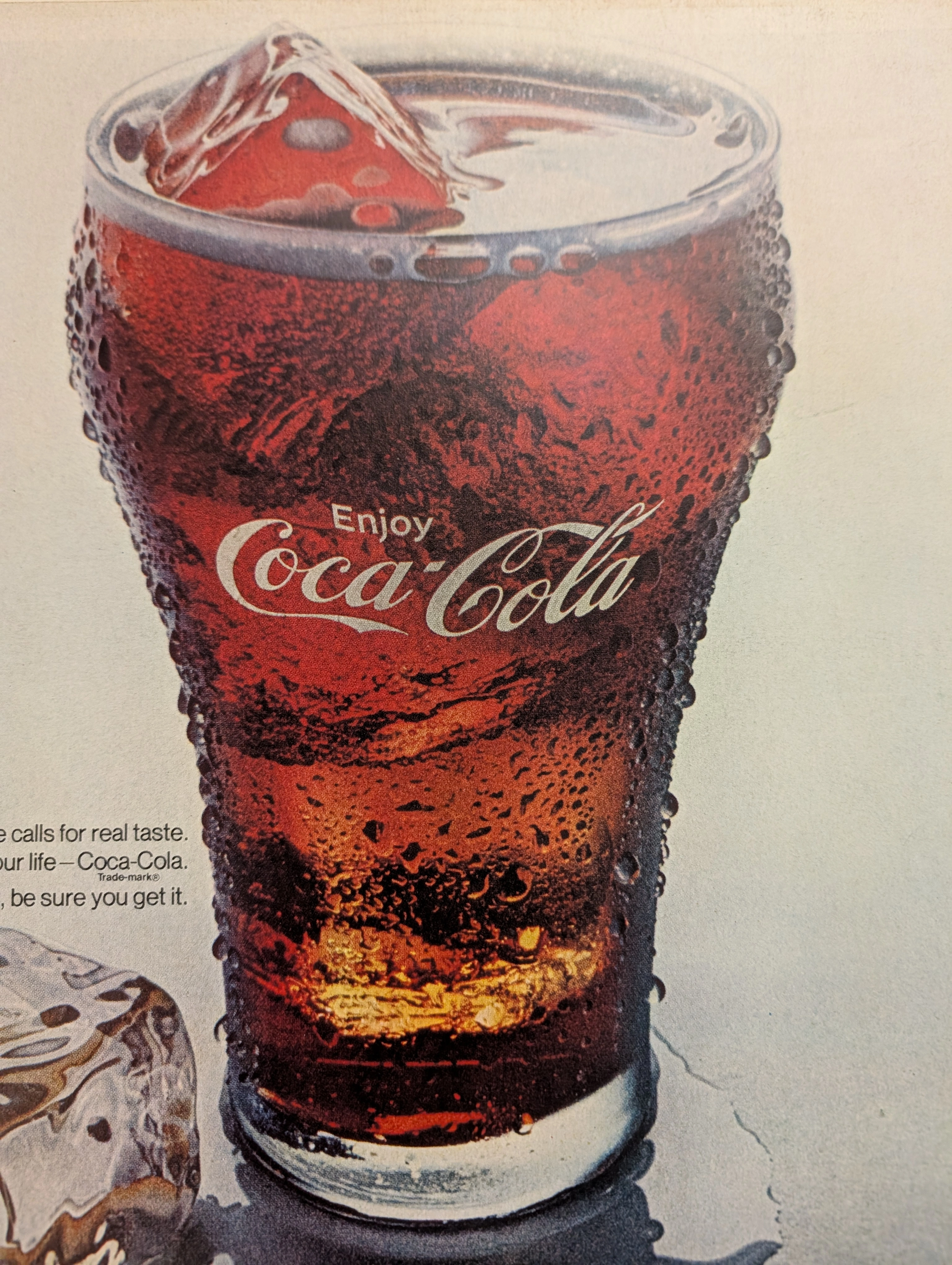
The artifact under uncompromising, museum-grade analysis is a flawlessly preserved Historical Relic originating from the cultural epicenter of 1970. This Primary Art Document is a monumental, full-page advertisement for Coca-Cola, officially copyrighted in 1970. It serves as the definitive visual anchor for one of the most legendary and heavily studied marketing campaigns in human history: "It's the real thing." This is not a mere beverage promotion; it is a profound sociological masterstroke. Emerging at the dawn of the 1970s—an era defined by counter-culture, political disillusionment, and a search for genuine meaning—Coca-Cola aggressively positioned its product as the ultimate, unassailable anchor of authenticity. The commanding copywriting, "Real life calls for real taste... When you ask for it, be sure you get it", is a psychological directive urging consumers to reject artificiality. Visually, the artifact is a triumph of mid-century hyper-realism. The towering glass, weeping with visceral, tactile condensation, and the monolithic block typography elevate a 15-cent soda to the status of an absolute cultural leviathan. Rescued from the inevitable oblivion of disposable mass media and preserved as a standalone Archival Artifact, the inherently acidic analog paper is undergoing a majestic chemical degradation. It exhibits a beautiful, warm patina, with natural biological oxidation softening the iconic red "Enjoy Coca-Cola" emblem. This unstoppable molecular death transforms a piece of mass-produced corporate propaganda into an irreplaceable, ready-to-frame Primary Art Document of American pop-art history.

Zippo · Tobacco
The Time Traveller's Dossier: The Archive of the Immortal Flame – The 1968 Zippo "7 Beautiful Ways" Advertisement
The act of creating fire is a profound symbol of mankind's mastery over nature and the mechanical authority we hold over physical elements. The historical artifact elegantly placed upon the examination table of The Record Institute today is a full-page print advertisement for Zippo from 1968, presented under the campaign "7 beautiful ways to master The Gift Season." This document transcends conventional marketing; it is a flawless psychological projection of the mid-twentieth-century American Dream, encapsulated in metal and backed by a lifetime guarantee. This world-class archival dossier will conduct a meticulous and profound analysis of the artifact, operating under the most rigorous parameters of historical and material science evaluation. We will explore the brand's sophisticated market segmentation through seven occasion-specific lighter models, ranging from high-polish chrome to 10K gold-filled and Sterling Silver editions. Furthermore, we will delve into the magnitude of the legendary declaration, "it works or we fix it free," a promise that confidently challenges the passage of time. Advancing into the chemical foundations of this analog offset lithography, we will reveal the mechanical fingerprints of the halftone rosettes and the natural oxidation of the paper substrate. This precise intersection of metallurgical mechanics and the chemistry of time produces a serene wabi-sabi aesthetic—a phenomenon that serves as the primary engine driving up its market value exponentially within the elite global spheres of Vintage Tobacciana collecting.
Ballantine · Beverage
The Time Traveller's Dossier: The Martial Authority of the Brew – An Academic Archival Analysis of the 1968 Ballantine Ale Advertisement
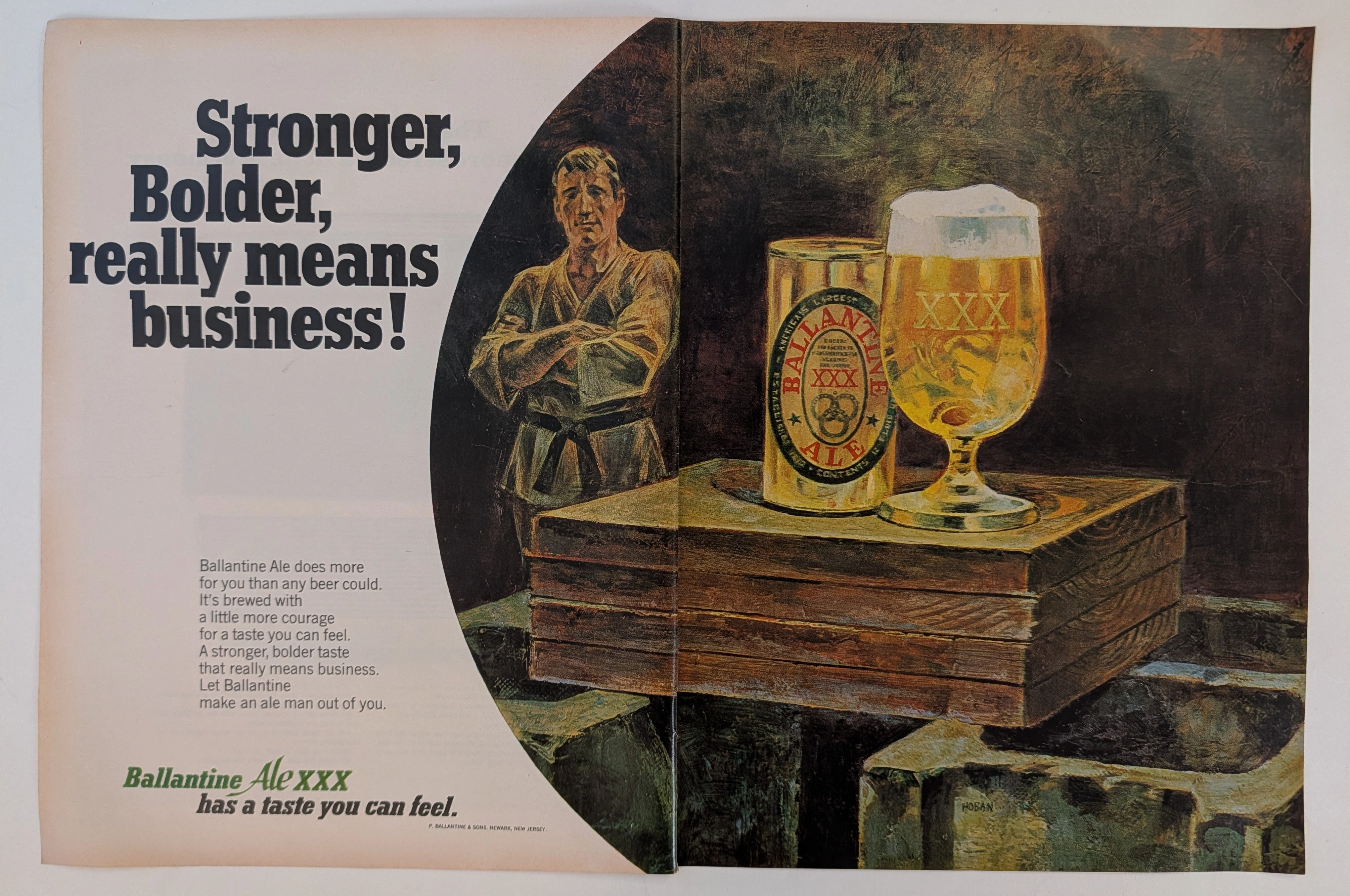
The cultivation of brand identity through visual symbolism is a profound psychological discipline, acting as a mirror to the cultural aspirations of its era. The historical artifact elegantly positioned upon the analytical table of The Record Institute today is a majestic two-page print advertisement for Ballantine Ale, originating from approximately 1968. This document completely transcends the boundaries of conventional beverage promotion; it stands as a masterclass in the semiotics of mid-twentieth-century American masculinity. By seamlessly aligning the consumption of a traditional ale with the disciplined, formidable imagery of a martial arts master, the advertisement constructs a compelling narrative of strength, boldness, and unyielding character. This world-class, comprehensive academic archival dossier will conduct a meticulous and deep examination of the artifact, operating under the most rigorous parameters of historical and material science evaluation. We will decode the strategic copywriting that challenges the consumer to embrace a "stronger, bolder taste," and illuminate the profound historical lineage of the P. Ballantine & Sons brewing empire. Furthermore, as we venture into the chemical and physical foundations of this analog offset lithography, we will reveal the mechanical fingerprints of the halftone rosettes and the graceful, natural oxidation of the paper substrate. This precise intersection of visual nostalgia, mid-century commercial artistry, and the chemistry of time cultivates a serene wabi-sabi aesthetic—a natural phenomenon that serves as the primary engine driving up its market value exponentially within the elite global spheres of Vintage Breweriana collecting.