THE TIME TRAVELER'S DOSSIER: HOLLYWOOD PROPAGANDA AND THE DAWN OF MULTIMEDIA SYNERGY
The History
The Cold War Context, the American Hero, Bette Davis, and Corporate Synergy ]
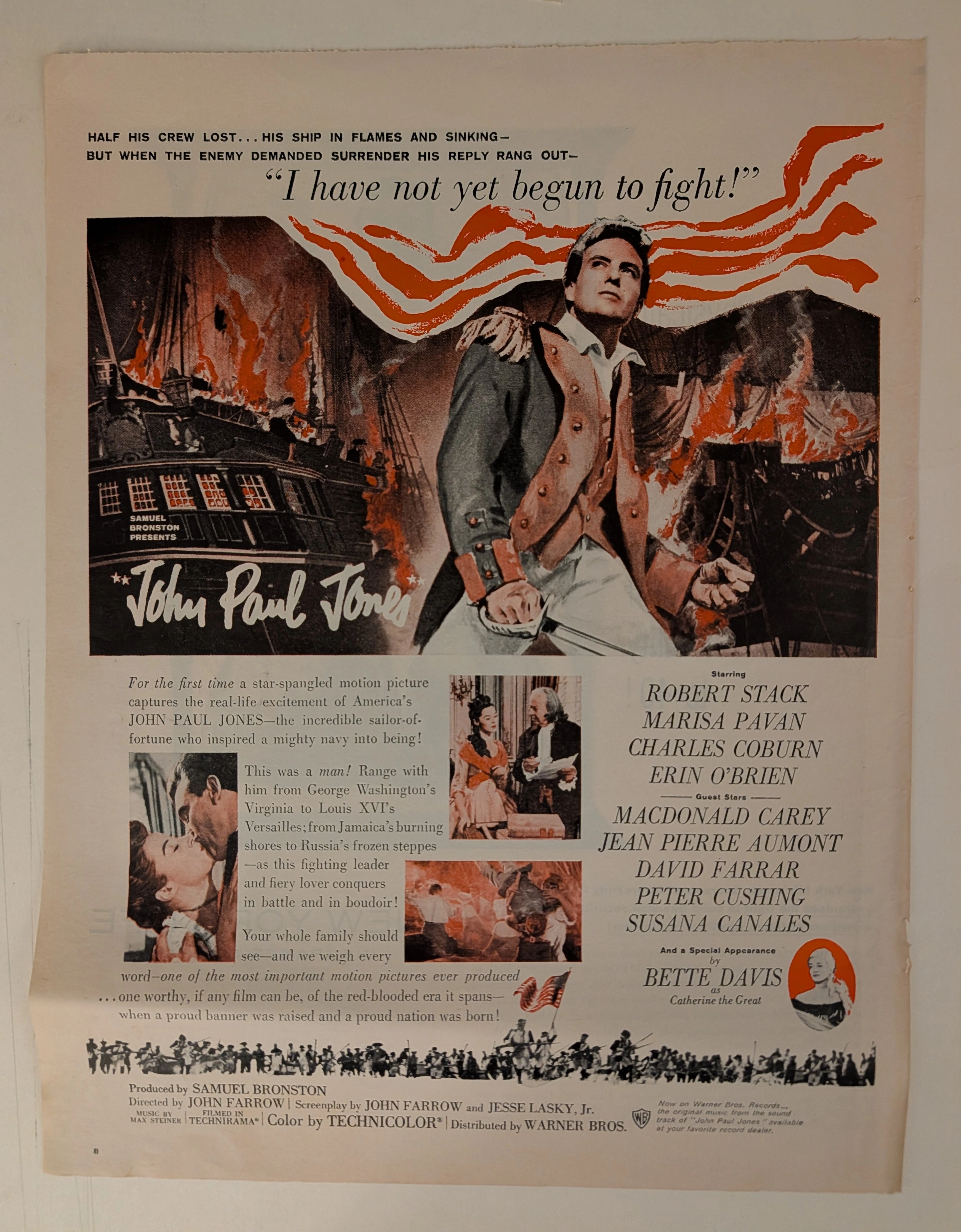
As the Chief Curator of The Record, the uncompromising guardian of analog history, I welcome you to the absolute, pulsating epicenter of mid-century Hollywood's golden age of epic filmmaking. The impeccably preserved Historical Relic that lies before you is not a mere, soulless vintage movie advertisement designed to sell theater tickets. It is a forensic "Sociological Blueprint of Cold War Nationalism," meticulously engineered in 1959 to explicitly define American exceptionalism on a global stage. This Primary Art Document serves as the formidable visual anchor for the theatrical release of "John Paul Jones", a sprawling historical epic produced by the legendary independent mogul Samuel Bronston.
To fully decode the immense, staggering gravity of this artifact, you must entirely immerse yourself in the volatile geopolitical landscape of 1959. The Cold War between the United States and the Soviet Union was at a terrifying, paralyzing climax. America desperately required mythological heroes to unify its populace, and Hollywood dutifully responded by immortalizing the "Father of the American Navy." The Visual Architecture of this document is explicitly designed to strike the viewer's soul. The bold, blood-red, sweeping typography—"I have not yet begun to fight!"—is not merely a historical quote shouted from a burning ship. It was a highly calculated, aggressive geopolitical message sent by Hollywood and the U.S. establishment directly to the communist bloc, projecting absolute, unyielding American defiance.
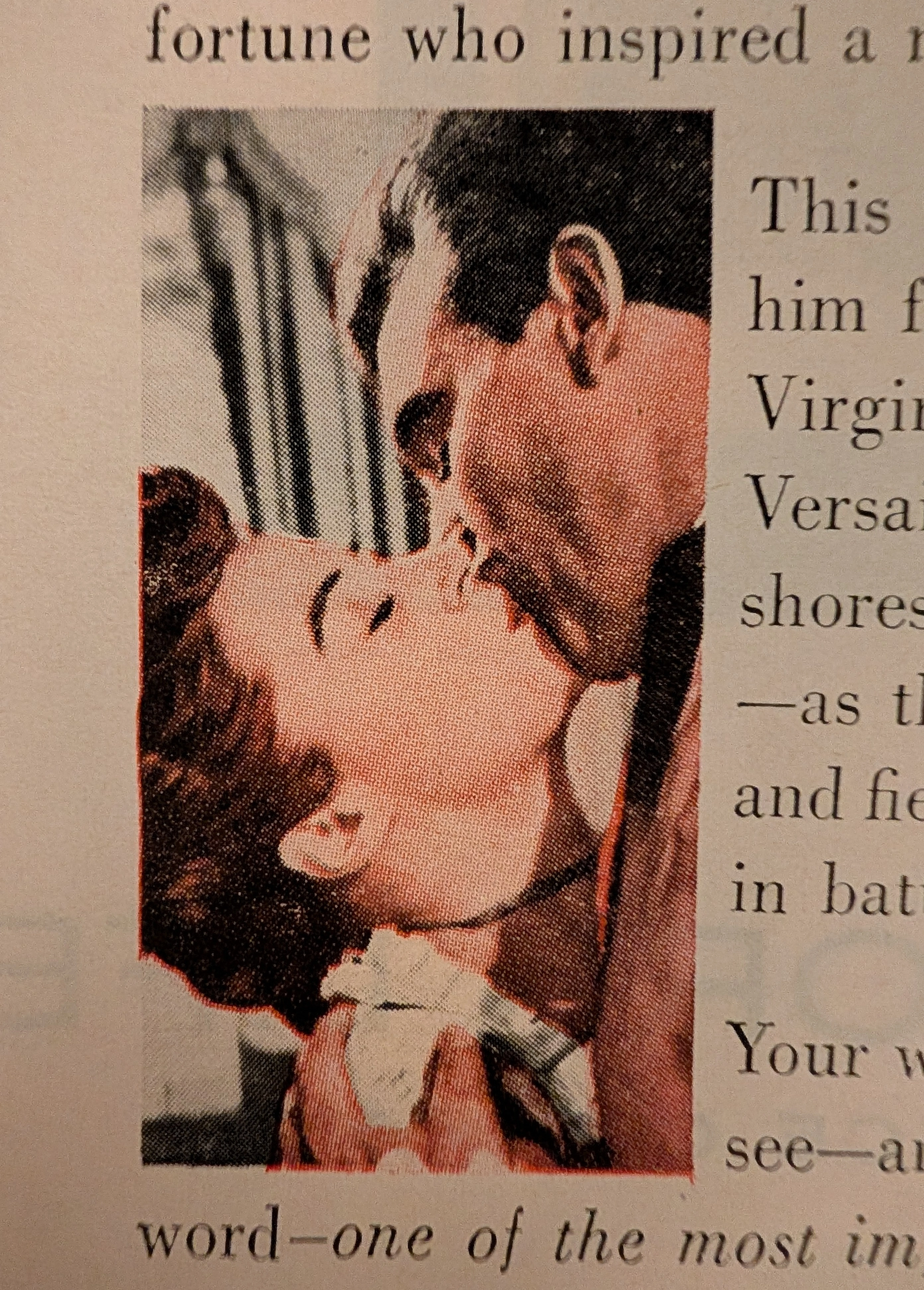
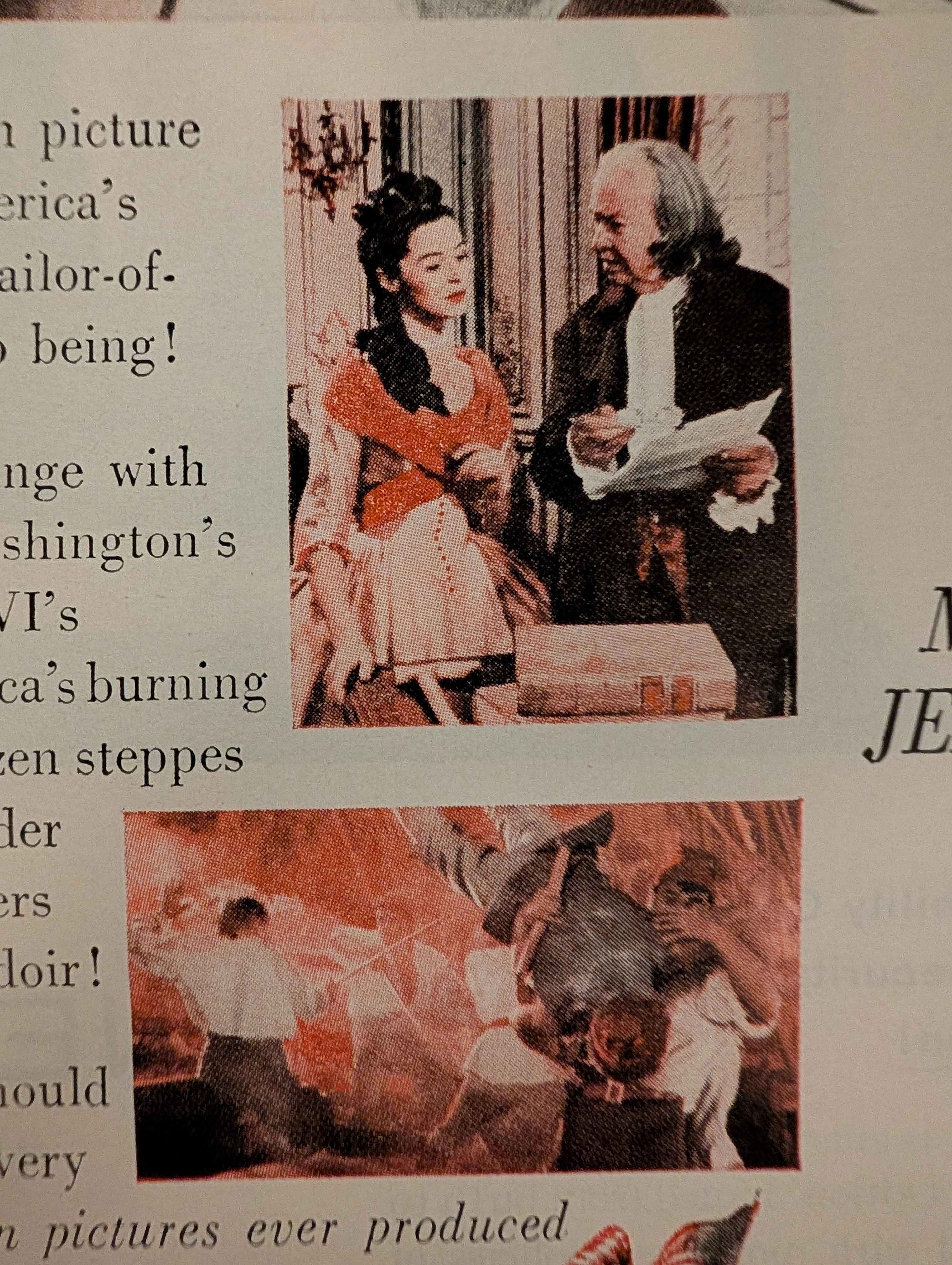
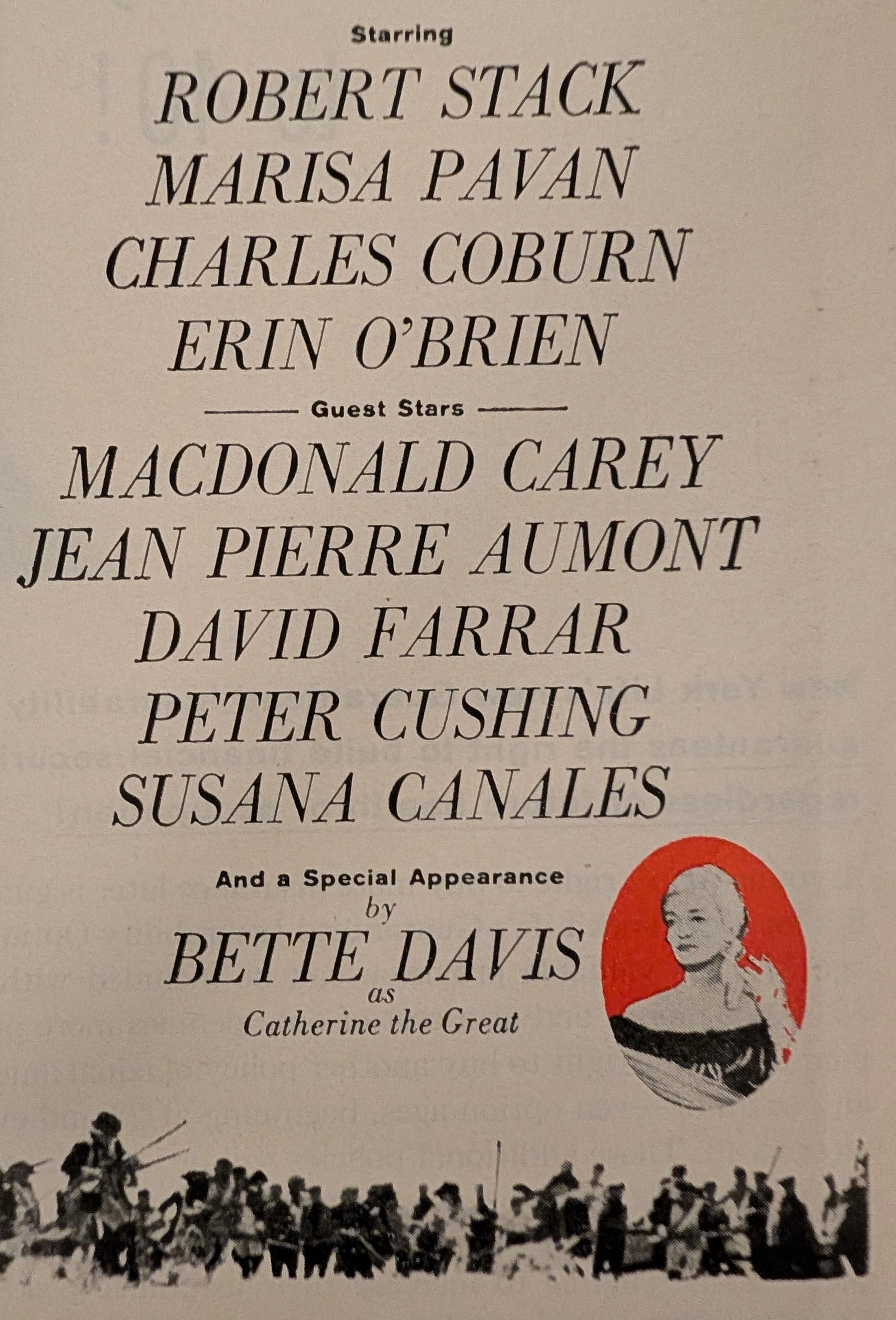
The casting strategy showcased here is pure, weaponized social engineering. The rugged, uncompromising portrait of Robert Stack was intended to solidify the ultimate standard of steadfast American masculinity. Simultaneously, the ad caters to a broader demographic by featuring passionate, dramatic romance and the intellectual diplomacy of Benjamin Franklin, played by Charles Coburn. But the true arrogance and unassailable power of the Hollywood studio system are forensically cemented in the striking red cameo vignette in the lower right corner, proudly announcing: "And a Special Appearance by BETTE DAVIS as Catherine the Great". Securing Hollywood royalty like Davis, even for a cameo, instantly elevated Bronston's film to undeniable, prestige epic status.
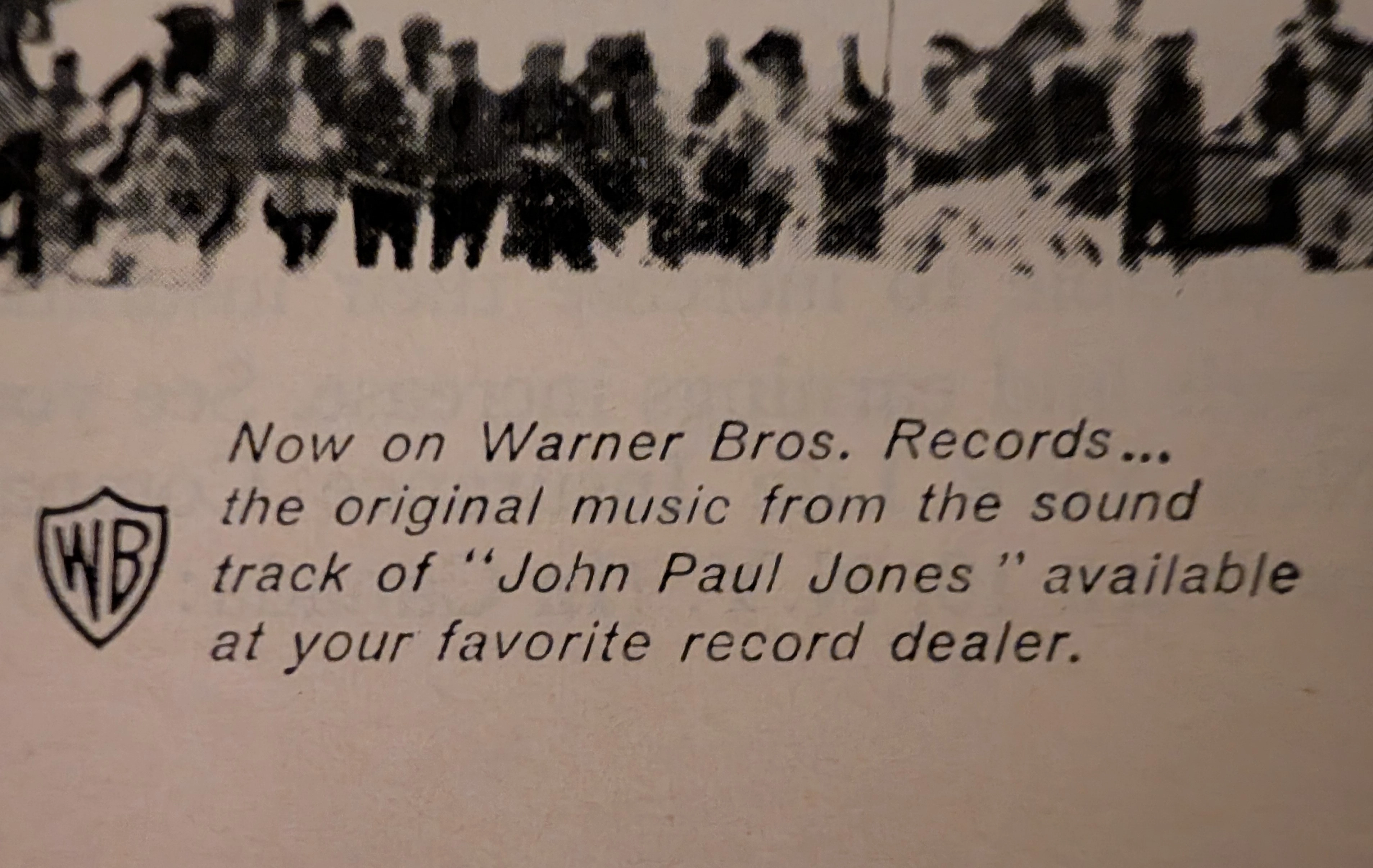
The Capitalist Masterstroke: The most historically significant industrial detail of this artifact lies quietly in the bottom left corner. Direct your analytical focus to the iconic shield logo and the text: "Now on Warner Bros. Records... the original music from the sound track of 'John Paul Jones' available at your favorite record dealer.". In the late 1950s, the commercialization of the standalone "Original Motion Picture Soundtrack" LP was still in its infancy. Utilizing extremely expensive theatrical advertising real estate to cross-promote a sister company’s vinyl record is a definitive, forensic recording of the birth of "Multimedia Cross-Promotion"—the exact corporate synergy that forms the indestructible foundation of modern mega-franchises like Disney and Marvel today.
The Paper
The Aesthetics of Decay (Wabi-Sabi) — The Chemical Scars of 1950s Acidic Pulp Burning Alive ]
At The Record, our ultimate, uncompromising reverence is reserved for the inevitable, tragic, and spectacular beauty of analog destruction. This standalone Primary Art Document was surgically rescued, liberated, and meticulously preserved. Mass-market entertainment magazines in the late 1950s were printed on highly acidic wood-pulp paper. They were explicitly designed by their publishers for mass, disposable consumption, harboring a fatal chemical death sentence within their very fibers from the millisecond they rolled off the roaring printing presses.
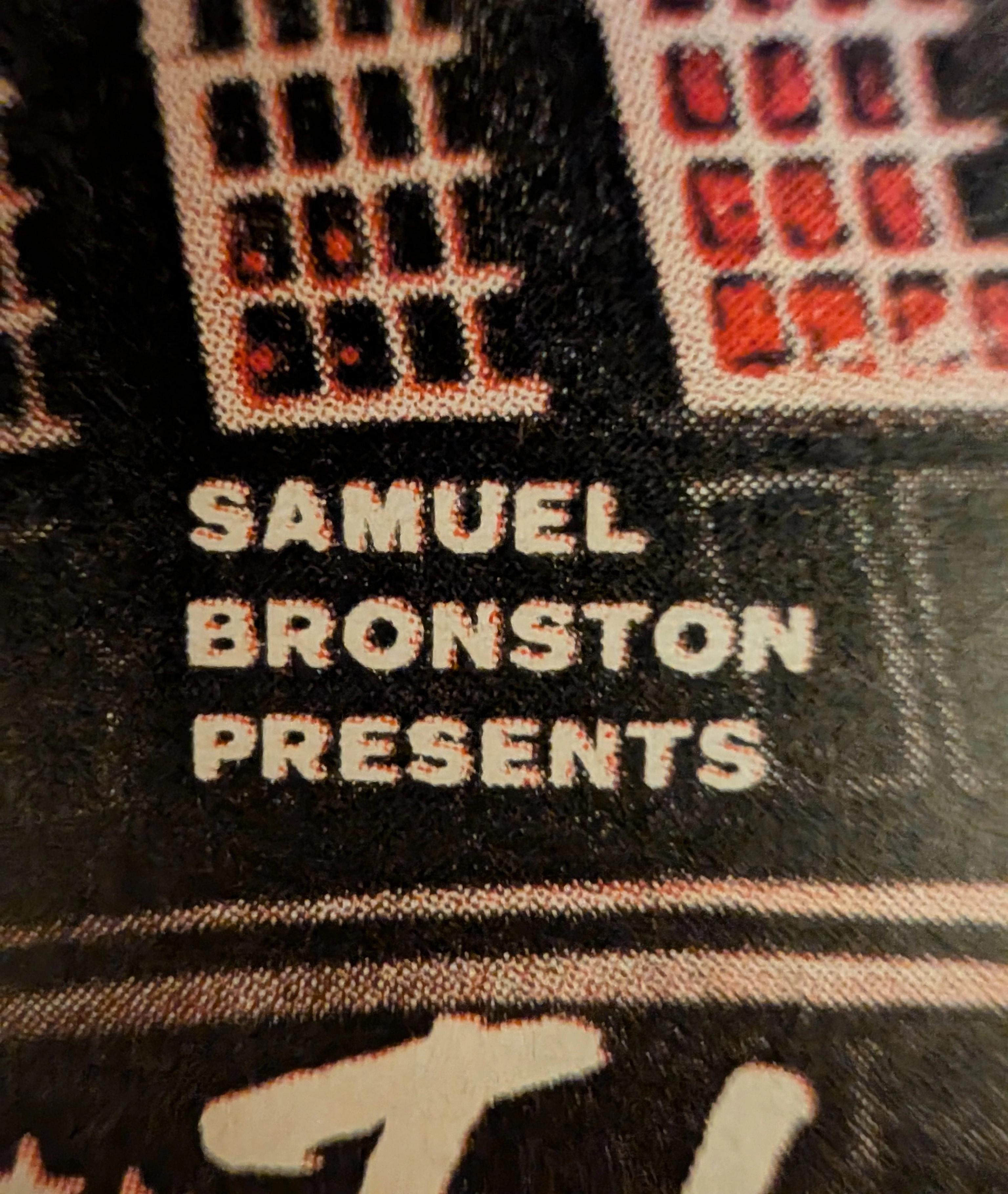
Direct your curatorial, analytical gaze to the surface of the paper. After 65 years, ambient oxygen and ultraviolet light have waged a relentless, unstoppable chemical war against the paper's inherent lignin. This irreversible oxidation process has birthed a magnificent, undeniable "patina," elegantly transforming the once-sterile white margins into a warm, creamy ivory and a deep, toasted amber. The authentic, microscopic analog halftone dots that create the blazing crimson fires on the warship, the delicate shading on Bette Davis's face, and the crisp lines of the WB logo have settled permanently into the brittle, degrading, and fragile fibers. This is the profound Japanese aesthetic of wabi-sabi—the spiritual realization of finding absolute perfection in impermanence and decay. This paper is quietly, literally burning itself alive at a molecular level. Its slow, majestic, and irreversible death is precisely what transfigures it from a disposable magazine page into an immortal piece of Primary Art.
The Rarity
Class A — A Miraculous Survivor of the Hollywood Marketing Machine ]
To understand the immense valuation of this artifact, you must comprehend the brutal reality of ephemera survival. Movie promotional materials from the 1950s were manufactured exclusively for short-term consumption during the film's theatrical run, purposefully intended to be thrown away immediately after. The statistical probability of a magazine page surviving nearly seven decades in such crisp, visually immaculate condition—where the micro-details of the artwork remain hyper-sharp and the paper bears no devastating, structure-ruining moisture rot—is staggeringly, miraculously low.
When you fuse this extreme physical scarcity with the monumental historical presence of Cold War propaganda, the elite casting of Bette Davis, and the forensic documentation of early soundtrack cross-promotion, this artifact unequivocally commands the highly prestigious Rarity Class A designation. It has evolved far, far beyond a disposable piece of vintage commercial advertising. It is a highly coveted Historical Relic, demanding to be framed and fiercely protected by an alpha curator who truly understands the heavy, beautiful, and irreplaceable weight of Hollywood capitalist history.
Exhibition Halls
The Archive Continues
Continue the Exploration
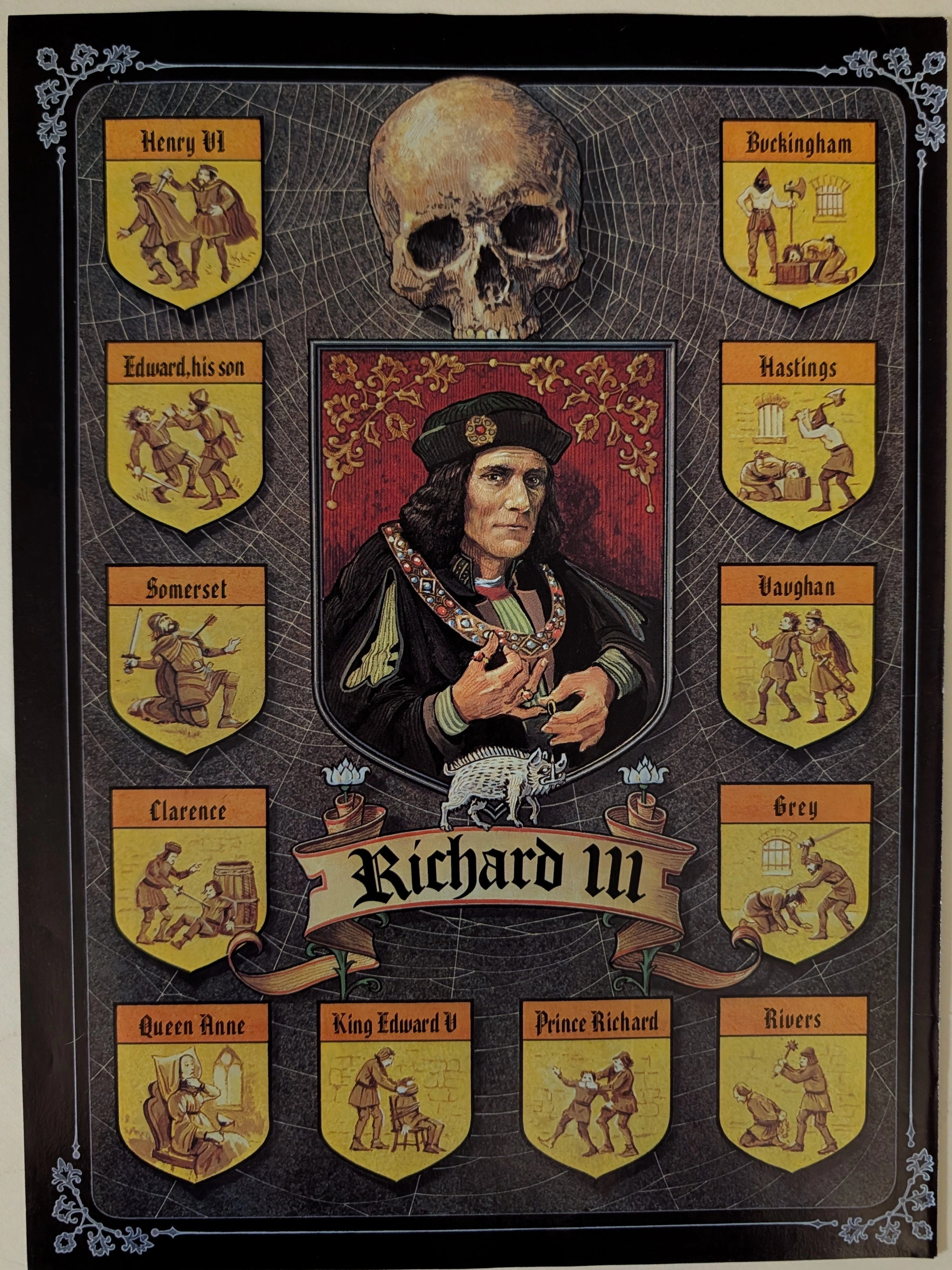
The Time Traveller’s Dossier: Circa 1970s Shakespearean Richard III Vintage Illustration — The Tudor Web of Blood
Delve into the archives to explore this definitive Circa 1970s Shakespearean Richard III vintage illustration, a profoundly dark and historically layered piece of theatrical and literary art. Likely produced as an educational broadside or promotional poster for a mid-to-late 20th-century theatrical run, this piece transcends basic historical depiction, serving instead as a macabre visual map of the corpse-paved path to the English throne as dramatized by William Shakespeare. For collectors of Gothic art, literary ephemera, and vintage ads, this artifact stands as a masterful intersection of historical reverence and narrative design. Unlike standard old advertisements or classic print ads that promote consumer goods, this illustration acts as a haunting visual codex of the "Tudor Myth." Its preservation of chilling literary iconography makes it a highly coveted piece of specialized print ephemera, capturing the visceral dread of Shakespeare's most infamous usurper.
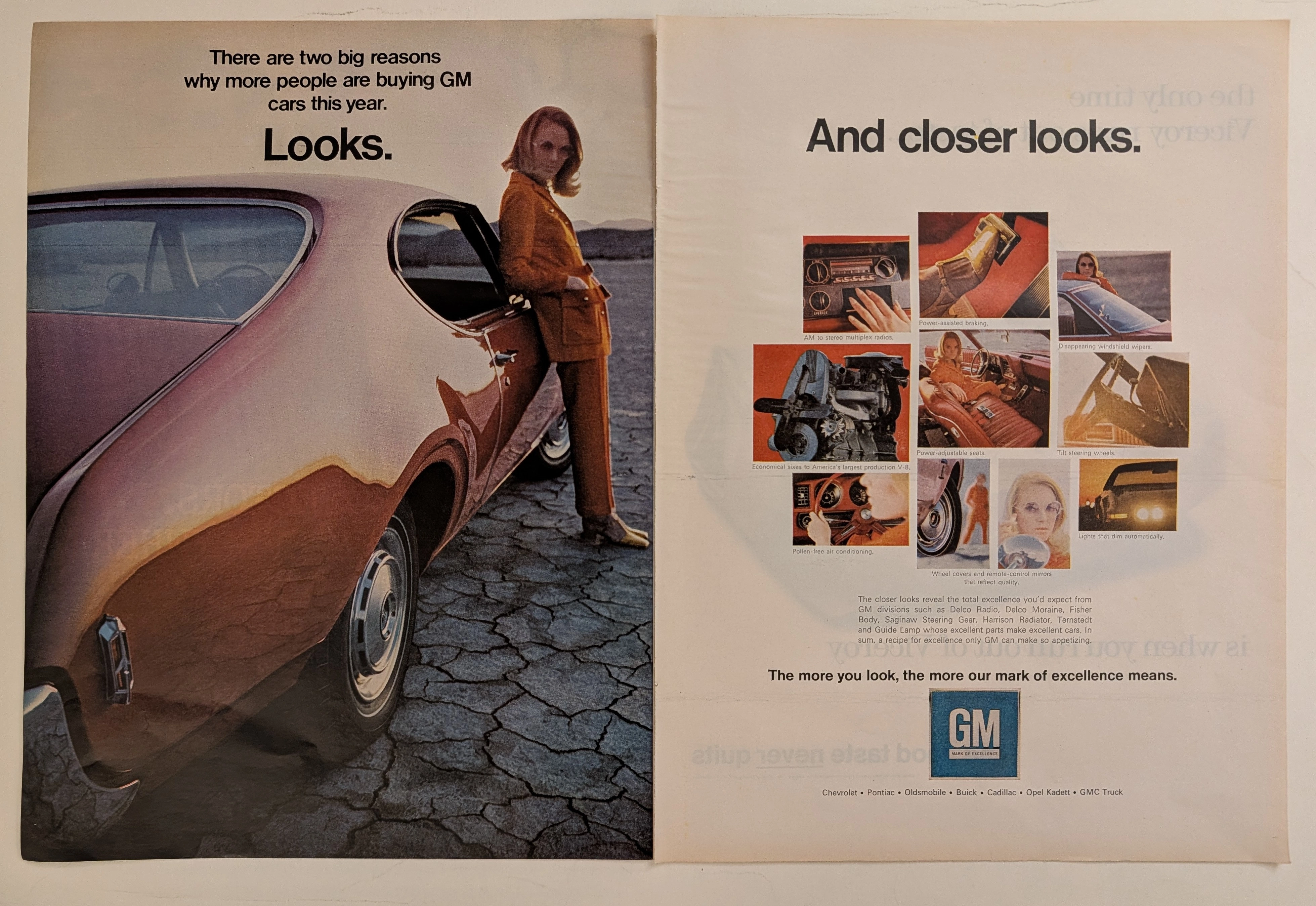
General Motors · Automotive
The Time Traveller's Dossier: The Zenith of General Motors
The automobile in mid-twentieth-century America was never merely a mode of transportation; it was a colossal canvas projecting industrial pride, technological advancement, and shifting consumer identities. The historical artifact elegantly and securely positioned upon the analytical table of The Record Institute today is a magnificent, large-format, two-page print advertisement for General Motors (GM), originating from the late 1960s to early 1970s. This document completely transcends the traditional boundaries of automotive catalogs. It operates as a highly sophisticated, dual-narrative cultural mirror: the left page captures the visceral, visual desire of "Looks" intertwined with a radical new era of feminine empowerment, while the right page dissects the mechanical and electronic mastery of "And closer looks," showcasing the vast ecosystem of GM's specialized manufacturing divisions. This world-class, comprehensive dossier conducts a meticulous, unyielding, and exceptionally deep examination of the artifact, operating under the absolute most rigorous parameters of historical, sociological, and material science evaluation. We will decode the immense industrial weight of the "Mark of Excellence" campaign, analyze the profound sociological implications of the female model's tailored pantsuit as a symbol of women's liberation, and dissect the anatomy of the nine revolutionary automotive technologies that defined modern driving. Furthermore, as we venture deeply into the chemical and physical foundations of this analog printed ephemera, we will reveal the precise mechanical fingerprints of the CMYK halftone rosettes and the graceful, natural oxidation of the paper substrate. This precise intersection of visual nostalgia, mid-century commercial artistry, and the immutable chemistry of time cultivates a serene wabi-sabi aesthetic—a natural, irreversible phenomenon that serves as the primary engine driving up its market value exponentially within the elite global spheres of Vintage Automotive Ephemera and Industrial Design collecting.
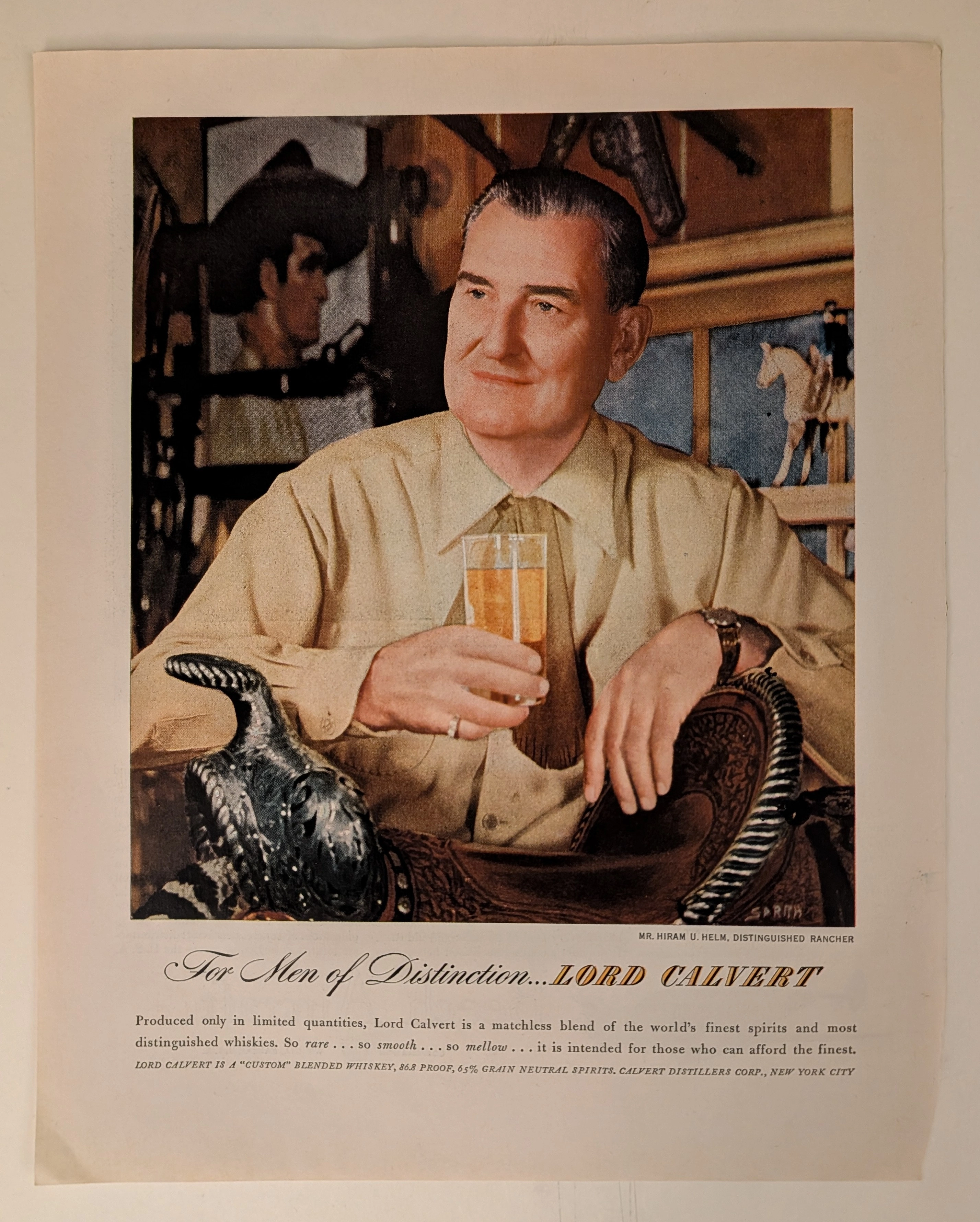
THE TIME TRAVELER'S DOSSIER: THE COMMODIFICATION OF STATUS AND THE ART OF THE ELEGANT ILLUSION
The artifact under exhaustive, uncompromising, and unprecedented museum-grade analysis is an exceptionally preserved Historical Relic originating from the absolute zenith of Madison Avenue's psychological marketing era (circa late 1940s to 1950s). This Primary Art Document is a monumental, full-page advertisement for LORD CALVERT, produced by the Calvert Distillers Corp., New York City. This piece represents the visual anchor for one of the most legendary, extensively studied, and phenomenally successful advertising campaigns in the history of American capitalism: "For Men of Distinction". It features a masterful, hyper-realistic portrait of Mr. Hiram U. Helm, Distinguished Rancher, deliberately painted/photographed to exude rugged sophistication, wealth, and aristocratic leisure. The artwork proudly bears the signature of SARRA (Valentino Sarra), a titan of mid-century commercial photography and illustration known for his cinematic lighting and profound character studies. This document is a profound "Sociological Blueprint of Aspirational Wealth." It masterfully utilized the psychology of exclusivity, marketing a blended whiskey composed of "65% Grain Neutral Spirits" as a "Custom" blend intended only "for those who can afford the finest". Rescued from the inevitable oblivion of disposable mass media, this mid-century analog artifact is a breathtaking embodiment of the Japanese aesthetic of wabi-sabi. Printed on inherently acidic wood-pulp paper, it exhibits a beautifully authentic, warm amber oxidation across its entire surface. This unstoppable molecular death transforms a piece of mass-produced corporate propaganda into an irreplaceable, ready-to-frame Primary Art Document of post-war sociological history.