The Time Traveller's Dossier: The Oil Baron's Chariot – 1970s "HOU$TON" Editorial Illustration — The Record Institute JournalThe Time Traveller's Dossier: The Oil Baron's Chariot – 1970s "HOU$TON" Editorial Illustration — The Record Institute Journal
1 / 2

✦ 2 Photos — Click any image to view in high resolution

March 13, 2026

The Time Traveller's Dossier: The Oil Baron's Chariot – 1970s "HOU$TON" Editorial Illustration

AutomotiveBrand: ROLL ROYCEIllustration: Eraldo Carugati
Archive Views: 36
Heritage AdvertisementsTravel & Tourism

The History

To decode the sociological architecture embedded within this printed artifact, it is mandatory to contextualize the macroeconomic landscape of the United States in the 1970s. This era was defined by the global energy crisis, stagflation, and long lines at gas stations across the nation. However, Texas—specifically Houston—experienced an inverse reality. Fueled by skyrocketing oil prices and the localized aerospace industry ("saturn rockets and oil"), Houston became an explosive boomtown, generating unprecedented, overnight fortunes and creating a new class of ultra-wealthy American elites.

Part 1: The Binary Shift: European Aristocracy vs. The American Frontier
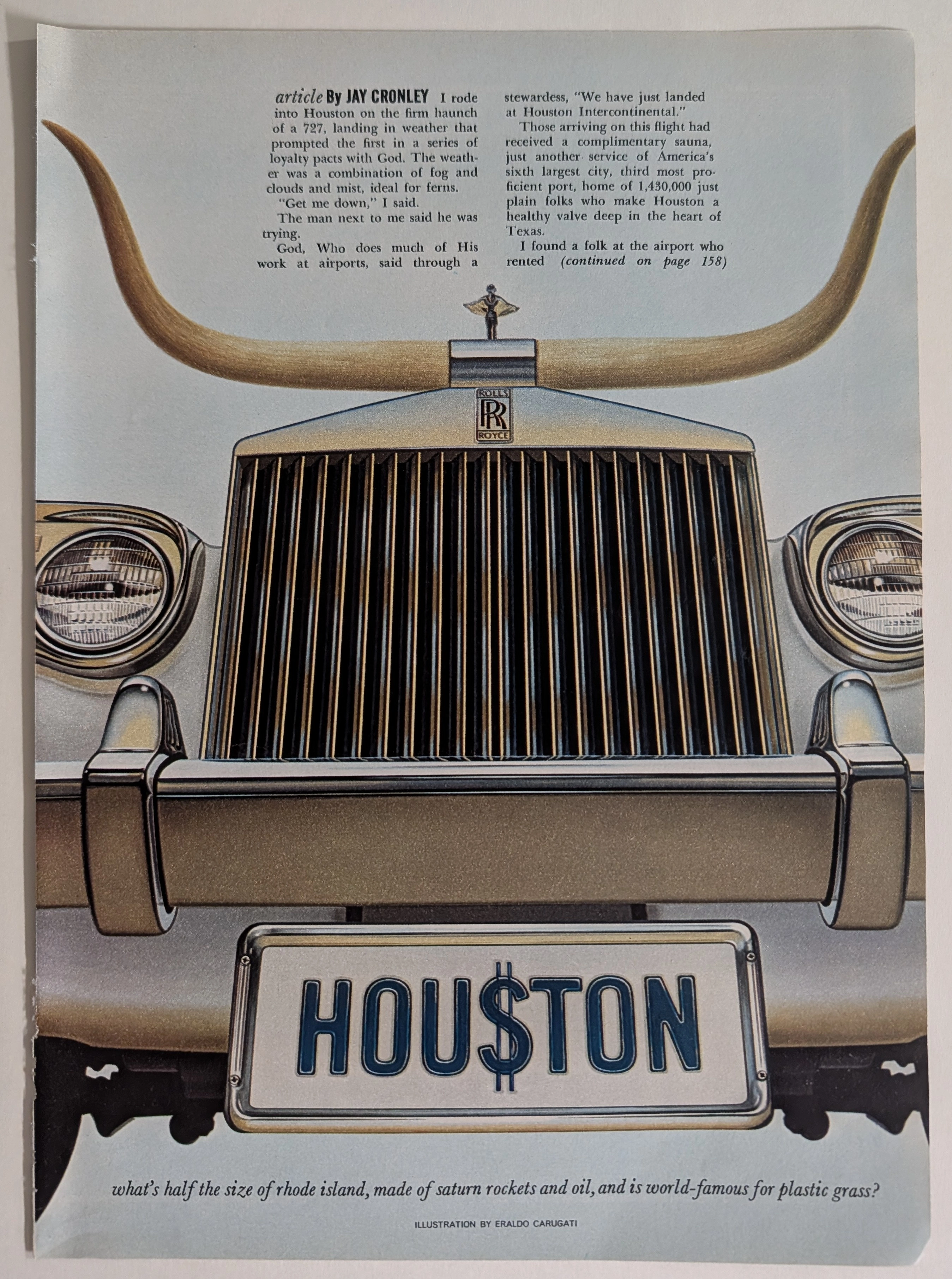
The narrative architecture of this artifact is built upon a strict, uncompromising binary contrast. Historically, the Rolls-Royce grille represents the absolute zenith of quiet, generational European aristocracy—a symbol of understated, highly refined old money. Carugati’s illustration violently obliterates that narrative by grafting a massive set of Texas Longhorns directly over the British engineering. This visual executes a flawless cultural pivot. It deliberately contrasts the old world of aristocratic subtlety with the new world of loud, aggressive, frontier capitalism. By physically marrying the ultimate symbol of British luxury with the ultimate symbol of the Texas dirt, the artwork successfully maps the concept of wealth onto the unapologetic, upward mobility of the American South.

Part 2: The Petro-Dollar Discourse & The Myth of Infinite Growth
Executing this binary shift required a specific visual vocabulary. The typography and copywriting function as an aggressive declaration of economic dominance. By replacing the "S" in Houston with a dollar sign ("HOU$TON"), the artist transforms the name of a municipality into a pure financial statement. The accompanying text acts as a manifesto of human triumph over nature and limits:

"what's half the size of rhode island, made of saturn rockets and oil, and is world-famous for plastic grass?"

The references to "plastic grass" (the Astroturf of the Houston Astrodome, the world's first multi-purpose domed sports stadium) and "saturn rockets" (NASA) align the city with an era's public obsession with technological omnipotence. It portrays a society so wealthy and advanced that it builds its own indoor ecosystems and funds the conquest of space, neutralizing any perception of provincial southern backwardness.

Part 3: The Sovereign Wildcatter and the Boomtown Economy
The socioeconomic structure of the 1970s oil boom saw the rise of the "Wildcatter"—the independent oilman who struck it rich. For this cultural archetype to succeed globally, it required the explicit visual approval of excess. The illustration targets the intellectual vanity of the boomtown economy, where wealth was not meant to be hidden, but displayed as a weapon. This conceptual boundary eradicated the line between luxury and kitsch; if the luxury was expensive enough, the kitsch became a symbol of absolute power.

Part 4: Visual Semiotics: Usurpation and Supreme Confidence
The illustration functions as a precise semiotic indicator of Texas's absolute confidence, engineering the mythos through visual usurpation:

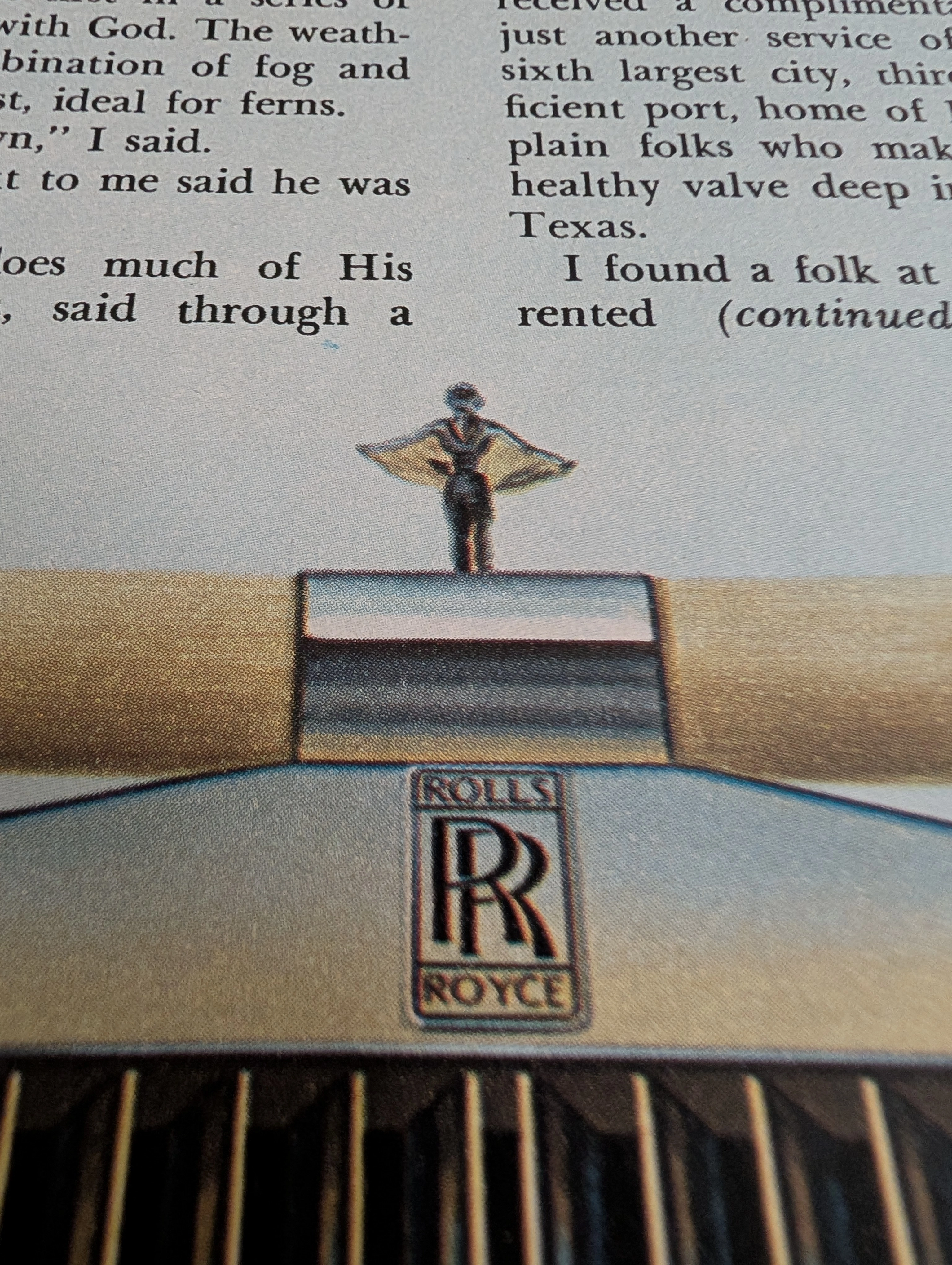
The Spirit of Ecstasy vs. The Longhorns: The iconic Rolls-Royce hood ornament, "The Spirit of Ecstasy," is visually dwarfed and imprisoned beneath the massive, organic span of the Texas Longhorns. It signifies that the refined grace of the old world is entirely subjugated by the brute force of American oil wealth.

The Monolithic Grille: By rendering the Rolls-Royce grille from a dead-on, low-angle perspective, the car is presented not as a vehicle, but as an imposing, impenetrable financial temple. The golden hues reflecting off the chrome reinforce the sheer weight of capital.

Part 5: Pop Culture Impact and Enduring Legacy
The visual language pioneered in this exact era left an indelible, structural mark on global pop culture. The aesthetic of the brash, immensely wealthy Texas oilman—cruising in luxury European sedans or massive Cadillacs adorned with longhorns—became the foundational DNA for legendary 1980s television dynasties. The ruthless capitalism and unapologetic excess showcased here directly birthed the iconic archetype of J.R. Ewing in the global phenomenon Dallas (1978).
In the modern entertainment arena, the contemporary obsession with neo-Westerns and modern ranching empires operates on a cyclical return to the era this artwork represents. Today's massive hits like Yellowstone rely entirely on this exact clash between rural cowboy grit and billions of dollars in capital. This artifact is the foundational source code for the modern mythology of the American Petro-State.

The Paper

As a physical entity, this tear sheet is an unrepeatable record of late-analog offset printing. The medium-weight coated magazine stock was engineered for mass distribution, yet its current state demands evaluation through the Japanese aesthetic philosophy of wabi-sabi (侘寂)—the recognition of beauty in impermanence and the natural progression of time.

Visual Forensics & Substrate Analysis:
Examining the extreme close-ups of this artifact reveals the mechanical heartbeat of the 1970s press. Under magnification, the illusion of smooth gradients on the metallic horns and the glowing chrome shatters into a precise, mathematical galaxy of CMYK halftone rosettes. The distinct grain of the offset lithography is aggressively visible in the rich, deep blues of the typography. The margins exhibit authentic "toning"—a gradual, irreversible yellowing caused by the natural oxidation of lignin within the wood pulp. This organic degradation cannot be cloned by modern digital processes. The evolving patina elevates the piece from a uniform industrial print to a singular, historically scarred artifact. The wabi-sabi nature of this page ensures that its aesthetic and historical value increases precisely because it is slowly returning to the earth.

The Rarity

Rarity Class: A (Advanced / Highly Desirable)
Within archival parameters, this artifact holds a definitive Class A designation. The paradox of analog print ephemera lies in its initial mass production versus its extreme current scarcity. Magazines of the 1970s were quintessential disposable media, destined for the recycling bin. The survival of this specific editorial page—enduring half a century without yielding to moisture damage, destructive handling, or structural center creases—is an archival anomaly. Furthermore, artwork by Eraldo Carugati outside of his legendary music industry commissions is highly prized. Finding this specimen retaining its original pigment saturation while bearing only the authentic hallmarks of wabi-sabi aging is highly uncommon, making it a prime candidate for museum-grade preservation.

Visual Impact

The aesthetic authority of this piece lies in a masterclass of symmetrical composition and psychological design. The immediate focal point is dead center—the intersection of the delicate silver hood ornament and the aggressive, sweeping golden arcs of the longhorns. This creates a powerful, inescapable visual anchor. The artist strategically utilizes the imposing vertical lines of the radiator grille to force the viewer's eye downward, landing heavily on the ultimate punchline: the "HOU$TON" license plate. It is a highly calculated visual mechanism aimed at commanding absolute attention, projecting an aura of intimidating wealth directly into the viewer's space.

Share This Archive

The Archive Continues

Continue the Exploration
THE TIME TRAVELER'S DOSSIER: THE GENESIS OF ARROGANCE — OMEGA, THE QUARTZ CRISIS, AND THE SPACE HERO

THE TIME TRAVELER'S DOSSIER: THE GENESIS OF ARROGANCE — OMEGA, THE QUARTZ CRISIS, AND THE SPACE HERO

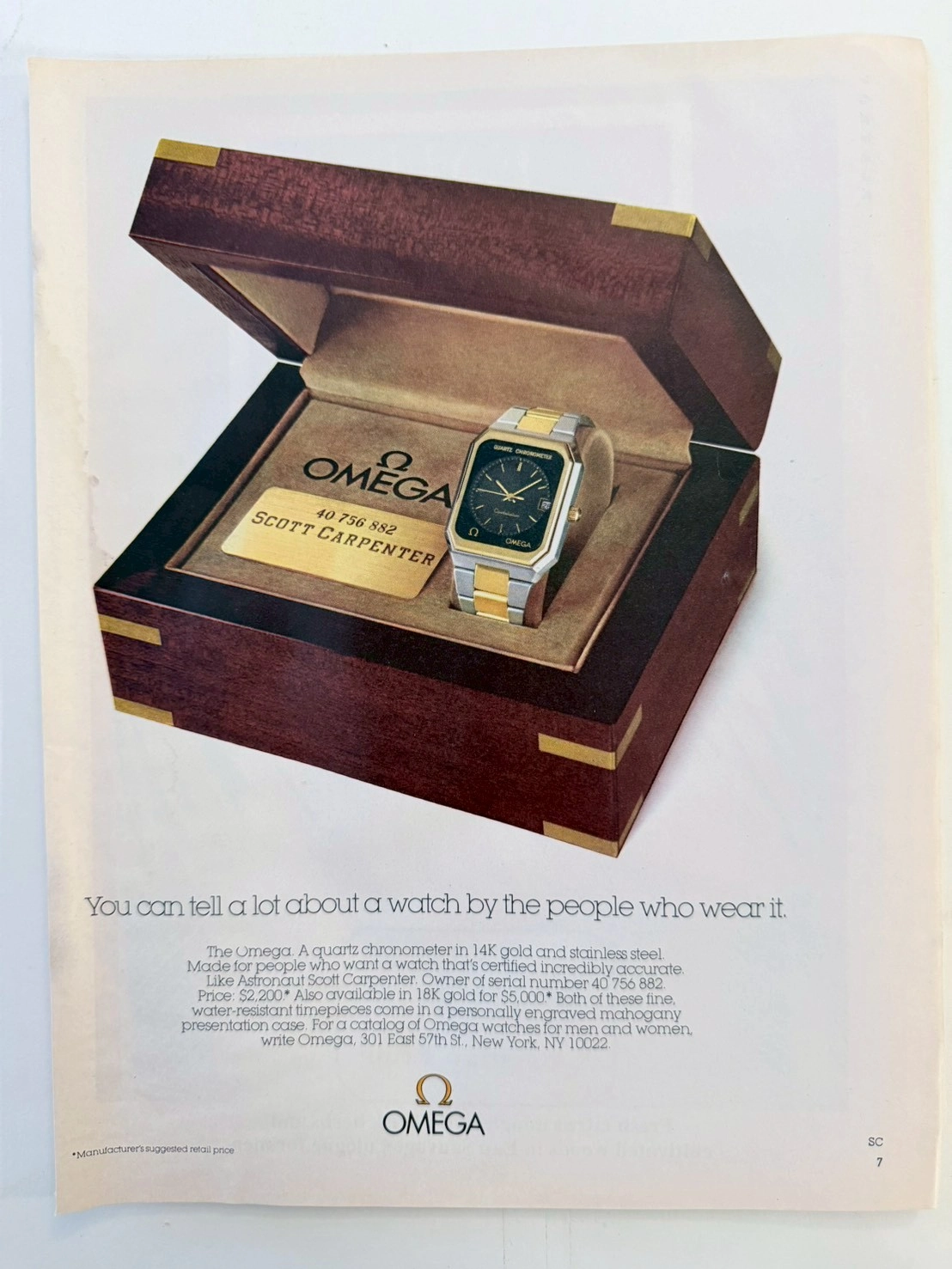
An original vintage magazine cut page featuring the OMEGA Quartz Chronometer, endorsed by NASA Mercury Seven astronaut Scott Carpenter. This standard-sized ephemera captures Omega's luxurious counter-offensive during the "Quartz Crisis," elevating battery-powered movements to haute horlogerie. The natural degradation and warm patina of the pre-2000s acidic paper transform this surviving ad into a highly collectible Class A historical artifact.
"The Bloodline of Champions: Ferry Porsche's Ultimate Test"

"The Bloodline of Champions: Ferry Porsche's Ultimate Test"

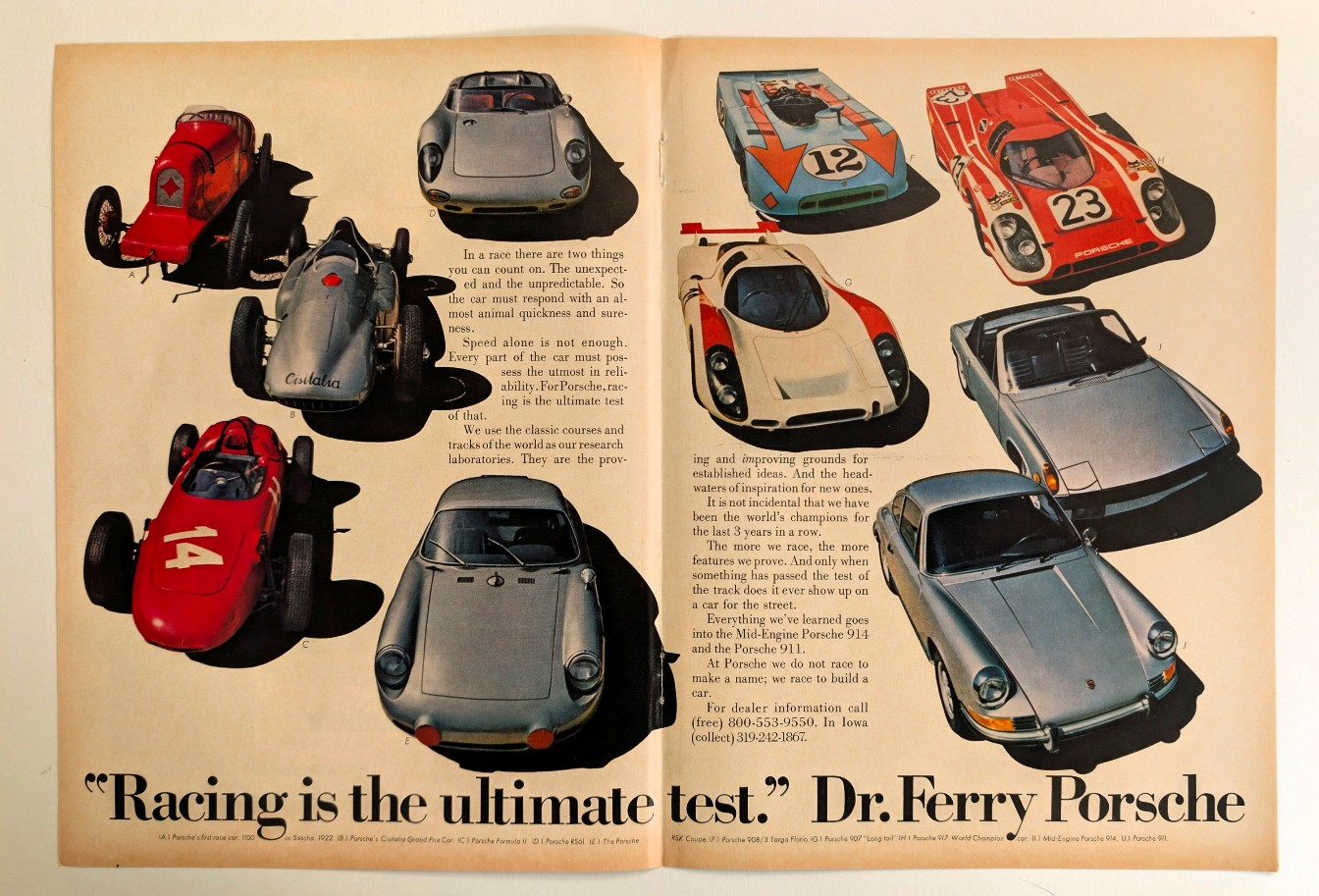
Uncovering the historical lineage of Porsche's motorsport dominance, from the 1922 Sascha to the legendary 917, and how track technology forged the 911.
THE TIME TRAVELER'S DOSSIER: THE AUTOMOTIVE ARISTOCRACY AND THE AESTHETICS OF RUIN

THE TIME TRAVELER'S DOSSIER: THE AUTOMOTIVE ARISTOCRACY AND THE AESTHETICS OF RUIN

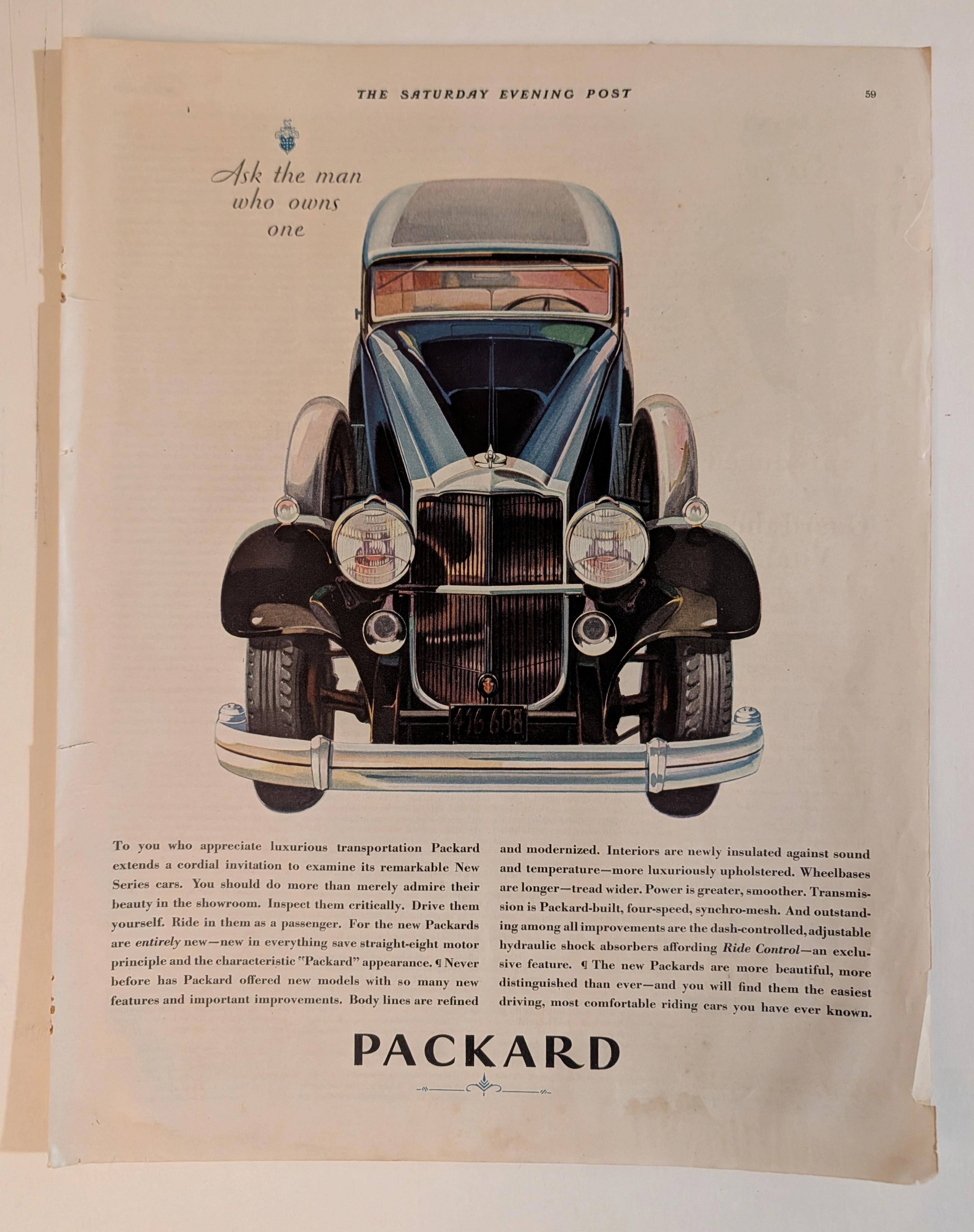
The artifact under rigorous, museum-grade analysis is an exceptionally preserved Historical Relic originating from the golden age of American automotive supremacy. Sourced from a vintage issue of The Saturday Evening Post, this Primary Art Document features a commanding, full-page advertisement for Packard, one of the most prestigious luxury automobile manufacturers in world history. Visually dominated by a striking, head-on illustration of a New Series Packard, the piece explicitly highlights the legendary corporate slogan: "Ask the man who owns one". Published during the turbulent economic landscape of the early 1930s Great Depression, this advertisement is a profound sociological marker. It boldly markets uncompromising luxury—boasting features like a four-speed synchro-mesh transmission and "Ride Control" shock absorbers—to an elite aristocracy largely insulated from the era's financial collapse. Physically, this pre-2000s analog artifact is a breathtaking embodiment of wabi-sabi. It exhibits a violently torn left binding edge, significant moisture blooming along the bottom margin, and deep amber lignin oxidation. This natural chemical and environmental degradation transforms a mass-produced commercial print into an irreplaceable, ready-to-frame Primary Art Document, forever capturing the magnificent mortality of the analog age.
Published by

The Record Institute

Taxonomy Match

Related Articles

The Time Traveller's Dossier: The Architect of the Great Society – Lyndon B. Johnson — related article
Read Article

The Time Traveller's Dossier: The Architect of the Great Society – Lyndon B. Johnson

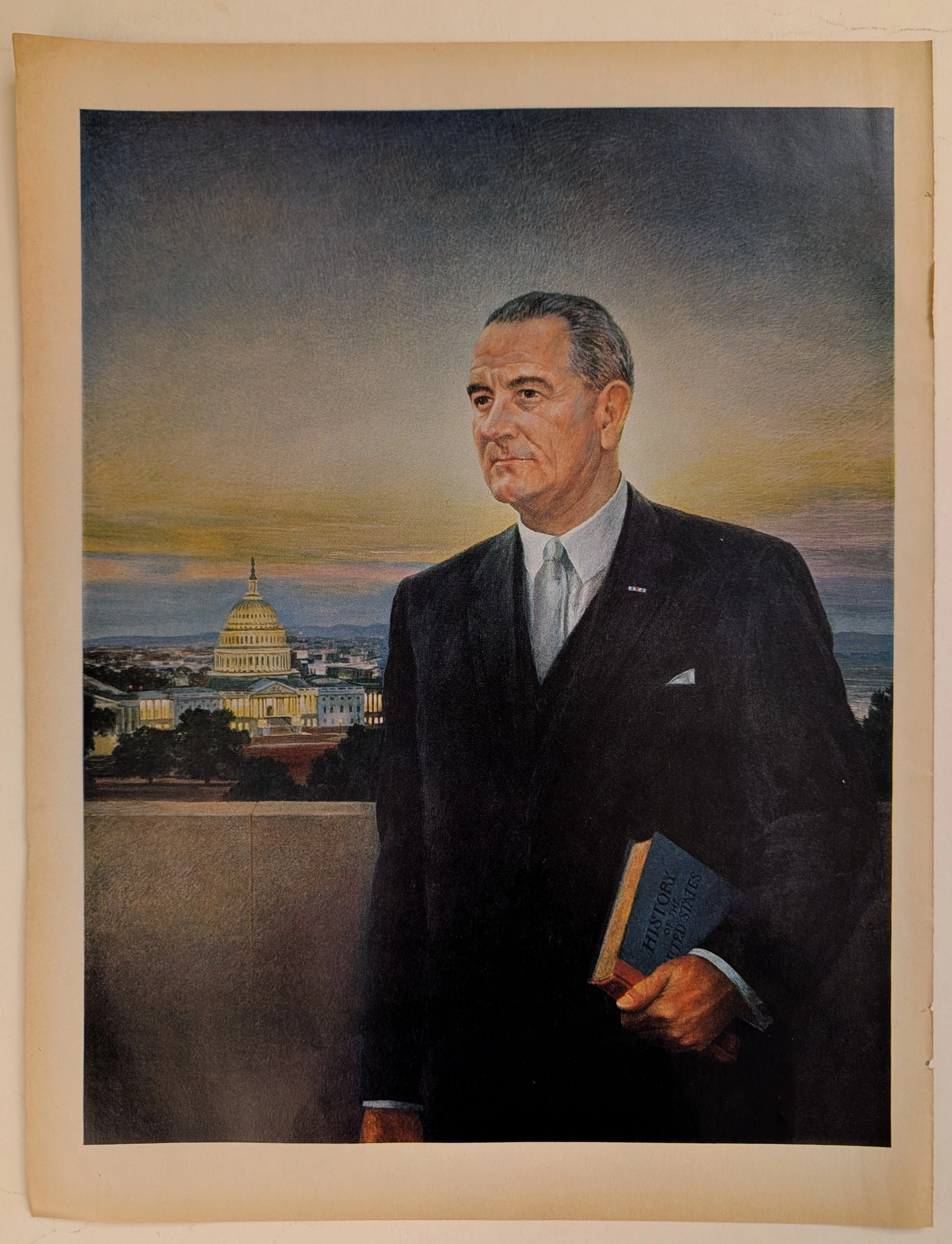
The presidency of the United States during the mid-twentieth century was an office defined by epochal challenges, sweeping domestic transformations, and the profound weight of global leadership. The historical artifact elegantly and securely positioned upon the analytical table of The Record Institute today is a majestic, large-format political lithograph portraying Lyndon Baines Johnson, the 36th President of the United States. Originating from the transformative core of the 1960s, this document completely transcends the traditional boundaries of political memorabilia. It operates as a highly sophisticated, multi-layered cultural and historical mirror, reflecting the exact moment when unparalleled legislative ambition intersected with the intricate realities of the geopolitical landscape on a single printed page. This world-class, comprehensive dossier conducts a meticulous, profound, and historically objective examination of the artifact, operating under the absolute most rigorous parameters of sociological and material science evaluation. We will decode the brilliant iconographic strategy embedded within this portrait, analyze the legendary political machinery of a statesman who mastered the United States Senate, and dissect the rich, aspirational semiotics surrounding the Great Society initiatives alongside the challenging context of the Cold War era. Furthermore, as we venture deeply into the chemical and physical foundations of this analog printed ephemera, we will reveal the precise mechanical fingerprints of the CMYK halftone rosettes and the graceful, natural oxidation of the paper substrate. This precise intersection of visual nostalgia, mid-century commercial artistry, and the immutable chemistry of time cultivates a serene wabi-sabi aesthetic—a natural, irreversible phenomenon that serves as the primary engine driving up its market value exponentially within the elite global spheres of Vintage Political Ephemera and Presidential Archives collecting.

THE TIME TRAVELER'S DOSSIER:THE ENGINEERING OF ELEGANCE, THE GUCCI TRUNK, AND THE ARCHITECTURE OF REASON — related article
Read Article

THE TIME TRAVELER'S DOSSIER:THE ENGINEERING OF ELEGANCE, THE GUCCI TRUNK, AND THE ARCHITECTURE OF REASON

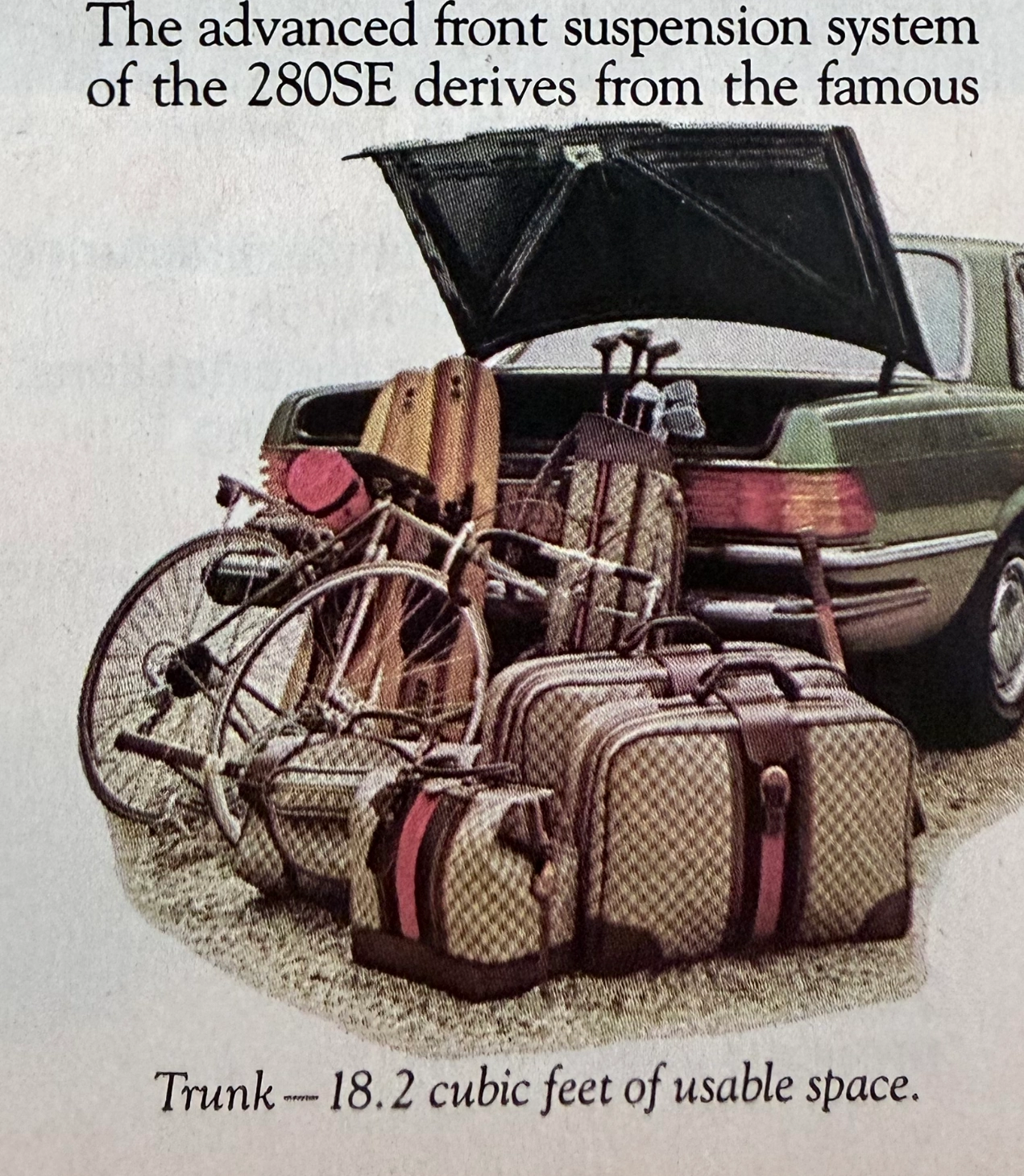
The artifact under exhaustive, uncompromising, and unprecedented museum-grade analysis is a remarkably preserved Historical Relic originating from the absolute zenith of West German automotive engineering. This Primary Art Document is a densely informative, multi-column magazine advertisement for the Mercedes-Benz 280SE Sedan (W116 chassis). ​This document is a "Forensic Blueprint of Engineered Elegance and Status Commodification." It aggressively markets the 280SE as the "Heir to a Classic," positioning it as a vehicle that inherits the legendary proportions of the 450 Series but is powered by a highly advanced, fuel-injected 6-cylinder engine. The copywriting reads like an arrogant technical dossier, boasting of the "Continuous Injection System" (CIS) and a fully independent "Suspense-free suspension" derived from the legendary C-111 high-speed research vehicle. ​However, the absolute psychological masterstroke lies in the lower-left illustration. To visually prove the cavernous "18.2 cubic feet of usable space," the artist meticulously illustrated the trunk effortlessly swallowing a bicycle, golf clubs, and a set of Gucci luggage. The unmistakable beige geometric monogram and the iconic red-and-green Web stripe on the suitcases serve as a deliberate, powerful socio-economic signal. It explicitly communicates that the Mercedes-Benz trunk is designed exclusively for the "Jet-Set" elite who travel with Italian haute couture. ​Rescued from a mass-market periodical, this pre-2000s analog artifact exhibits a beautifully authentic warm ivory oxidation across its surface. This majestic chemical aging transforms a mass-produced piece of technical propaganda into an irreplaceable Primary Art Document of automotive and sociological history.

The Time Traveller's Dossier: The Stroke of Seduction – 1970s Christian Dior "Dioressence" Advertisement — related article
Read Article

The Time Traveller's Dossier: The Stroke of Seduction – 1970s Christian Dior "Dioressence" Advertisement

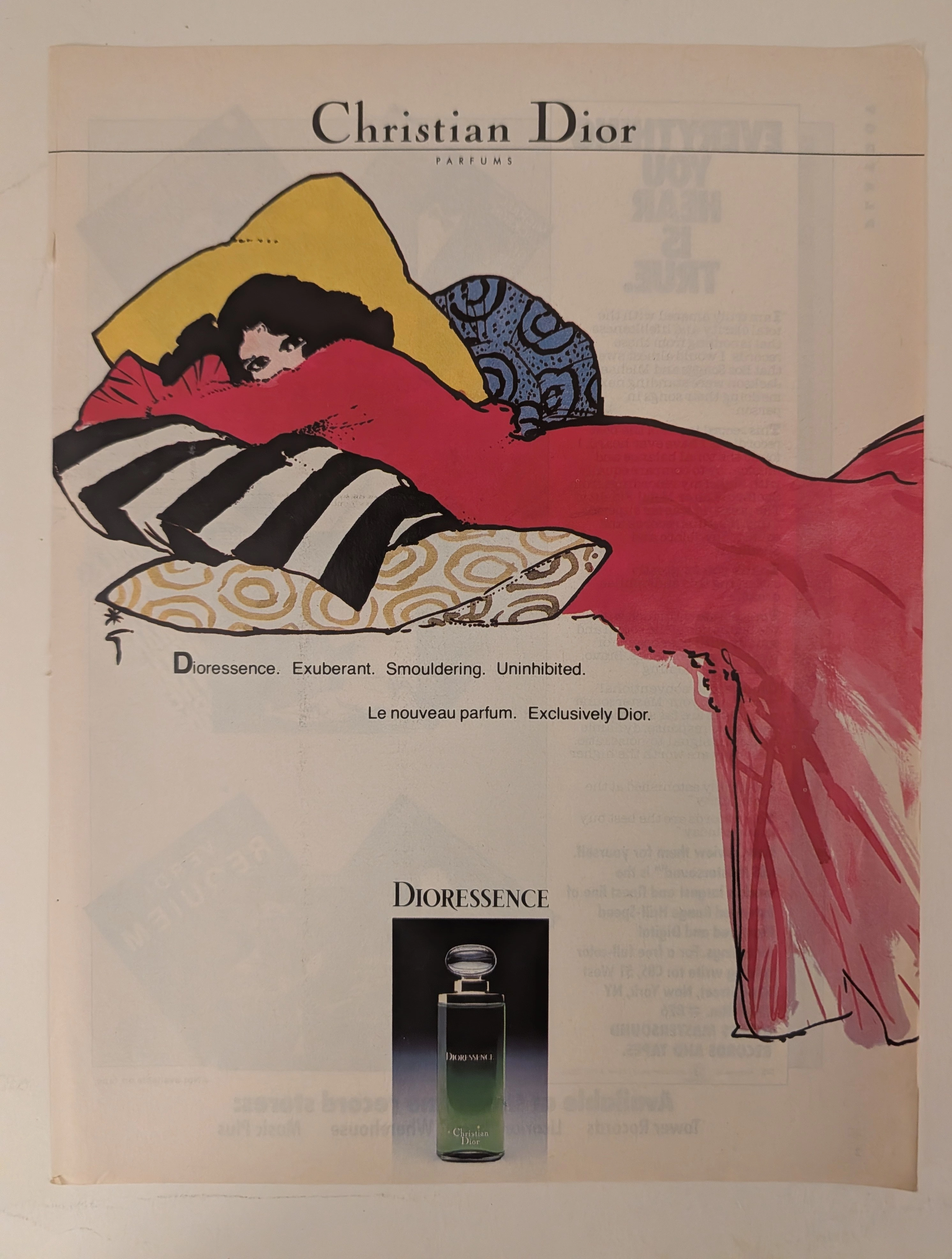
History is not written; it is printed. Before digital algorithms dictated consumer desires, societal engineering was executed through the calculated geometry of the four-color offset press and the masterful stroke of an illustrator's brush. The historical artifact before us is not merely a fragrance advertisement; it is a weaponized blueprint of unapologetic female sensuality and a testament to the absolute zenith of French haute couture marketing. This museum-grade archival dossier presents an academic deconstruction of a vintage 1970s print advertisement for Christian Dior's "Dioressence" perfume. Operating on a profound binary structure, it documents a calculated paradigm shift within the global luxury fragrance industry. It illustrates the precise historical fracture where the polite, restrained elegance of post-war fashion transitioned into the bold, liberated, and sexually assertive era of the 1970s. Through the lens of late-analog commercial artistry—specifically the genius of René Gruau—and precise visual forensics, this document serves as a masterclass in psychological semiotics, establishing the visual tropes of the empowered, enigmatic woman that unconditionally dominate modern luxury branding.

The Time Traveller's Dossier: The Architecture of Eternity – De Beers "Glory of Bells" Advertisement (Circa early 1940s) — related article
Read Article

The Time Traveller's Dossier: The Architecture of Eternity – De Beers "Glory of Bells" Advertisement (Circa early 1940s)

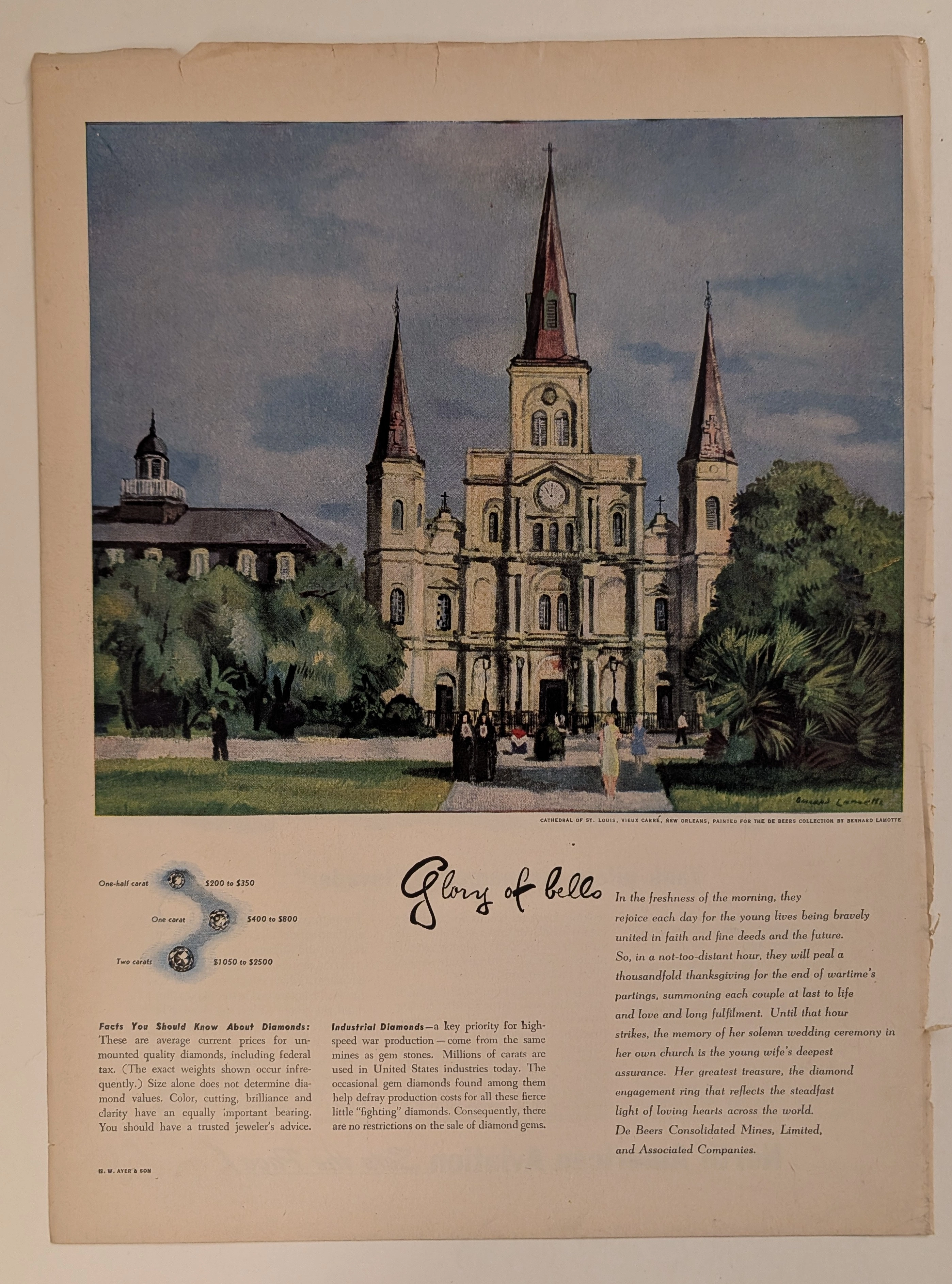
History is not shaped by chance; it is engineered by those who control the narrative and own the resources. Long before the digital age fragmented human attention, the ultimate manifestations of social engineering and psychological manipulation were executed through the calculated precision of the four-color offset printing press and the masterful strokes of commercial fine art. The historical artifact presented before us is not merely a page from a vintage magazine. It is a perfectly weaponized blueprint of corporate capitalism, a masterpiece of emotional extortion, and a foundational document in the creation of one of the most successful, universally accepted illusions in the history of human commerce: the diamond engagement ring. This museum-grade, academic archival dossier presents an exhaustive, microscopic deconstruction of a World War II-era print advertisement for De Beers Consolidated Mines, Limited, executed by the legendary advertising agency N.W. Ayer & Son. Operating on a profound and ruthless binary structure, this document records a calculated paradigm shift within the global luxury and gemstone industry. It captures the precise historical fracture where a monopolized carbon allotrope was conceptually transmuted from a rare gemstone into an absolute, non-negotiable sacrament of love, faith, and matrimony. Through the highly specialized lens of late-analog commercial artistry and stringent visual forensics, this document serves as a masterclass in psychological marketing. It established the foundational archetype for linking extreme financial expenditure with spiritual and emotional devotion—an archetype that unconditionally dictates the visual and strategic totems of the modern diamond industry today.

The Time Traveller's Dossier: The Architecture of Desire – Guerlain "Shalimar" Advertisement (Circa Mid-20th Century) — related article
Read Article

The Time Traveller's Dossier: The Architecture of Desire – Guerlain "Shalimar" Advertisement (Circa Mid-20th Century)

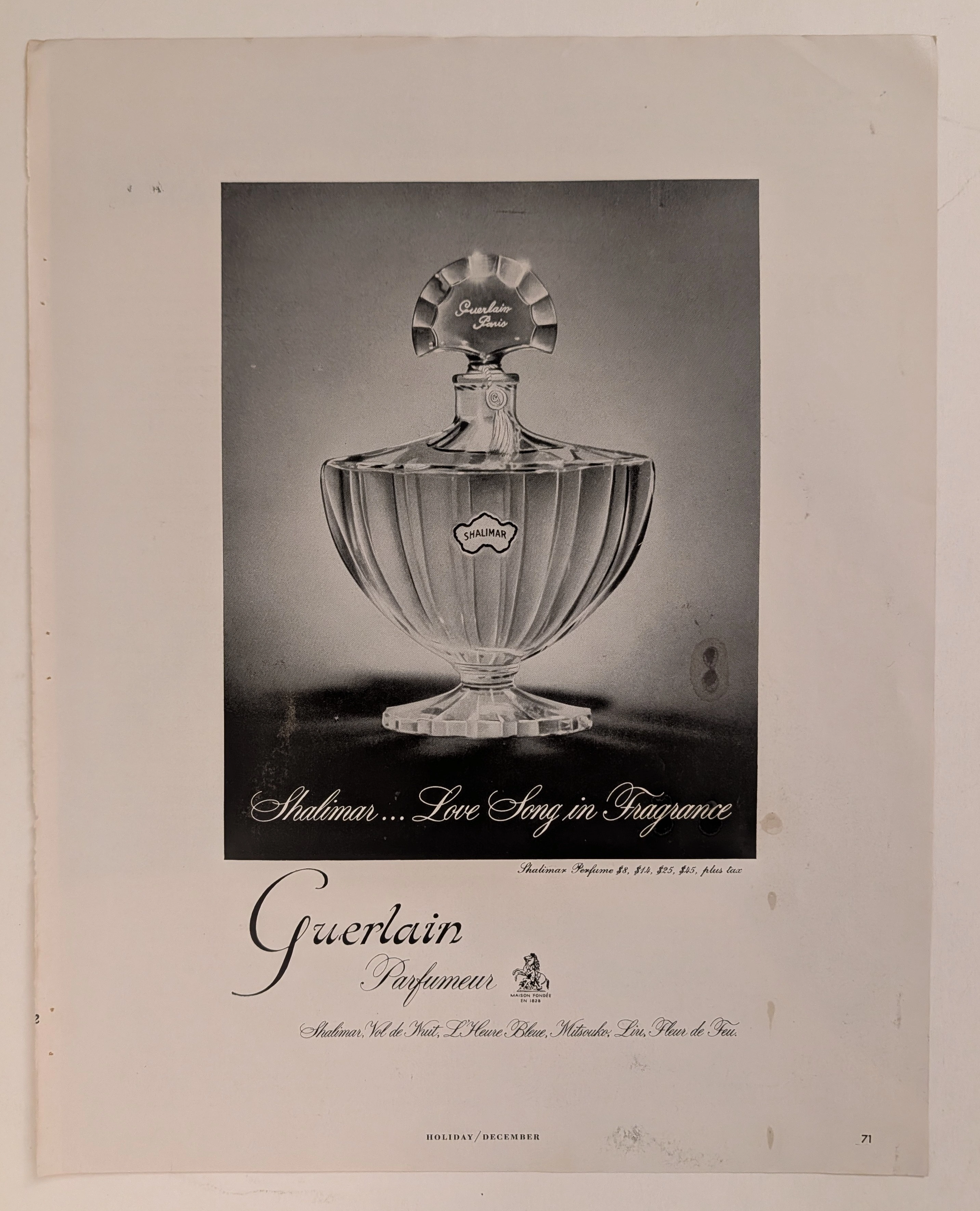
History is not an accidental sequence of events; it is a meticulously engineered illusion crafted by those who command the aesthetic and cultural narratives of their time. Long before digital algorithms could sterilely dictate consumer preferences, the ultimate manifestation of psychological manipulation and corporate alchemy was executed through the calculated precision of the halftone printing press and the absolute mastery of analog darkroom photography. The historical artifact before us is not merely a disposable page torn from a vintage magazine. It is a perfectly weaponized blueprint of exoticism, a visual declaration of extreme luxury, and an unwavering testament to an era where fragrance was sold not as a cosmetic, but as an immortal "Love Song." ​This museum-grade, academic archival dossier presents an exhaustive, microscopic deconstruction of a mid-20th-century print advertisement for the legendary Guerlain "Shalimar" perfume. Operating on a profound and ruthless binary structure, this document records a calculated paradigm shift within the global luxury industry. It captures the precise historical fracture where a concoction of botanical extracts and synthetic molecules was conceptually transmuted into a literal, physical embodiment of a mythical Eastern romance. Through the highly specialized lens of late-analog commercial artistry and stringent visual forensics, this document serves as a masterclass in psychological marketing. It established the foundational archetype for selling intangible emotions at astronomical markups—an archetype that unconditionally dictates the visual and strategic totems of the modern haute parfumerie industry today.

The Time Traveller's Dossier: The Ten-Dollar Titan – The Autolite Ford Indianapolis 500 Exhibition — related article
Read Article

The Time Traveller's Dossier: The Ten-Dollar Titan – The Autolite Ford Indianapolis 500 Exhibition

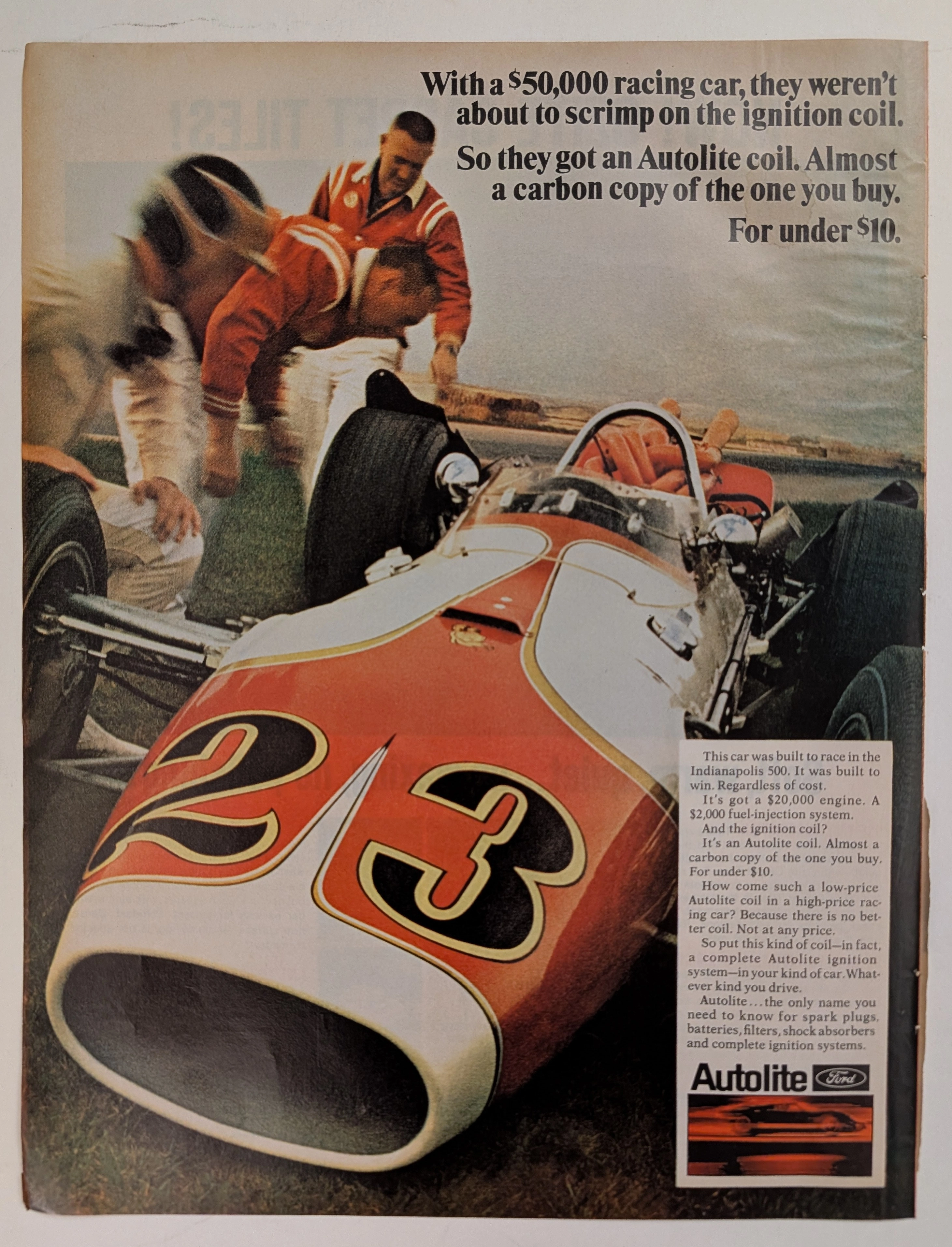
The synthesis of high-stakes motorsport engineering and everyday consumer accessibility represents a pinnacle achievement in mid-twentieth-century American commercial strategy. The historical artifact elegantly secured upon the analytical table of The Record Institute today is a majestic full-page print advertisement for Autolite Ford Ignition Coils, originating from the golden era of 1960s automobile racing. This document completely transcends the traditional boundaries of automotive parts marketing. It operates as a profound, sophisticated declaration of how cutting-edge technological innovation on the racetrack was democratized and delivered directly into the hands of the American middle class, transforming the daily commute into an extension of the Indianapolis 500. ​This world-class, comprehensive dossier conducts a meticulous and deep examination of the artifact, operating under the absolute most rigorous parameters of historical, sociological, and material science evaluation. We will decode the brilliant, kinetic pit-stop scene capturing an open-wheel race car, and analyze the dramatic visual juxtaposition of this high-speed chaos against the highly structured, calculated copywriting of the Ford Motor Company. Furthermore, as we venture into the chemical and physical foundations of this analog printed ephemera, we will reveal the mechanical fingerprints of the CMYK halftone rosettes and the graceful, natural oxidation of the paper substrate. This precise intersection of visual nostalgia, motorsport heritage, and the chemistry of time cultivates a serene wabi-sabi aesthetic—a natural, irreversible phenomenon that serves as the primary engine driving up its market value exponentially within the elite global spheres of Vintage Automotive Ephemera and Motorsports Archives collecting.