The Time Traveller's Dossier: The Architecture of Desire – Guerlain "Shalimar" Advertisement (Circa Mid-20th Century)
The History
To genuinely decode the complex sociopolitical architecture embedded within this printed artifact, one must pull back the lens to contextualize the macroeconomic history, the obsession with Orientalism in the 1920s, and the audacious DNA of the House of Guerlain. Created by the genius perfumer Jacques Guerlain in 1925, Shalimar was born from the romanticized, epic history of Mughal Emperor Shah Jahan, who built the magnificent Gardens of Shalimar and the Taj Mahal for his beloved wife, Mumtaz Mahal.
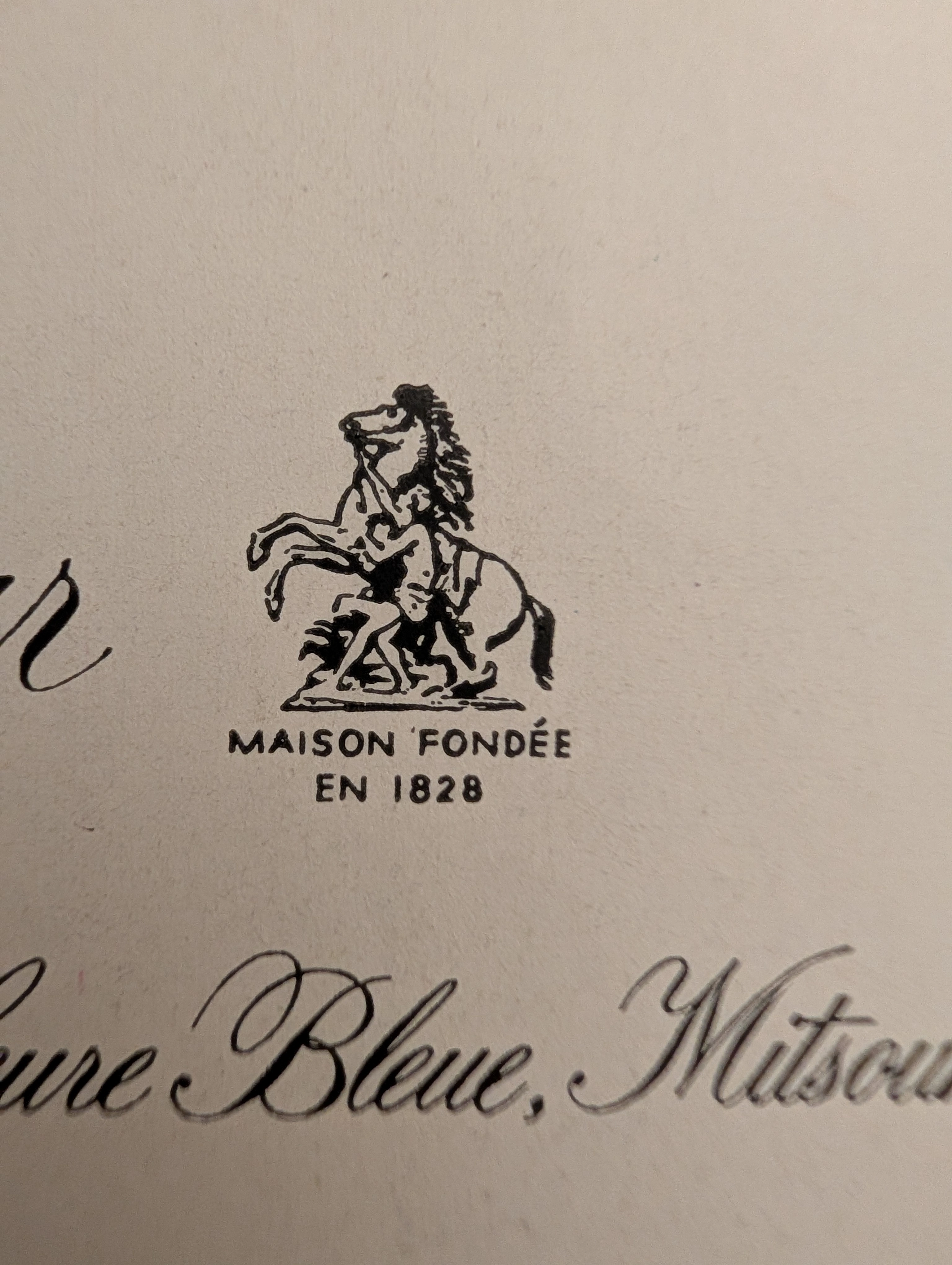
When this specific advertisement was printed (likely in the late 1940s or 1950s, given the typography and pricing), the macroeconomic landscape was defined by a post-war hunger for radical glamour and unapologetic luxury. The American middle and upper classes were desperate to shed the austerity of the war years. Guerlain, an aristocratic French house founded in 1828 (as proudly stamped at the bottom of the page alongside their iconic horse-and-rider logo), capitalized on this psychological void. They did not just sell a vanilla-heavy amber perfume; they sold an escape to a mythical, opulent East. By associating the fragrance with the phrase "Love Song in Fragrance," the brand effectively weaponized an ancient, imperial love story to compel modern consumers to prove their own devotion through financial expenditure.
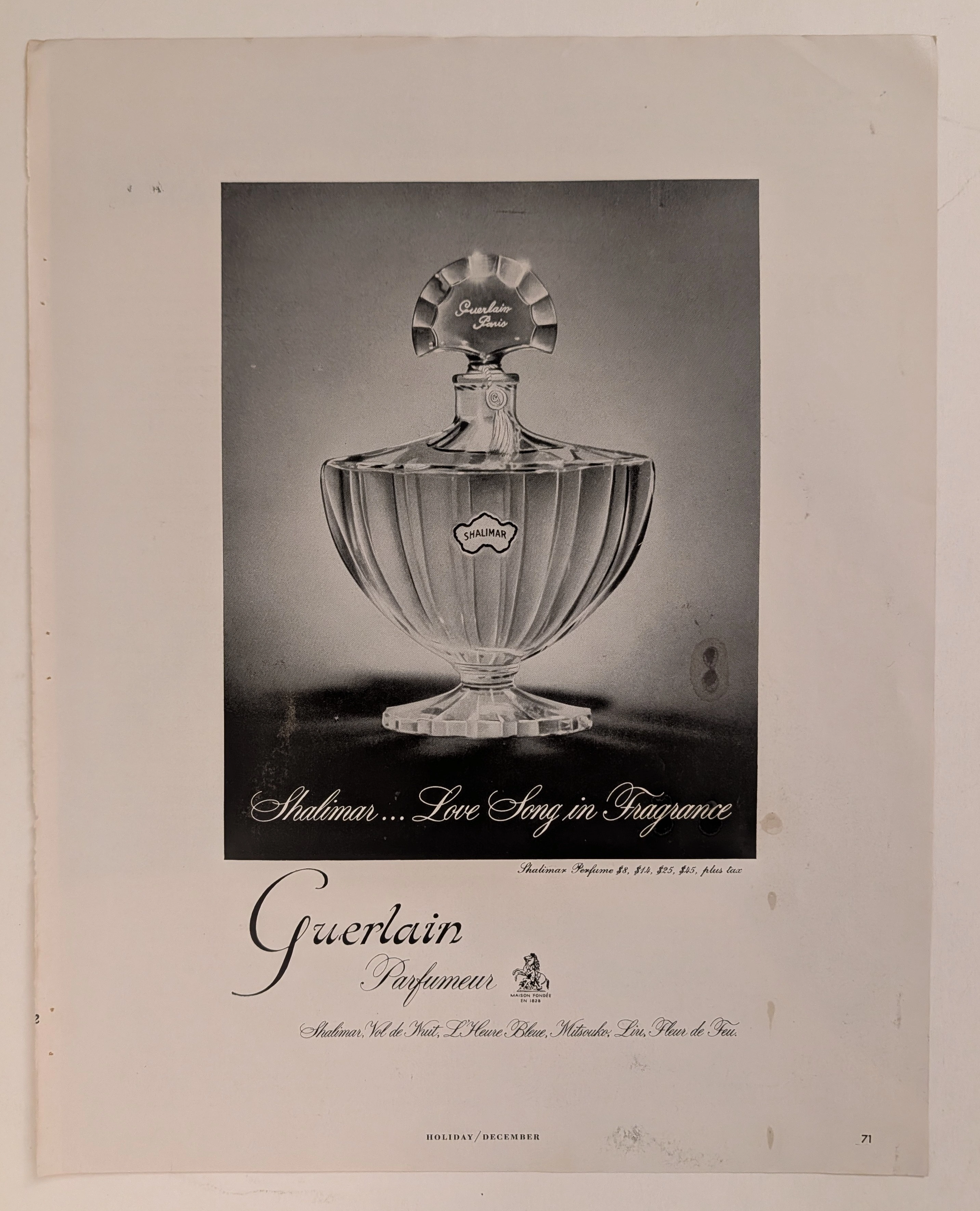
Creator / Photographer Information: While the specific studio photographer of this dramatic black-and-white still life remains uncredited, the architectural masterpiece at the center of the image—the iconic flacon—was designed by Raymond Guerlain and famously manufactured by the legendary Baccarat Crystal. The bottle’s design was revolutionary: its curving, ribbed body was inspired by the basins of the Shalimar gardens, while the striking, fan-shaped stopper (the bouchon chauve-souris or bat-wing stopper) was originally crafted from blue-tinted Baccarat crystal to evoke the night sky over the Taj Mahal. By photographing this specific, monumental piece of glasswork, the uncredited photographer hijacked the inherent authority and aristocratic gravitas of Baccarat artisanship, framing the perfume not as a manufactured liquid, but as a priceless, ancient artifact.
Part 1: The Binary Shift: Cold Modernity vs. Exotic Sensuality
The narrative architecture of this artifact is built upon a strict, uncompromising binary contrast against the rigid, industrialized reality of the mid-20th century. In a post-war world defined by concrete, steel, and corporate conformity, Guerlain presented a diametrically opposed concept: absolute, unyielding exotic sensuality.
The advertisement violently obliterates the narrative of the mundane. It executes a flawless cultural pivot by completely isolating the Shalimar flacon in a void of pure darkness. There is no background, no human figure, no context—only the monumental presence of the bottle. This represents a profound conceptual transition: the brand isolates the consumer, forcing a one-on-one psychological confrontation with the concept of "Desire." The perfume is elevated from a mere accessory to a sacred idol of romance. It dictates that true passion does not belong to the modern, industrialized world; it belongs to the mythical, opulent realm contained exclusively within the glass walls of Guerlain’s creation.
Part 2: The Semantics of Immortal Romance
To execute a strategy of this magnitude, the brand required a highly specific, unapologetic vocabulary. The copywriting on this page abandons all traditional marketing humility. It completely ignores standard olfactory descriptors—there is no mention of bergamot, iris, or vanilla. Instead, it deploys a language of pure, emotional supremacy:
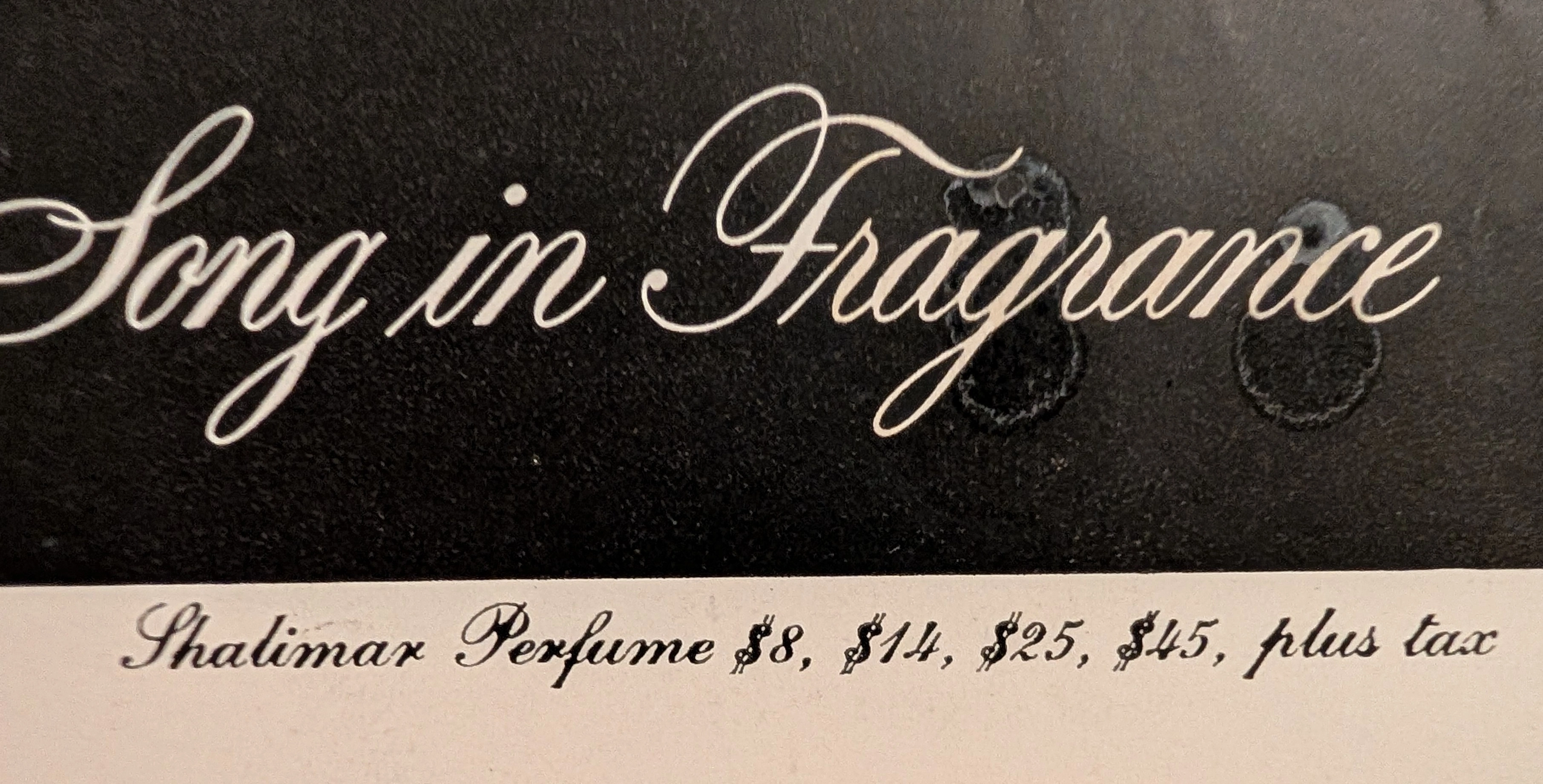
"Shalimar... Love Song in Fragrance"
The deployment of this single, devastating line is not mere poetic prose; it is a calculated psychological hijacking. This is the ultimate manifestation of the "Semantics of Arrogance." The brand makes no attempt to rationally justify the purchase through ingredients or craftsmanship in the main headline. It shamelessly elevates the liquid to the status of an auditory, emotional masterpiece—a "Love Song." This psychological strike paralyzes the consumer's logical defenses. By equating the perfume with immortal love, the financial transaction becomes a required romantic gesture. If you are not buying Shalimar, you are effectively silent; you have no "Love Song" to sing.
Part 3: The Sovereign Consumer & The Tiered Extortion
The socioeconomic structure of the era was carefully managed by luxury houses to ensure exclusivity while maximizing reach. This advertisement serves as a textbook case study in price anchoring and tiered exclusivity. At the bottom right of the central image, the agency lists the prices with clinical precision:
"Shalimar Perfume $8, $14, $25, $45, plus tax"
By boldly publishing this staggering price range—where $45 in the mid-20th century represented an astronomical sum for a tiny bottle of liquid—Guerlain was engaging in aggressive psychological conditioning. They were creating a hierarchy of devotion. The $8 bottle allowed the aspirational class a taste of the myth, while the $45 bottle was reserved as a Veblen Good for the true elite, satisfying their primal need to socially dominate their peers through pure purchasing power. The brand is essentially demanding: How loud is your love song?
Part 4: Visual Semiotics: The Monochrome Supremacy
In an era where color advertising was becoming the ultimate tool for mass-market appeal, Guerlain's deliberate choice to render this advertisement in profound black-and-white (Monochrome) acts as a precise and extremely courageous semiotic indicator:
Timeless, Institutional Elegance: Black-and-white photography aggressively strips away superficial visual noise, forcing the viewer to confront the raw, architectural geometry of Raymond Guerlain's bottle and the intricate, light-bending facets of the fan-shaped stopper. It visually separates the product from fleeting fashion trends, framing the perfume instead as a timeless, historical relic.
The Chiaroscuro of Desire: The absolute mastery of darkroom lighting causes the ribbed glass of the flacon to appear as if it is glowing from within, while the pitch-black negative space creates an illusion of infinite, mysterious depth. This visually translates the "Oriental" inspiration of the perfume—dark, mysterious, and deeply seductive—into a purely optical experience.
Part 5: Pop Culture Impact and Enduring Legacy
The marketing strategy pioneered by Guerlain—fusing an opulent, pseudo-historical Oriental myth with flawless French crystal artisanship—left an indelible, ineradicable mark on global luxury branding. Shalimar became the absolute gold standard for the "Oriental" fragrance category. The cultural impact of this positioning engineered a societal norm where true luxury requires an epic, almost theatrical backstory. In the modern commercial arena, niche perfume brands still desperately attempt to manufacture the aura of effortless, mythical supremacy that Guerlain achieved decades ago. This physical artifact is the foundational source code for the most pervasive and wildly successful brand-building mythologies in the history of modern cosmetics.
The Paper
As a physical entity, this carefully extracted single magazine tear sheet—and it must be strictly noted that this is a standard magazine size page, absolutely not a mass-produced, blown-up poster—is an unrepeatable, isolated record of mid-20th-century analog offset lithographic printing. The medium-weight, uncoated paper stock was originally engineered by the ton for mass distribution; however, its current, time-ravaged state demands a profound evaluation through the highest echelon of Japanese aesthetic philosophy: wabi-sabi (侘寂)—the acute recognition and appreciation of beauty found in impermanence, imperfection, and the ruthless, natural progression of time.
Visual Forensics & Substrate Analysis:
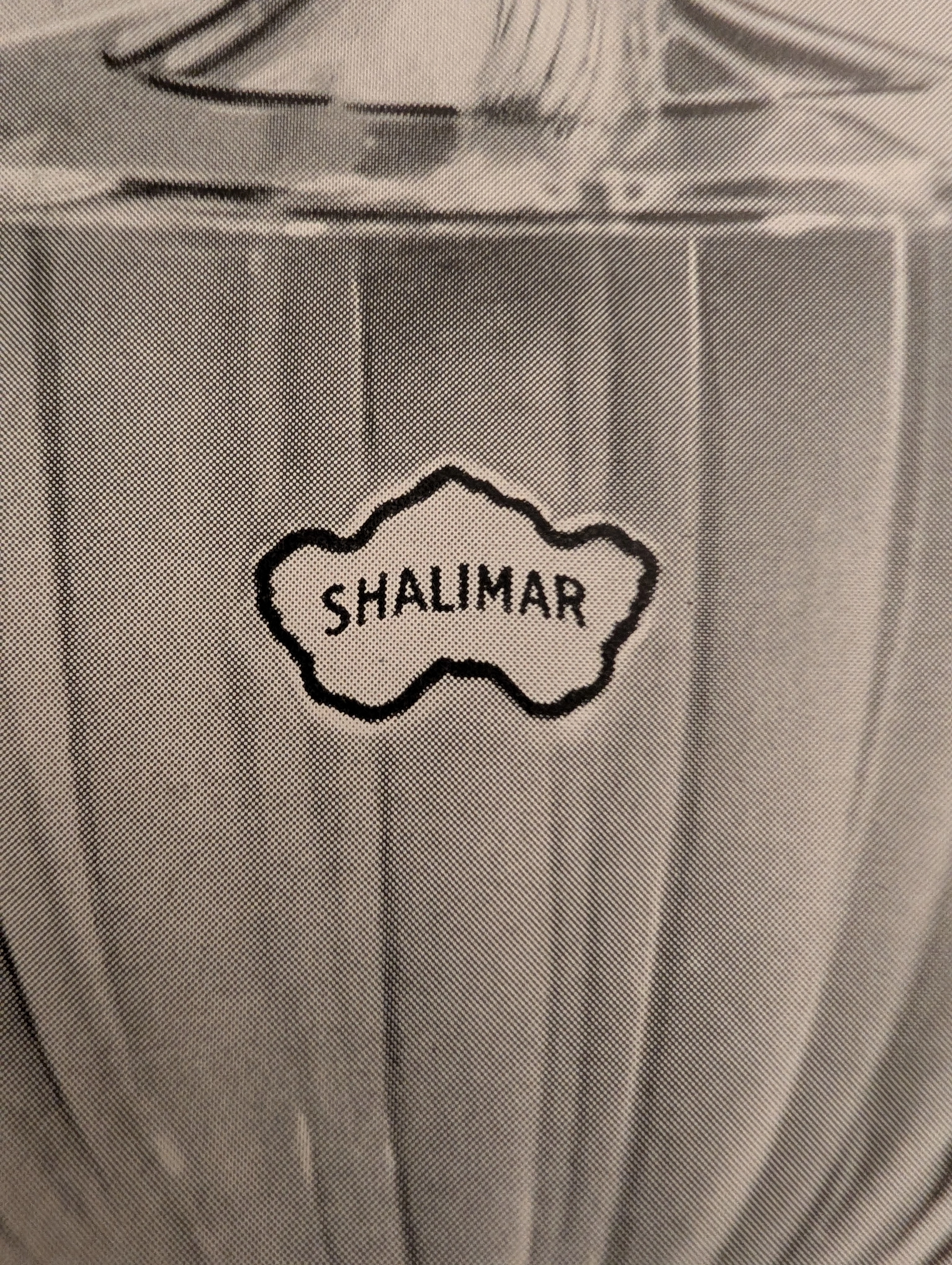
Subjecting the extreme macro close-ups of this artifact to visual forensics reveals the mechanical heartbeat of the pre-digital printing press. Under high magnification, the illusion of the smooth, glowing glass violently shatters, dissolving into a precise, mathematically rigorous galaxy of black and grey halftone rosettes. The distinct, gritty grain of the monochromatic offset printing process is aggressively visible within the transition zones between the pure white highlights on the crystal and the absolute black void of the background.
However, the most crucial and valuable aspect of this specific artifact lies in its Material Degradation. Examining the margins and the unprinted negative spaces reveals authentic, undeniable "Toning." This is a gradual, irreversible yellowing and embrittlement effect caused by the natural chemical oxidation of organic Lignin trapped within the wood pulp of the paper upon decades of exposure to air and ambient ultraviolet light.
It is vital to understand the archival and market significance of this ephemeral nature. Analog print media of this era represents a vanishing breed of historical documentation that is slowly, yet unstoppably, disintegrating. This organic, breathing physical degradation is a fingerprint of time that can absolutely never be cloned, replicated, or faked by modern high-precision digital scanning. As these original pages slowly burn themselves out through oxidation, turning fragile and brittle, their supply in the global collector's market shrinks daily. It is precisely this ticking clock of physical impermanence—the fact that this paper is slowly but irreversibly returning to the earth—that is driving up its market value exponentially. The evolving patina elevates the piece from a uniform, lifeless industrial print run into a singular, unique artifact covered in historical scars. The wabi-sabi nature of this decaying paper ensures that its aesthetic and financial worth will continue to skyrocket precisely because it is a dying medium.
The Rarity
Rarity Class: A (Advanced / Highly Desirable)
Within the strictest parameters of international archival evaluation, this artifact holds a definitive Class A designation. The ultimate paradox of mid-20th-century analog print ephemera lies in the violent contrast between its initial mass production and its extreme, near-extinct scarcity today. Vintage magazines were the quintessential "disposable media," destined to be read once and then mercilessly discarded into incinerators.
For this specific, single-page advertisement to have miraculously survived several decades—resisting the ravages of destructive handling, severe moisture damage, and avoiding catastrophic structural center creases—is a pure statistical archival anomaly. Furthermore, finding a Shalimar advertisement featuring the iconic Baccarat bottle in high-contrast monochrome, complete with its tiered pricing, wherein the black ink retains its absolute abyssal depth while exhibiting only the genuine, unforced hallmarks of wabi-sabi aging, is highly uncommon. Pristine remnants of this specific era of luxury marketing are fiercely hunted by curators of fragrance history and archivists of haute parfumerie. They are acquired with the sole intention of executing museum-grade, acid-free conservation framing, preserving them permanently as historical heirlooms of a lost analog era.
Visual Impact
The aesthetic authority of this piece lies in an absolute masterclass of Chiaroscuro—the intense, dramatic contrast between blinding light and impenetrable shadow. The immediate focal point that hijacks the viewer's optic nerve is the brilliant, radiant reflection striking the very top of the fan-shaped stopper, illuminating the engraved "Guerlain Paris" signature.
The uncredited photographer achieved this breathtaking visual spectacle not through cheap digital post-production, but through an absolute mastery of optical physics and studio lighting. The light cascades down the ribbed body of the bottle, creating vertical leading lines that draw the eye into the heavy, crystal base, before inevitably dropping the viewer's gaze onto the elegant, sweeping cursive of the typography below. The strategic use of the pitch-black void effectively isolates the product in a vacuum, creating a psychological "aura" of untouchable exclusivity.
Exhibition Halls
The Archive Continues
Continue the Exploration
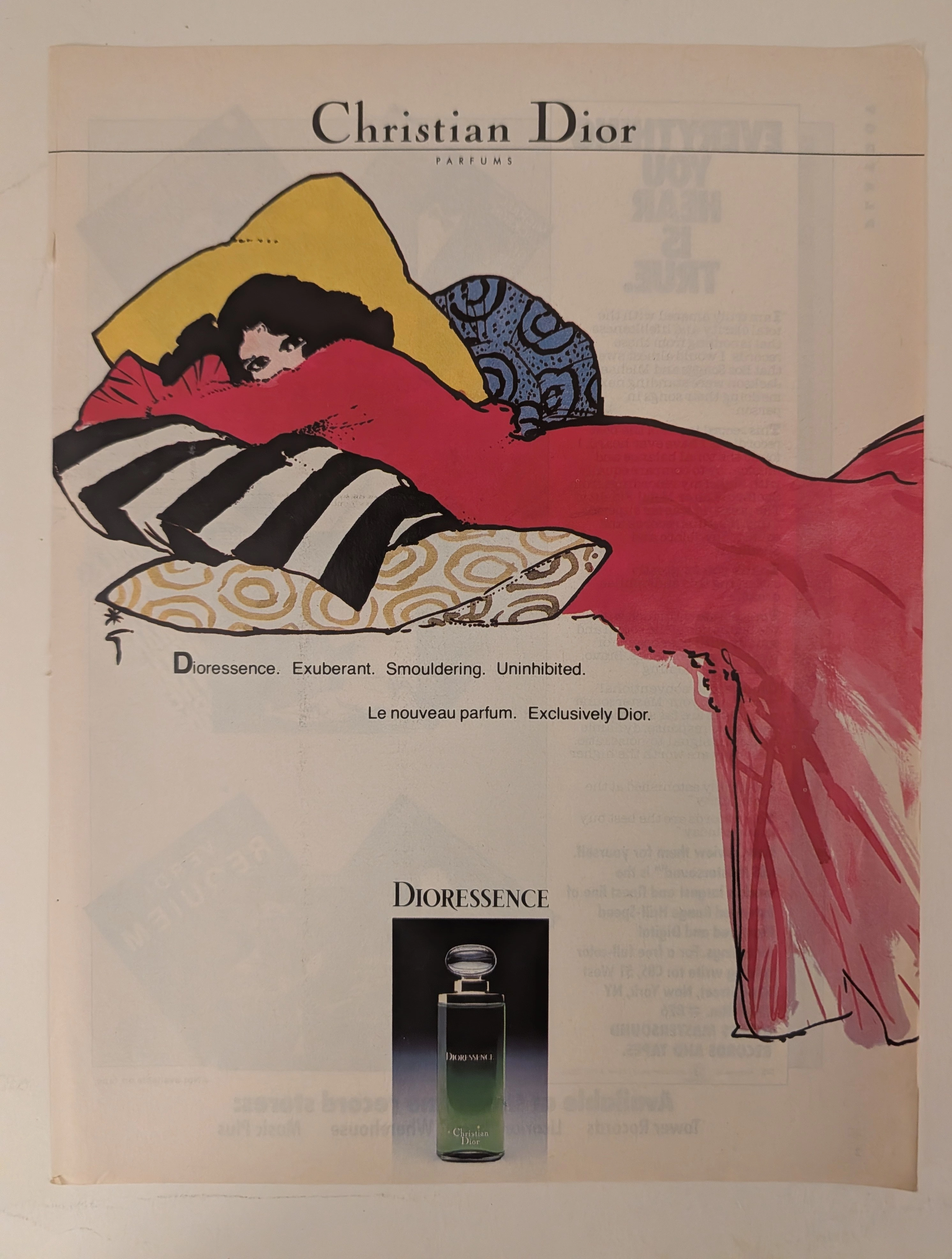
Christian Dior · Fashion
The Time Traveller's Dossier: The Stroke of Seduction – 1970s Christian Dior "Dioressence" Advertisement
History is not written; it is printed. Before digital algorithms dictated consumer desires, societal engineering was executed through the calculated geometry of the four-color offset press and the masterful stroke of an illustrator's brush. The historical artifact before us is not merely a fragrance advertisement; it is a weaponized blueprint of unapologetic female sensuality and a testament to the absolute zenith of French haute couture marketing. This museum-grade archival dossier presents an academic deconstruction of a vintage 1970s print advertisement for Christian Dior's "Dioressence" perfume. Operating on a profound binary structure, it documents a calculated paradigm shift within the global luxury fragrance industry. It illustrates the precise historical fracture where the polite, restrained elegance of post-war fashion transitioned into the bold, liberated, and sexually assertive era of the 1970s. Through the lens of late-analog commercial artistry—specifically the genius of René Gruau—and precise visual forensics, this document serves as a masterclass in psychological semiotics, establishing the visual tropes of the empowered, enigmatic woman that unconditionally dominate modern luxury branding.
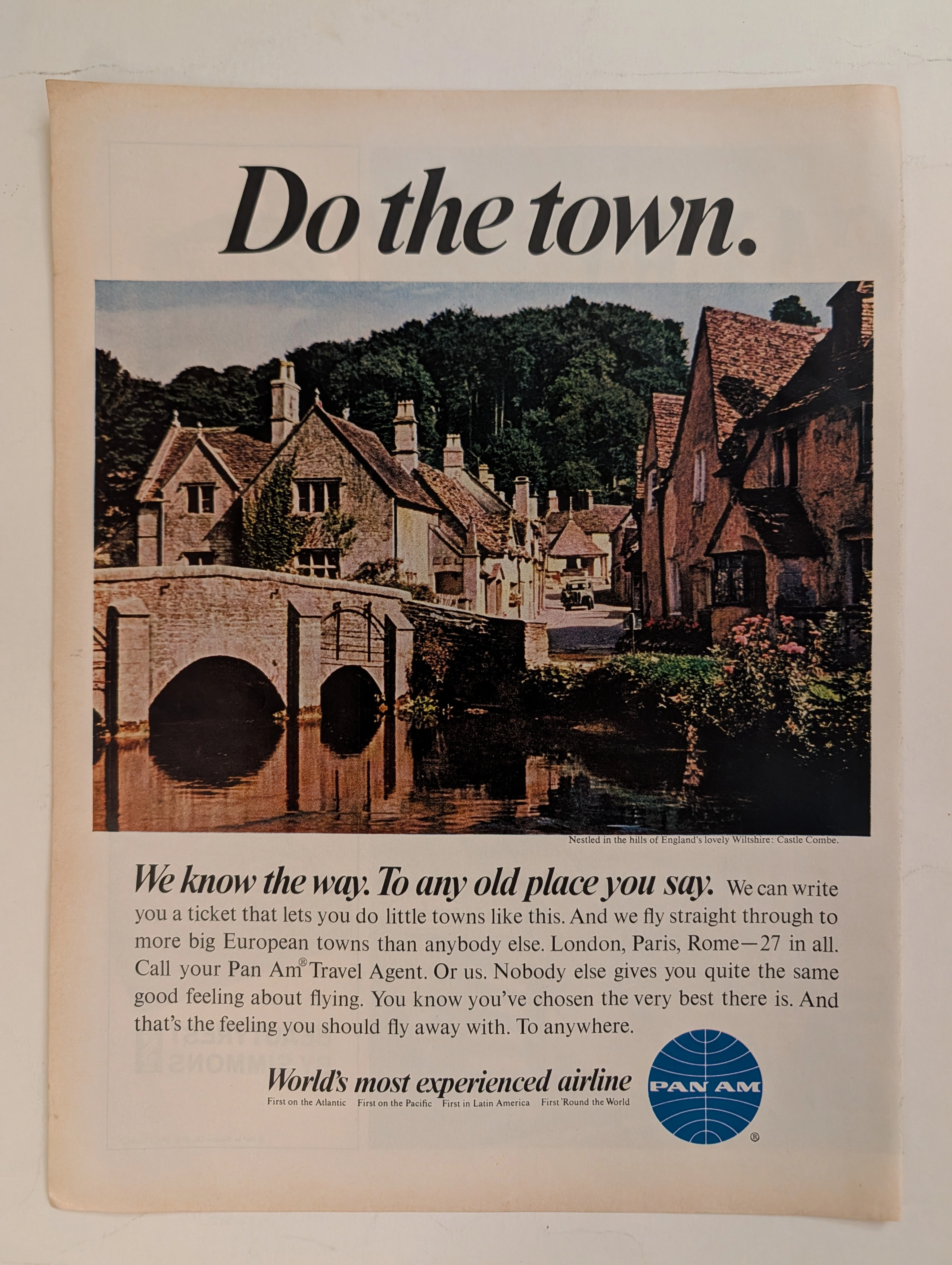
PanAm · Travel
The Time Traveller's Dossier: The Empire of the Sky and the Democratization of the Globe – Pan Am "Do the town."
The evolution of the American leisure class during the mid-twentieth century was fundamentally propelled by the rapid expansion, technological triumph, and increasing economic accessibility of commercial jet travel. The historical artifact elegantly and securely positioned upon the analytical table of The Record Institute today is a striking, single-page print advertisement for Pan American World Airways (Pan Am), originating from the transformative decade of the 1960s. This document completely transcends the standard, utilitarian boundaries of transportation marketing. It operates as a highly sophisticated, multi-layered cultural mirror, reflecting the precise era when the globe dramatically shrank, and the majestic, ancient corners of Europe were explicitly packaged and sold to the American middle-class consumer not merely as distant dreams, but as easily attainable weekend realities. This world-class, comprehensive dossier conducts a meticulous, unyielding, and exceptionally exhaustive examination of the artifact, operating under the absolute most rigorous parameters of historical, sociological, and material science evaluation. With the vast majority of our analytical focus dedicated to its immense historical gravity, we will decode the brilliant marketing psychology embedded within the "World's most experienced airline" branding, analyze the romantic contrast of the bold typography against the ancient stone architecture of Castle Combe, and dissect the profound geopolitical semiotics of the iconic blue globe logo. Furthermore, as we venture deeply into the chemical and physical foundations of this analog printed ephemera, we will reveal the precise mechanical fingerprints of the CMYK halftone rosettes and the graceful, natural oxidation of the paper substrate. This precise intersection of visual nostalgia, mid-century commercial artistry, and the immutable chemistry of time cultivates a serene wabi-sabi aesthetic—a natural, irreversible phenomenon that serves as the primary engine driving up its market value exponentially within the elite global spheres of Vintage Commercial Ephemera, Aviation Archives, and Mid-Century Lifestyle collecting.
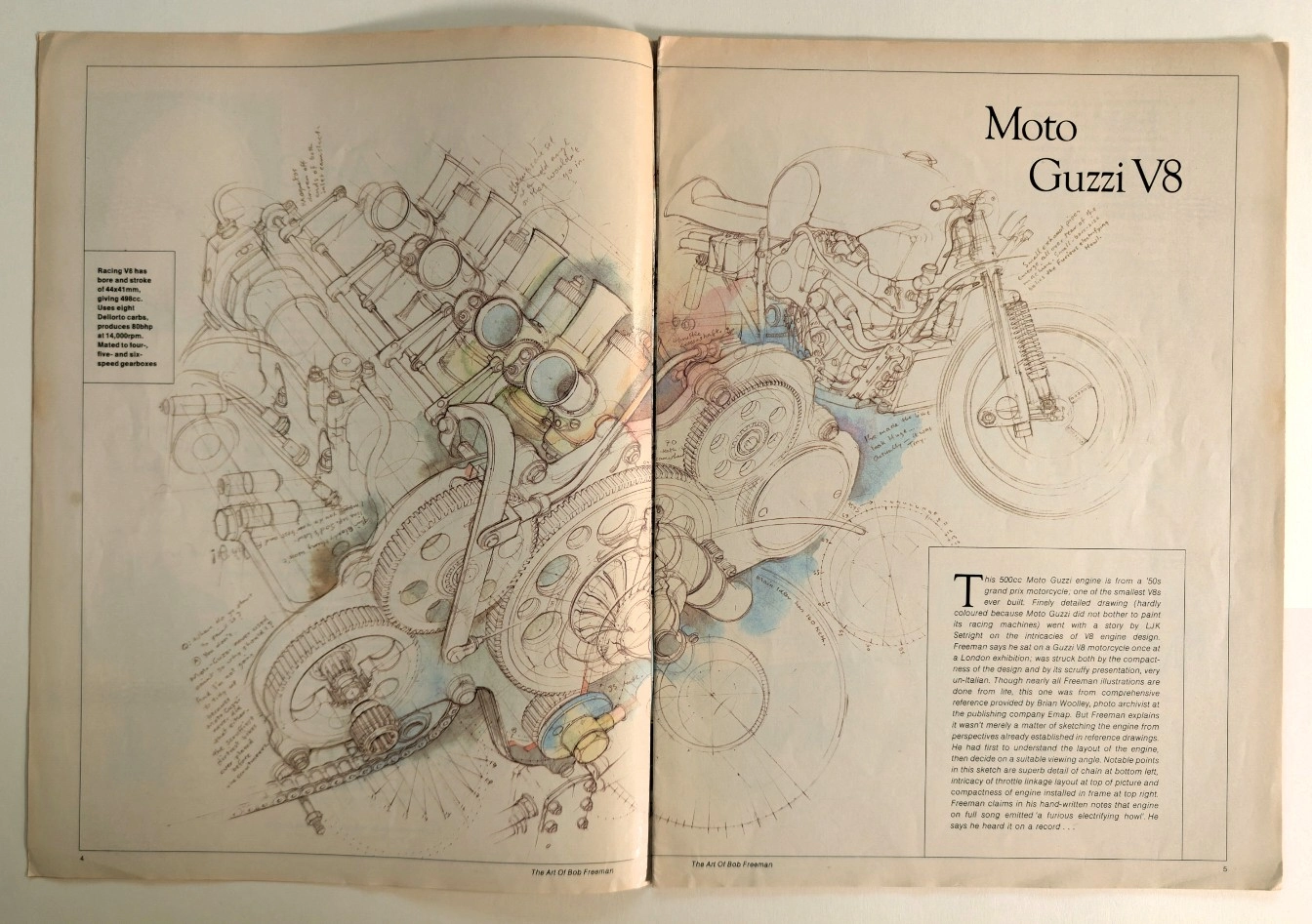
Anatomy of a Monster: The Moto Guzzi V8 Technical Masterpiece
Unearthing a rare technical illustration of the legendary Moto Guzzi V8 engine by Bob Freeman, preserved on naturally aged, pre-2000 analog print media.